

Prints
Printmaking, Experiment and the Transformation of the Image, 1967–1980
From the earliest black-and-white impressions to colour linocuts and hand-painted combinations, printmaking offered Janez Pristavec a field in which the image could be carved, transferred, repeated and continually transformed.
Printmaking represents a concentrated but important area of Janez Pristavec’s early oeuvre. The works gathered here span the period from 1967 to 1980 and encompass woodcut, linocut, drypoint, lithography and screenprint, as well as later combinations of printed line and hand-applied gouache. Together, they reveal an artist exploring not only the expressive possibilities of different techniques, but also the fundamental relationship between an image, its matrix and its successive transformations.
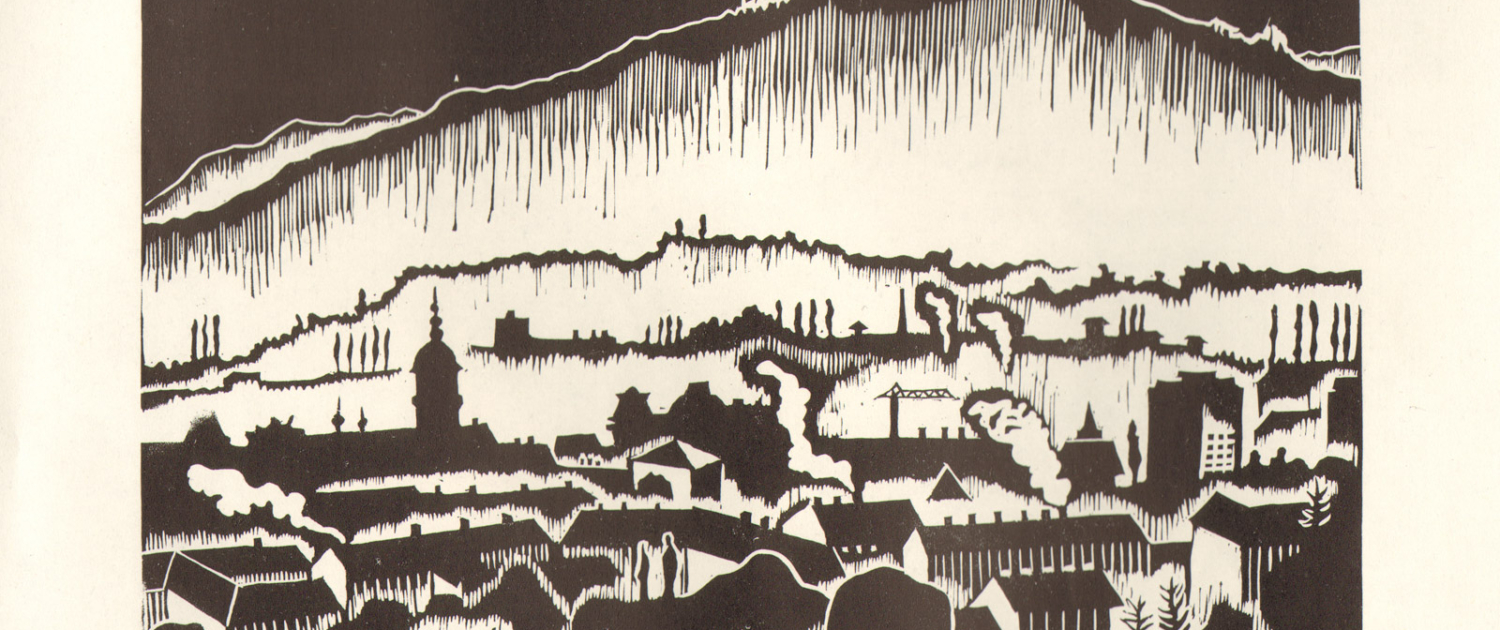
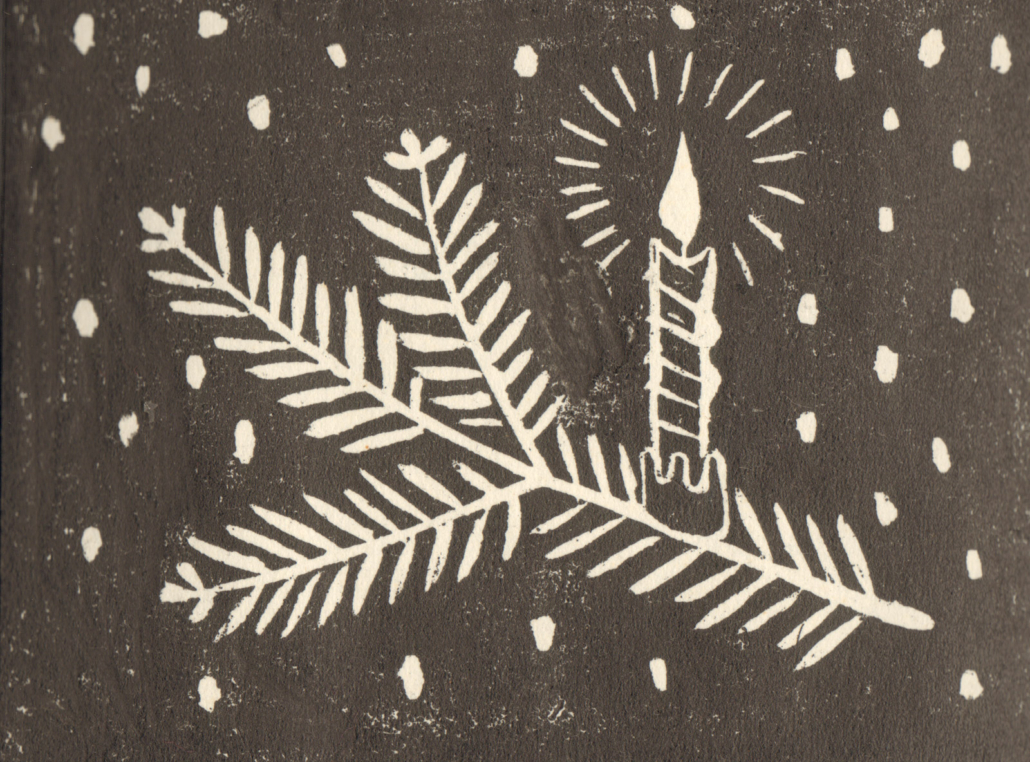
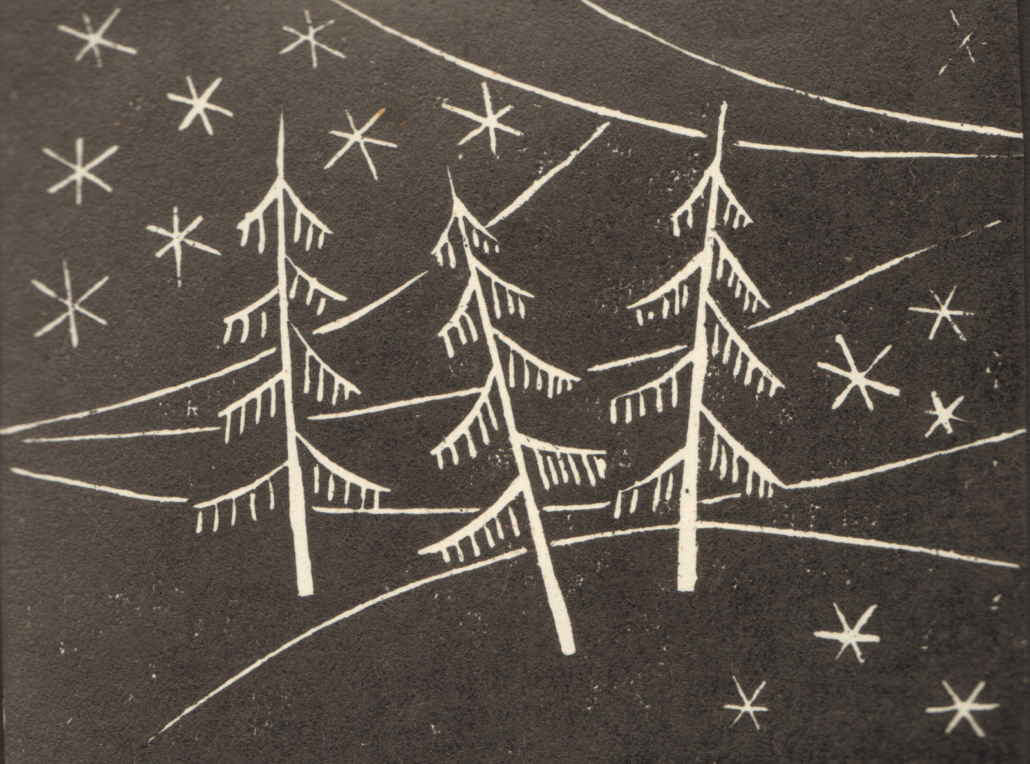
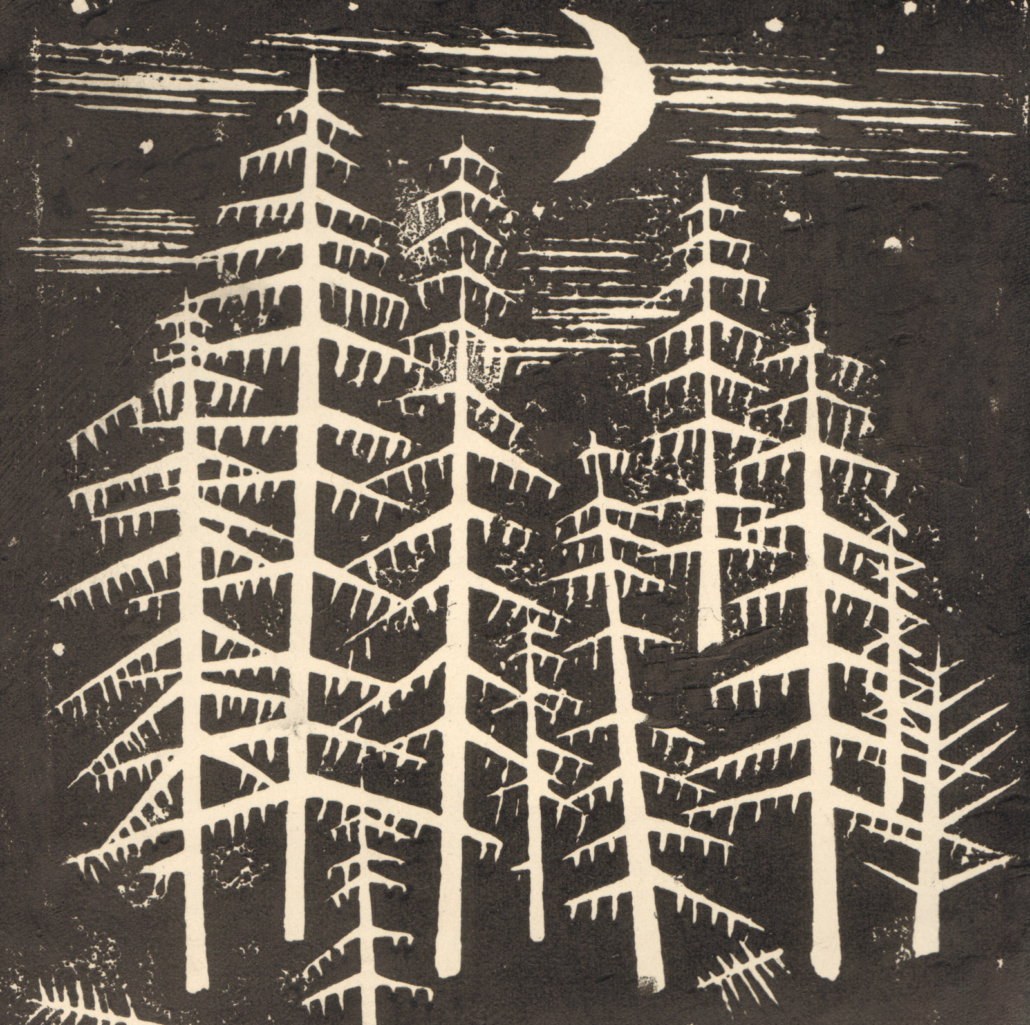
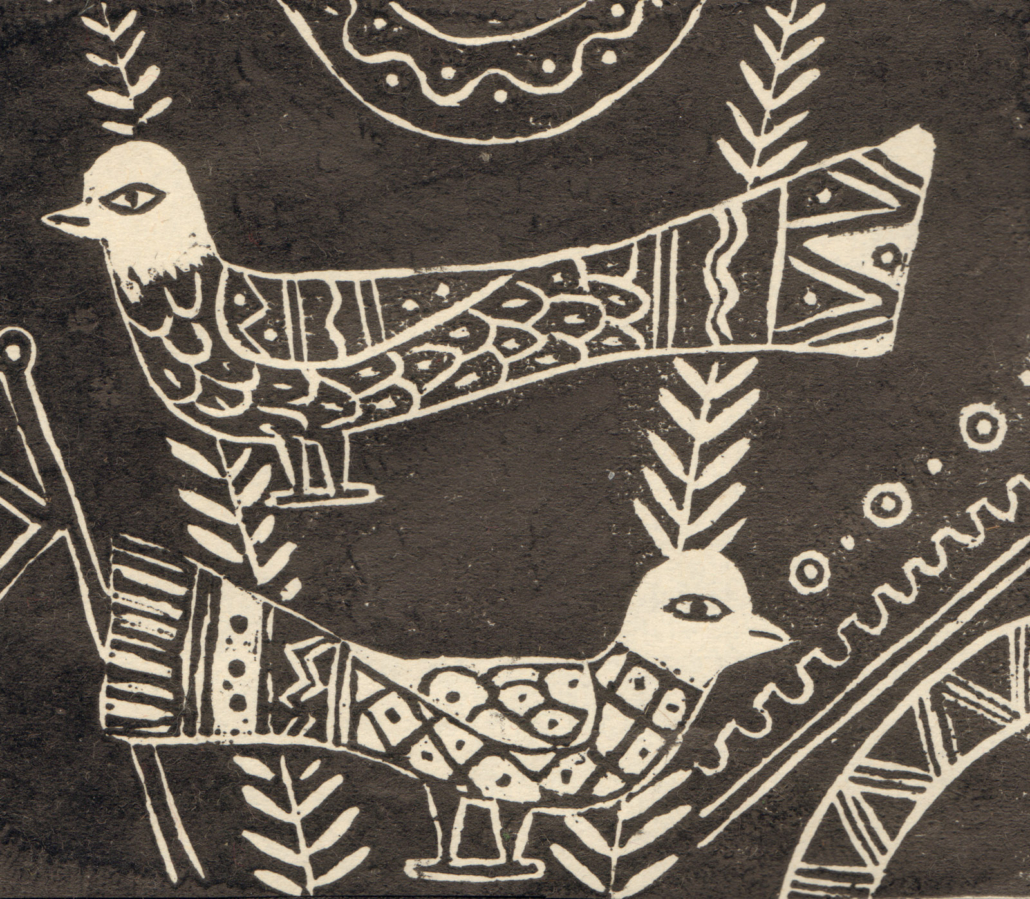
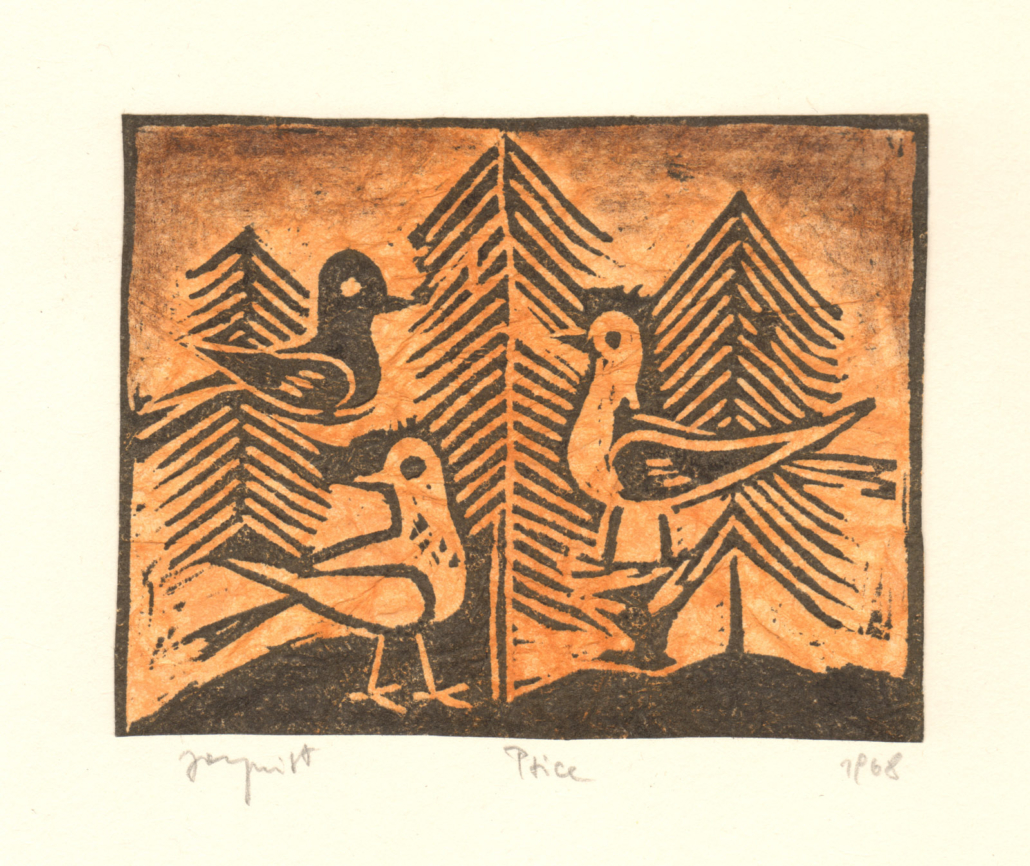
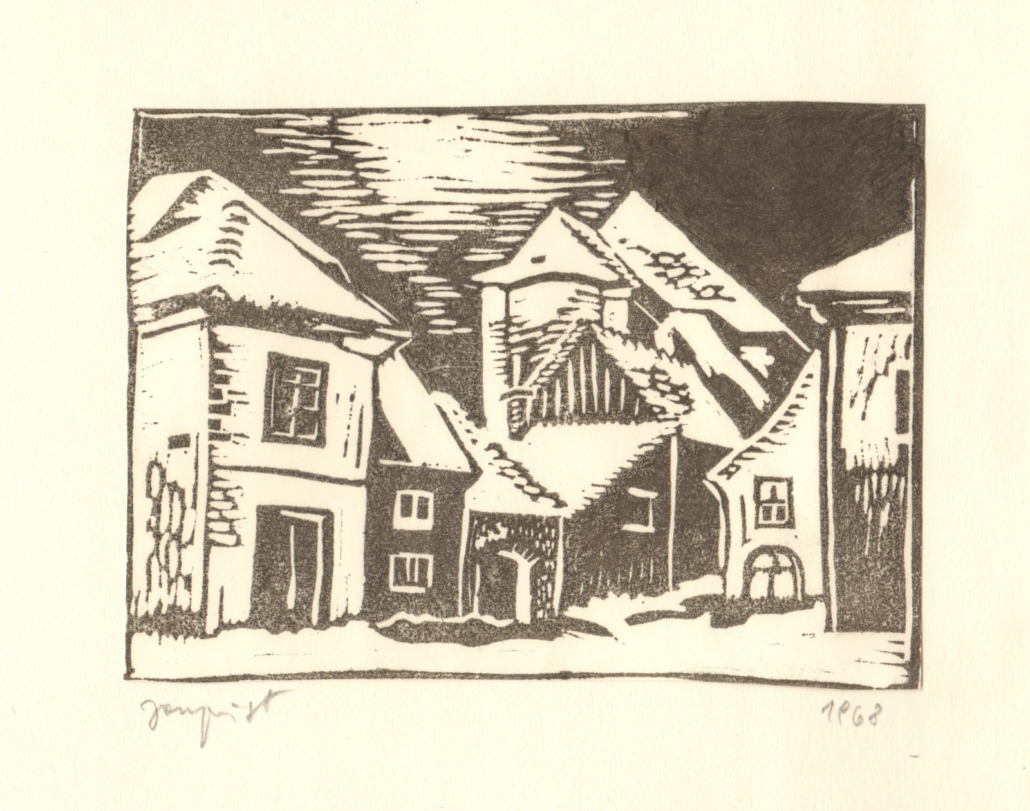
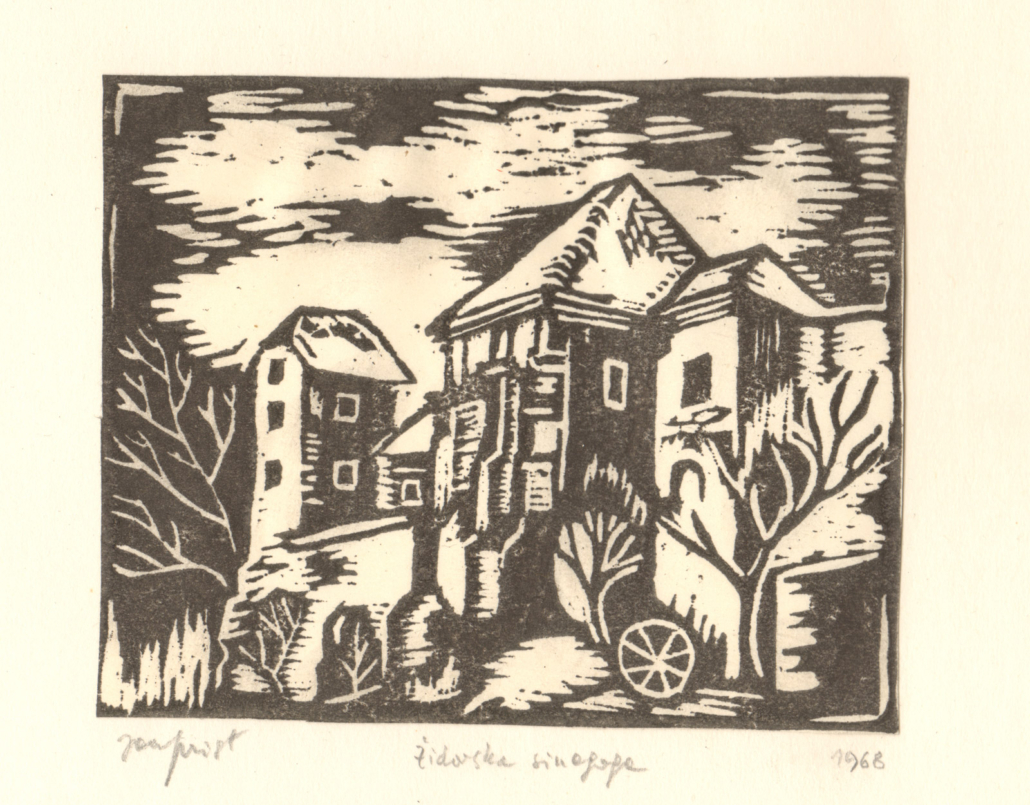
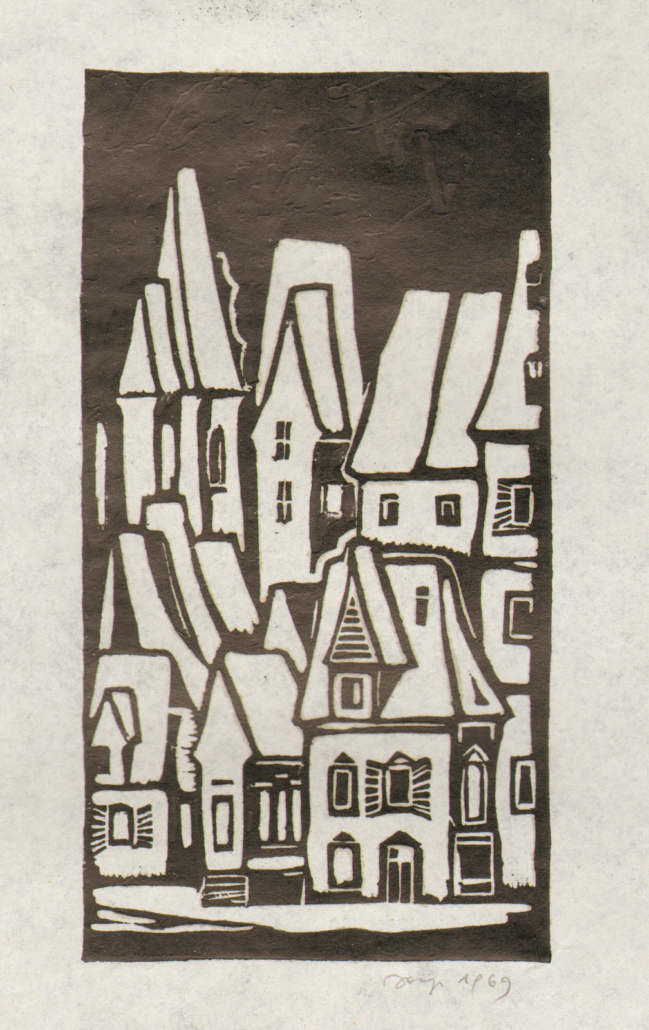
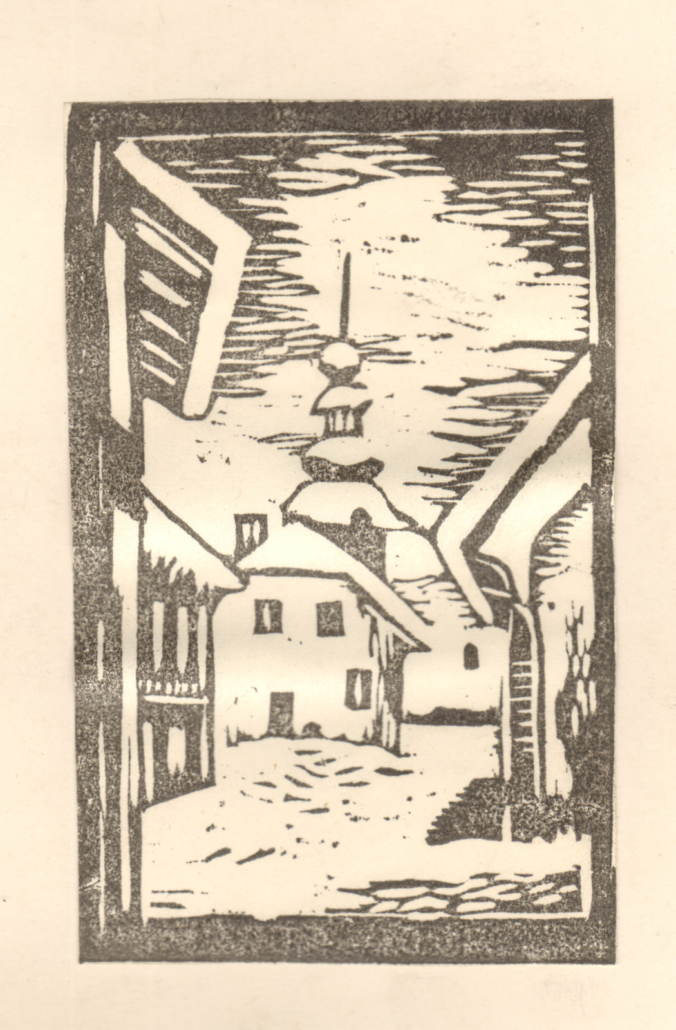
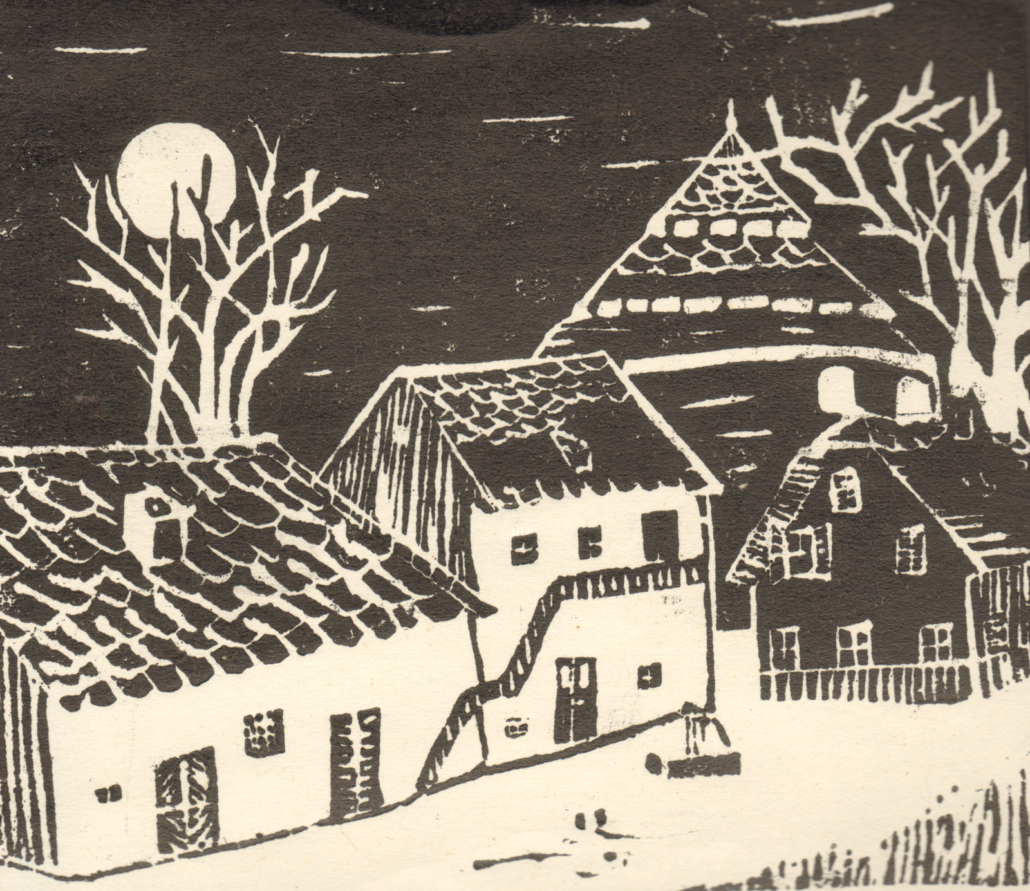
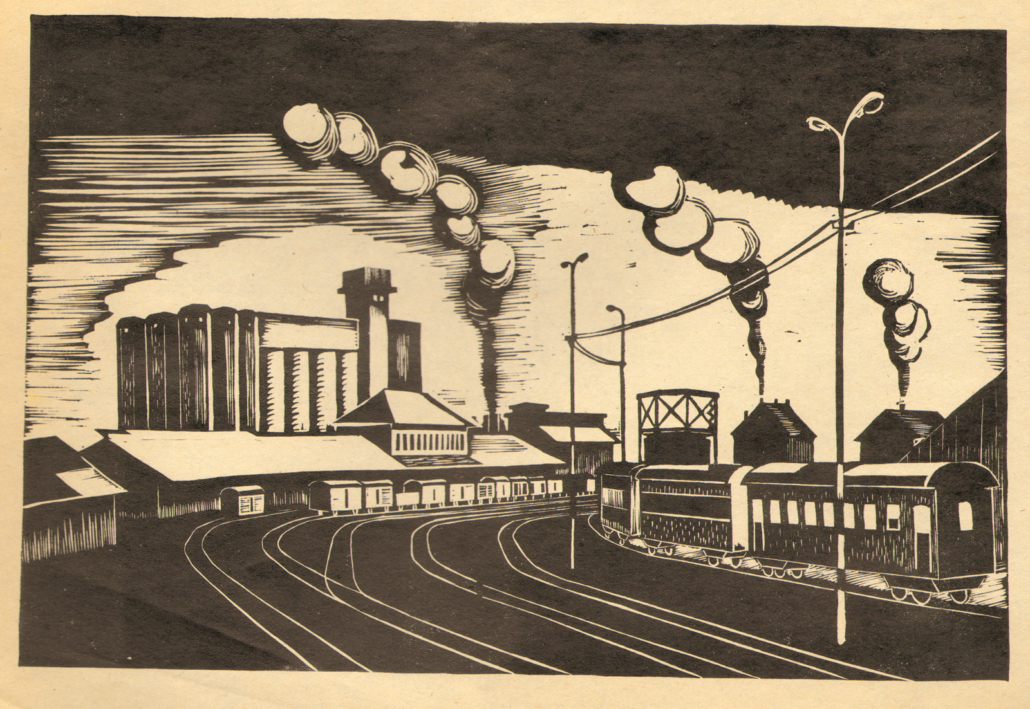
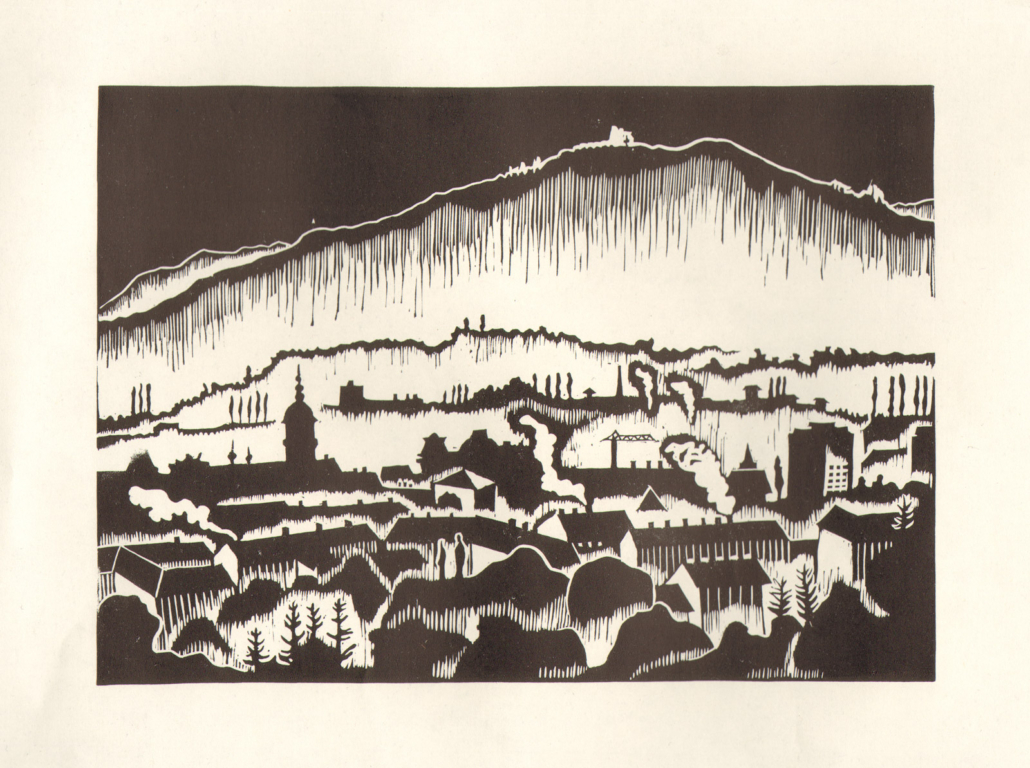
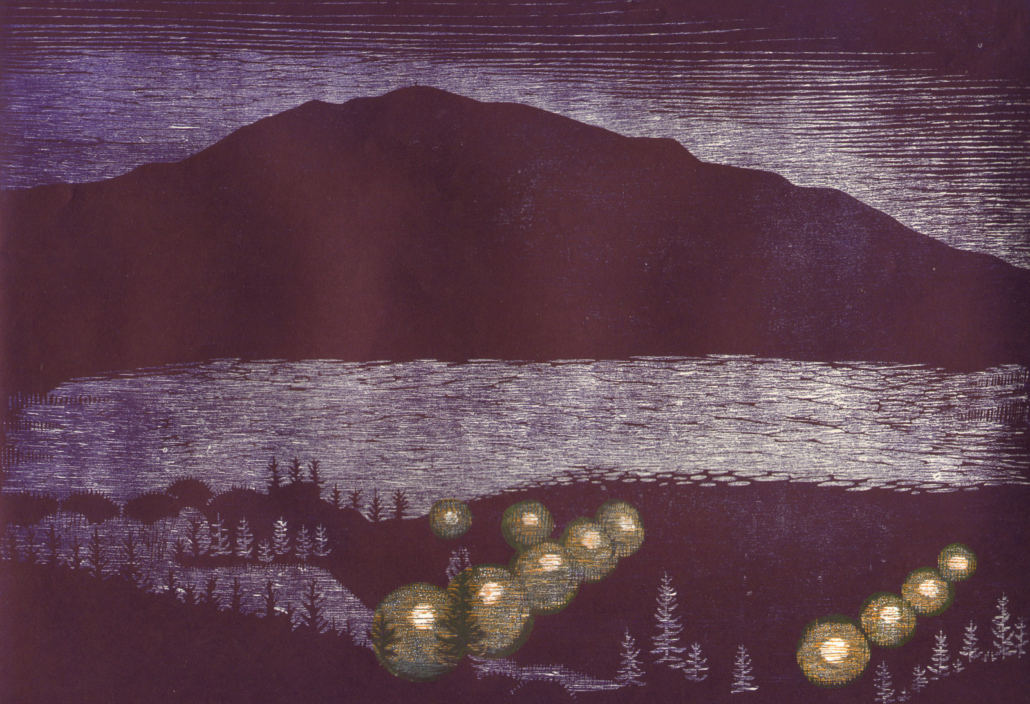
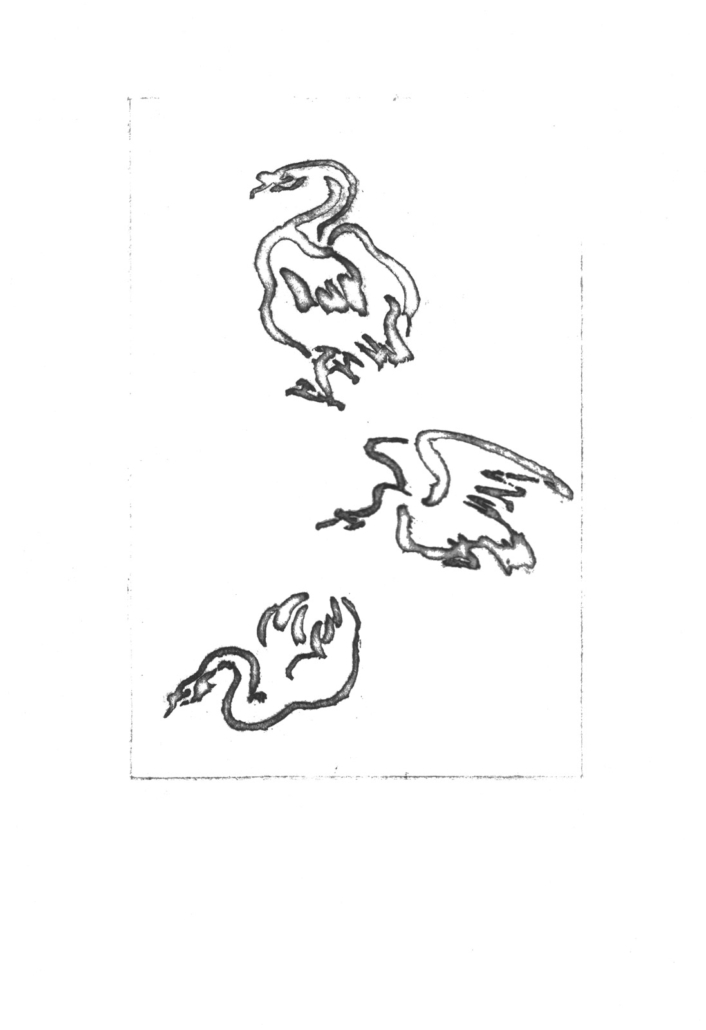
The earliest prints are small in scale and closely connected with the visible world. Forests, winter landscapes, birds, architecture and urban views are reduced to clearly organised relationships between black and white. Rather than imitating the tonal continuity of drawing or painting, Pristavec adapts each subject to the graphic logic of the printed image. Trees become vertical rhythms, buildings are compressed into angular silhouettes, and areas of untouched paper assume an active role within the composition.
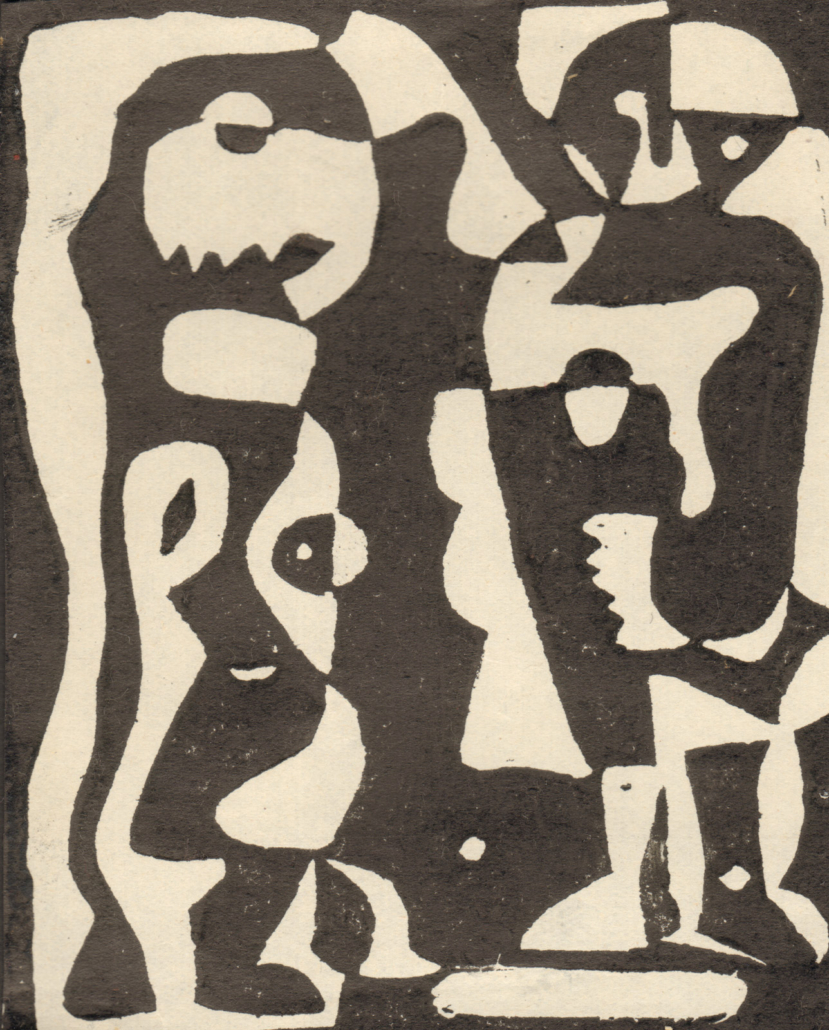
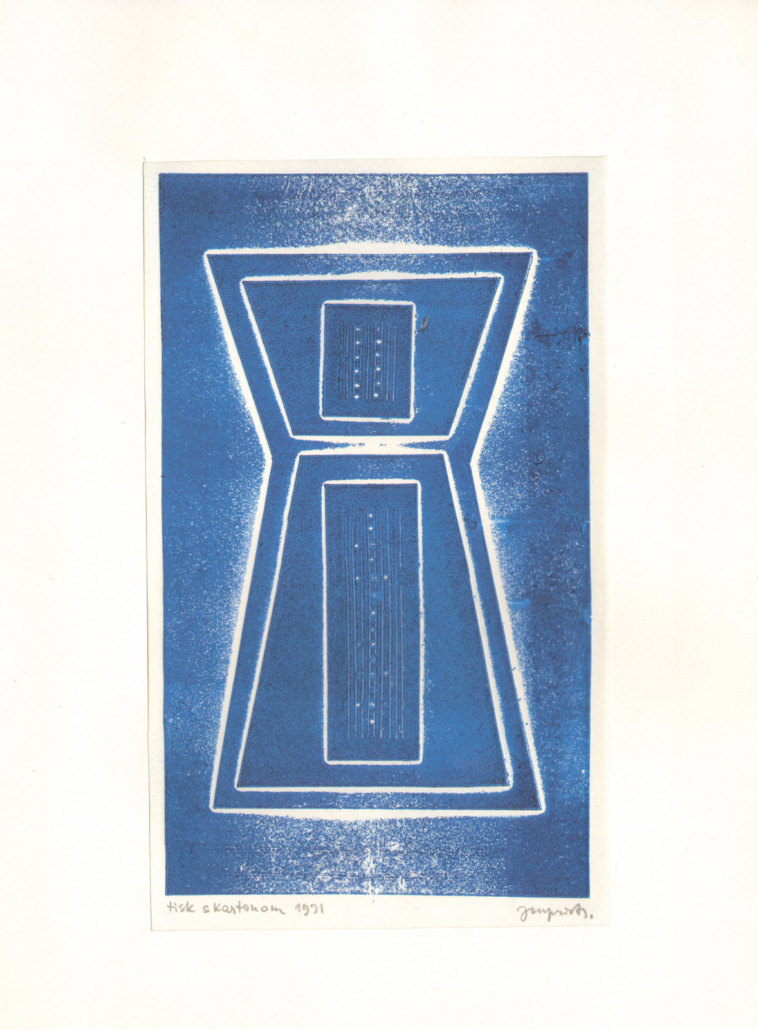
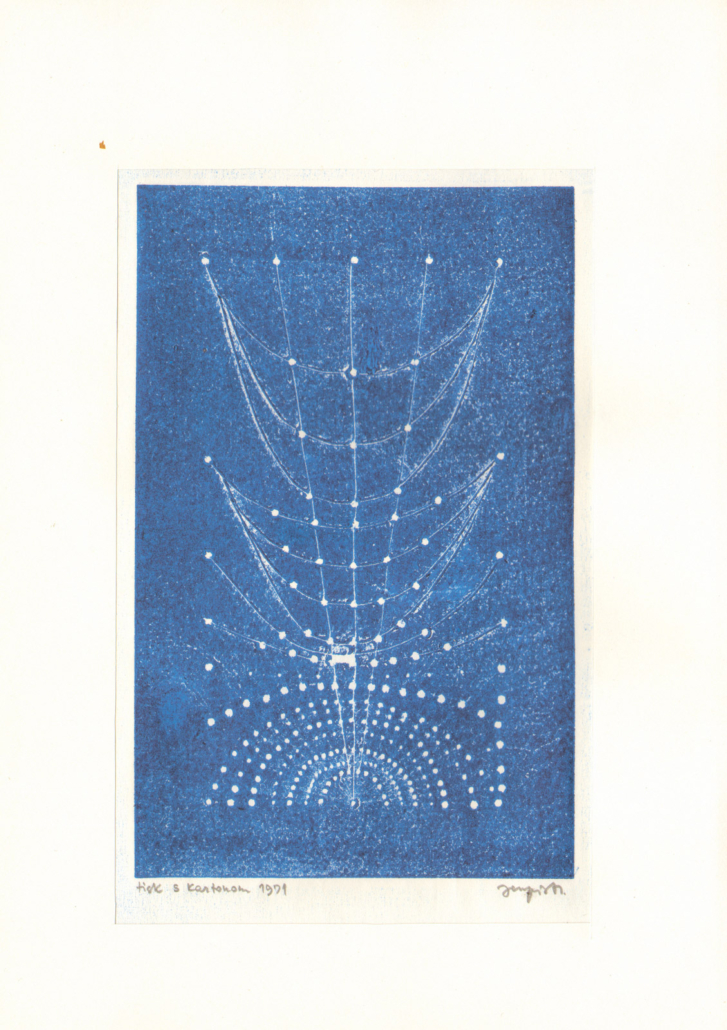
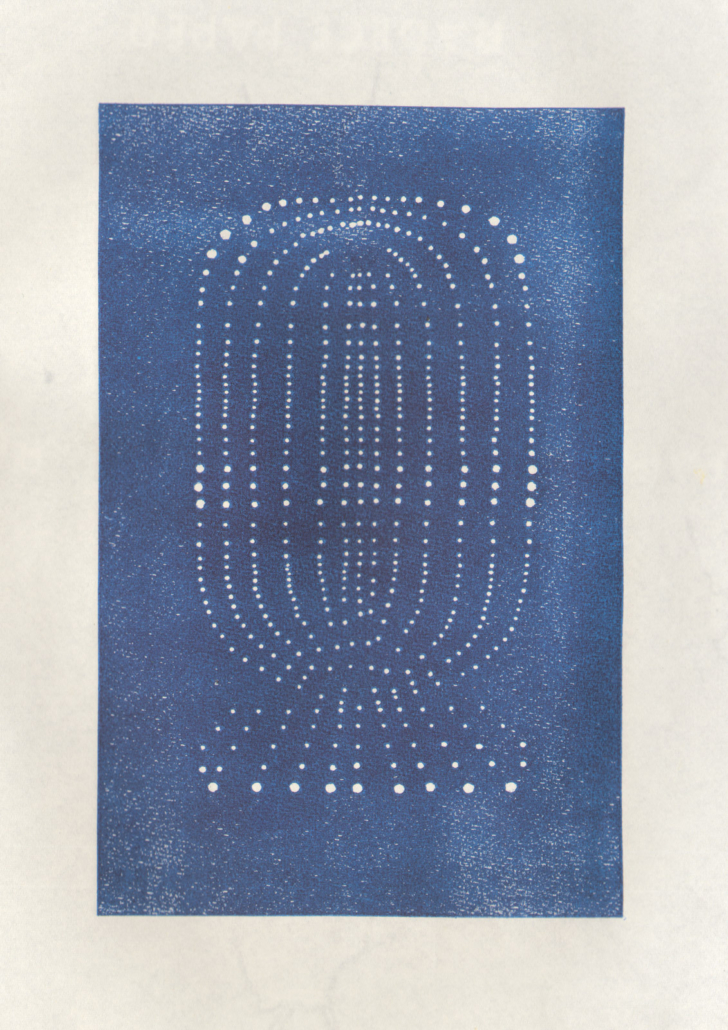
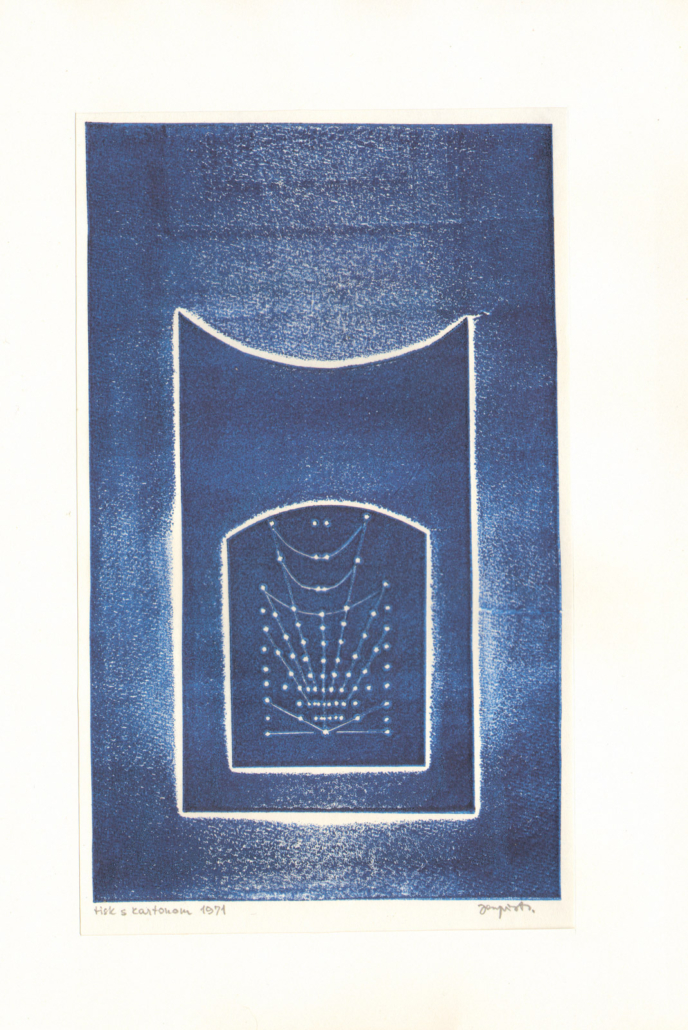
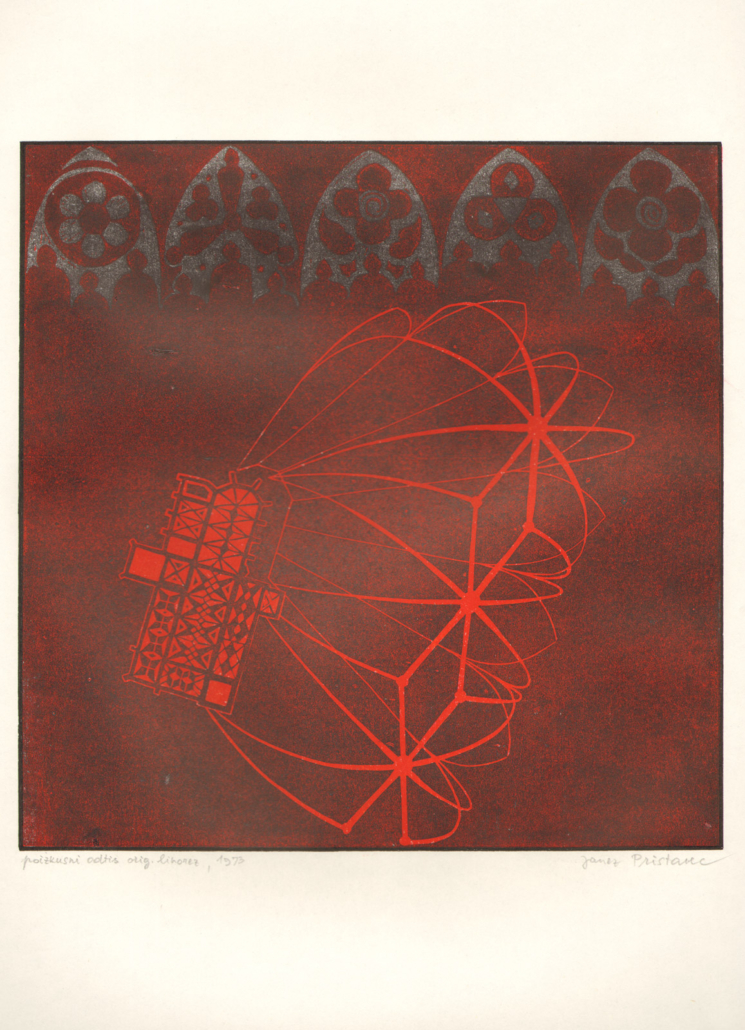
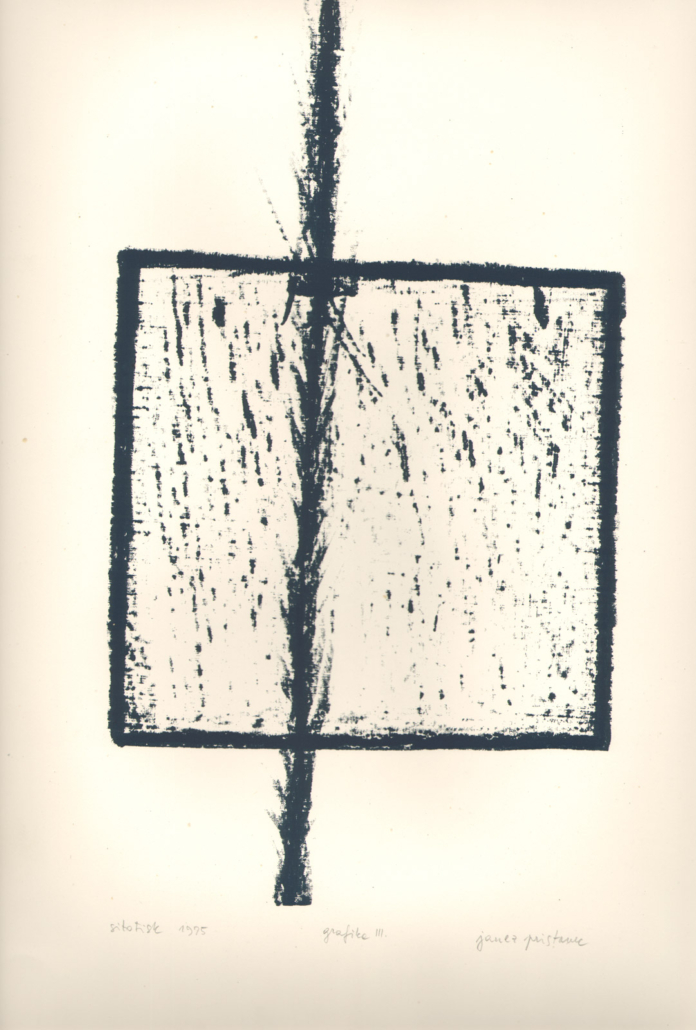
During the early 1970s, this direct engagement with nature and the city gradually gives way to more constructed images. Geometric divisions, spatial frameworks and industrial or architectural forms begin to dominate. Representation is not entirely abandoned, but the observed motif is increasingly reorganised into an autonomous system of planes, axes, openings and contrasts. These works anticipate Pristavec’s later interest in the internal structure of bodies, objects and landscapes.
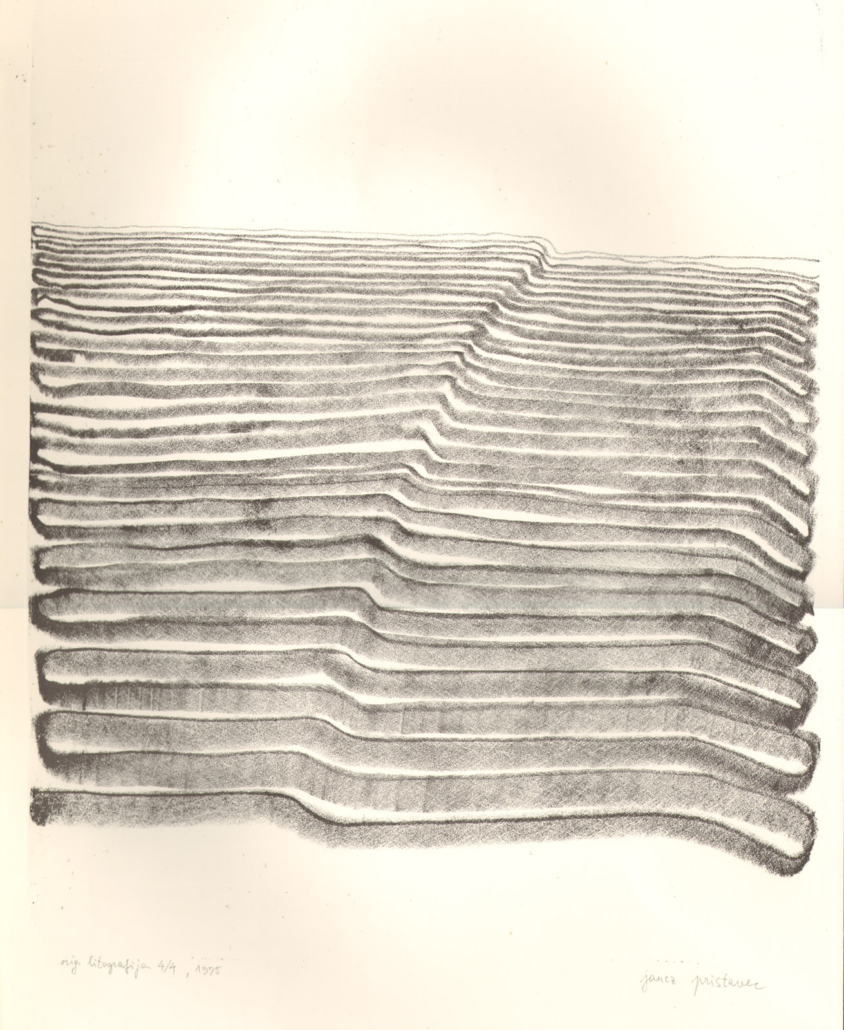
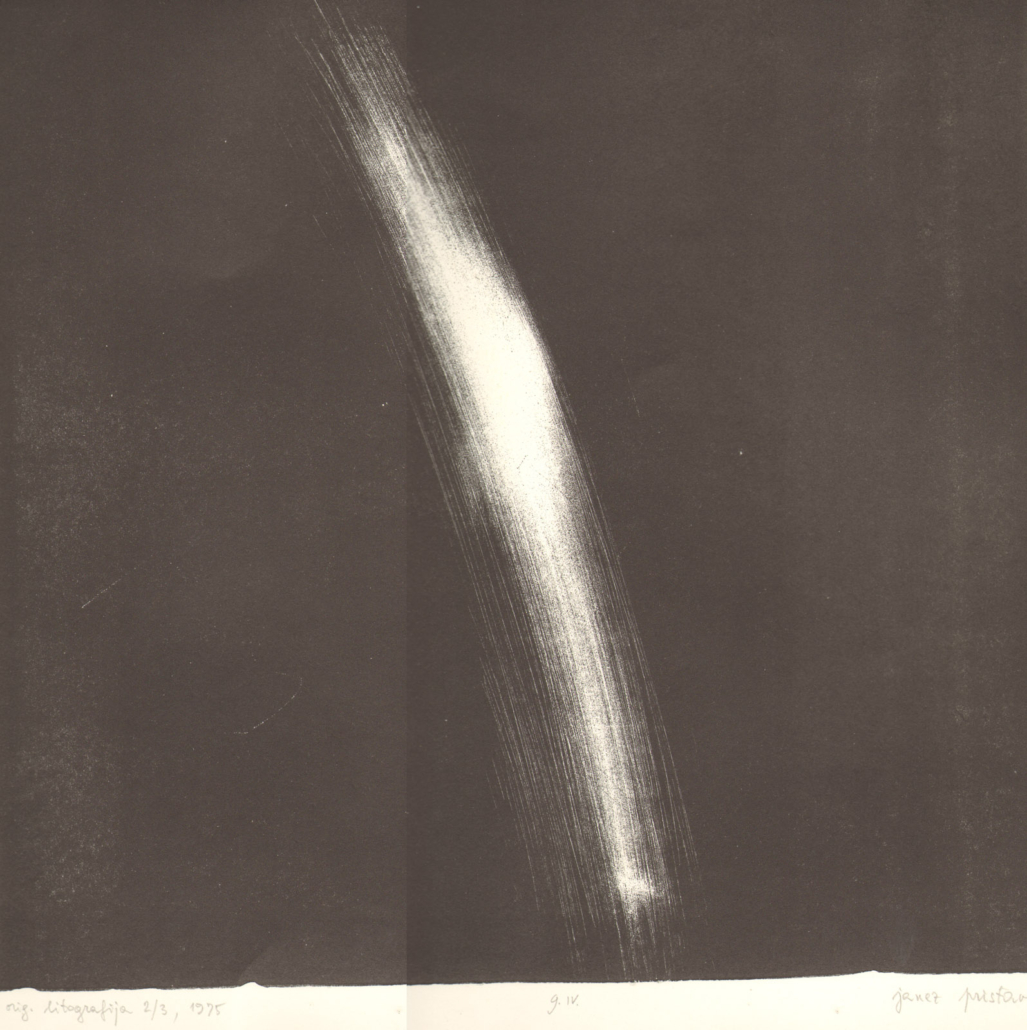
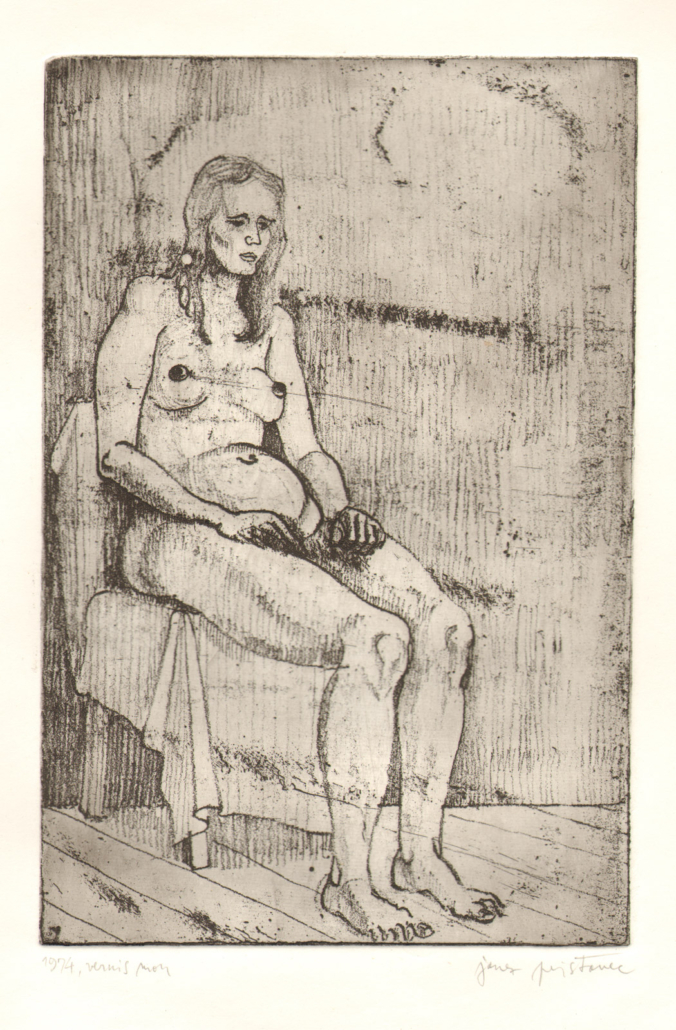
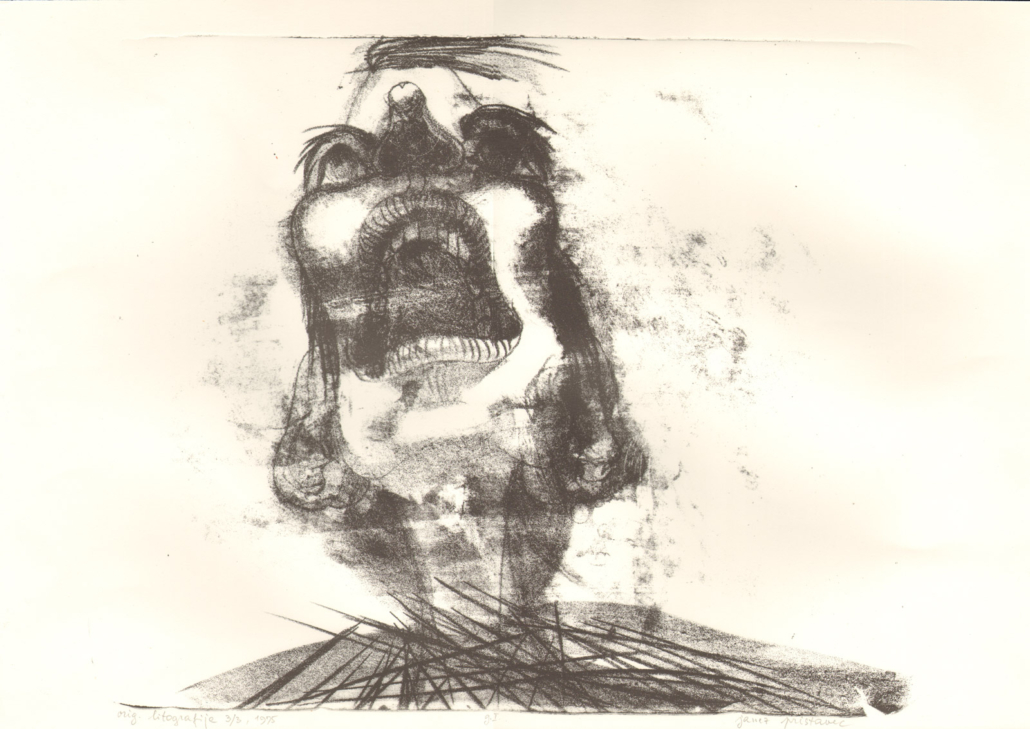
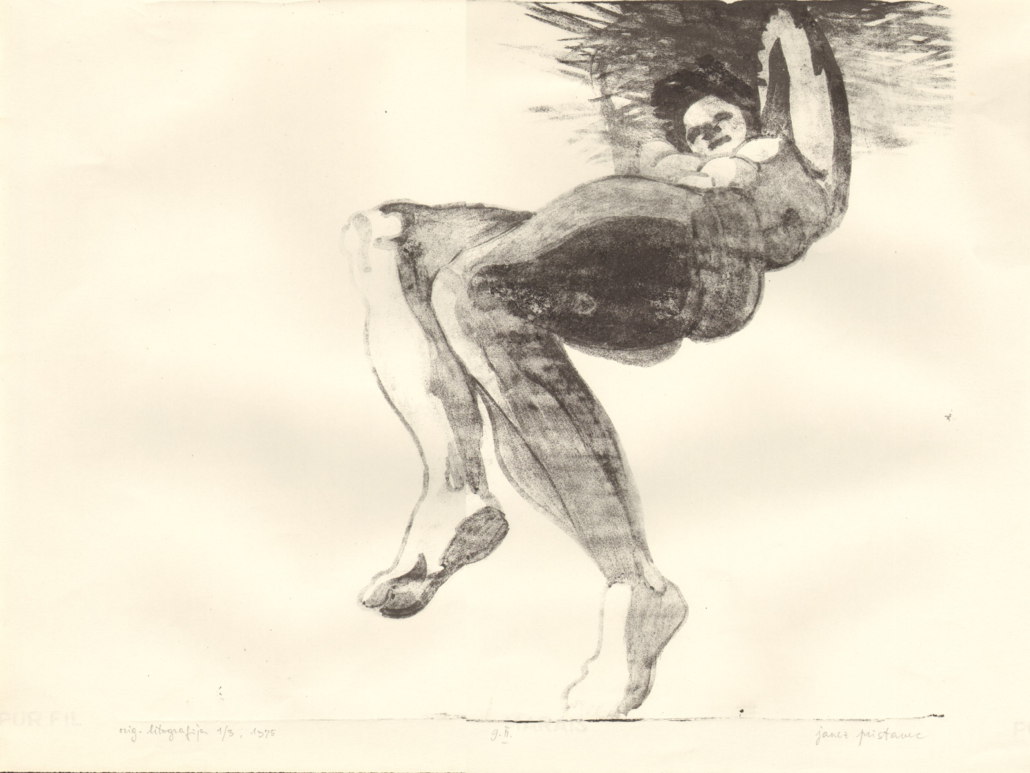
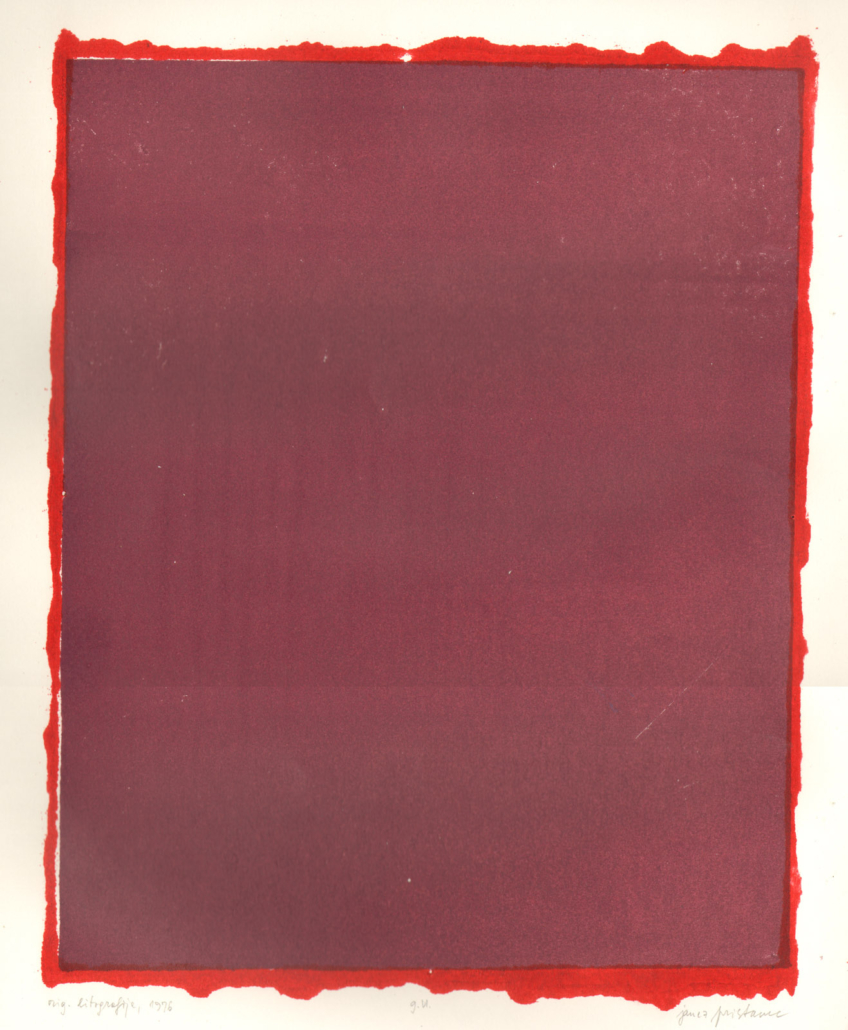
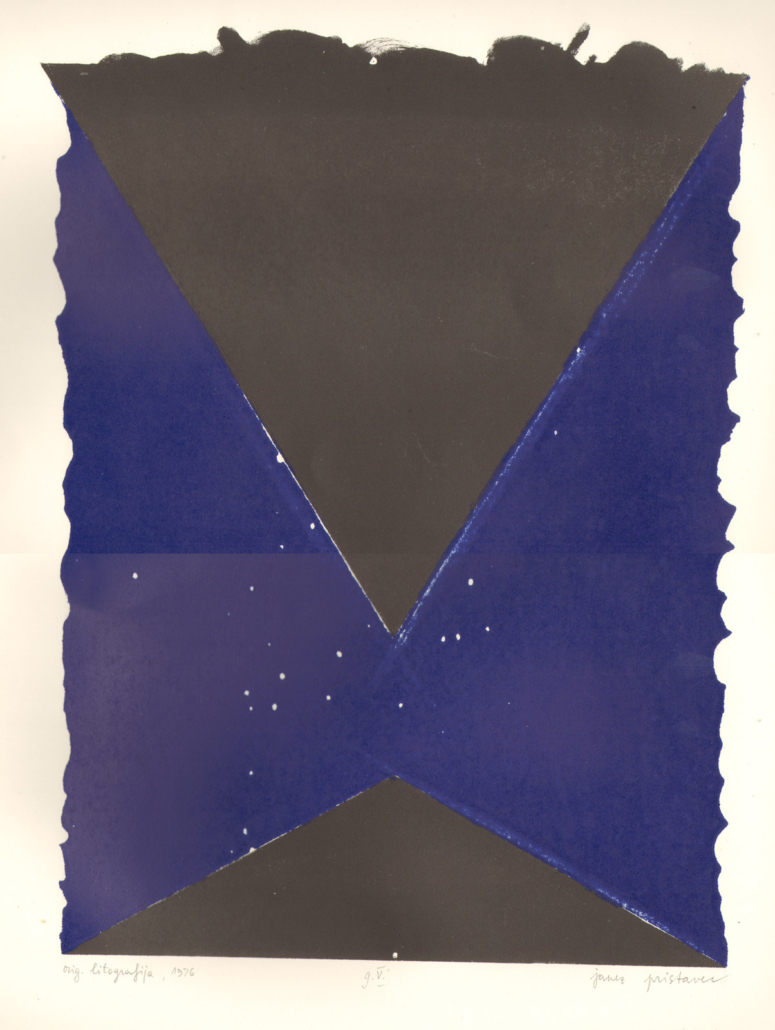
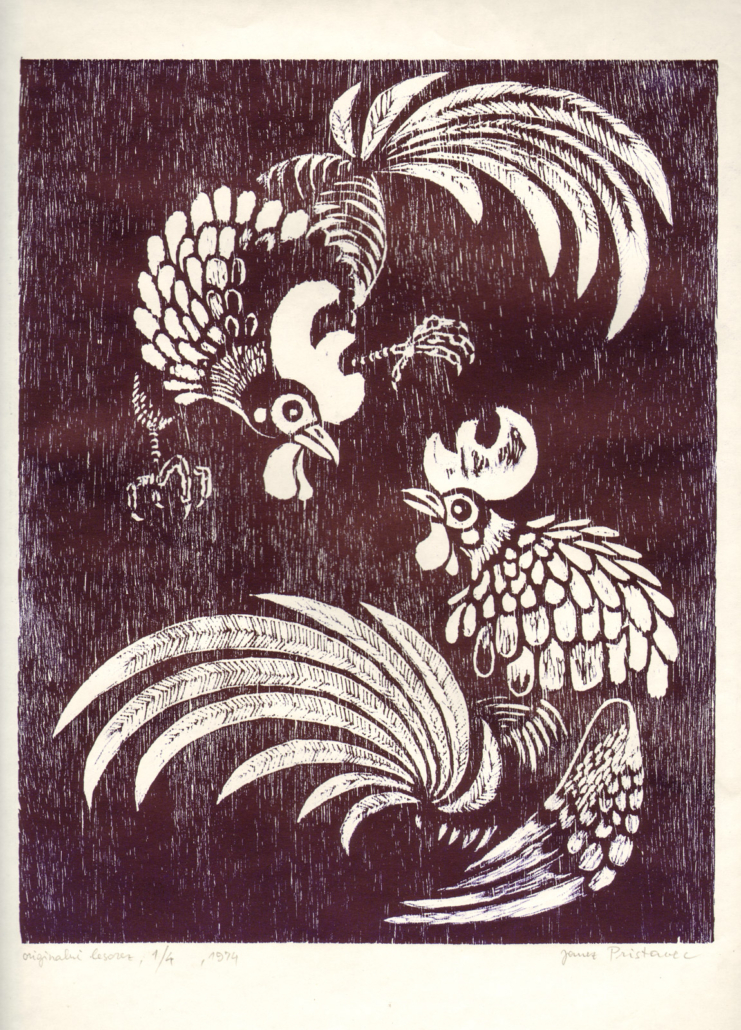
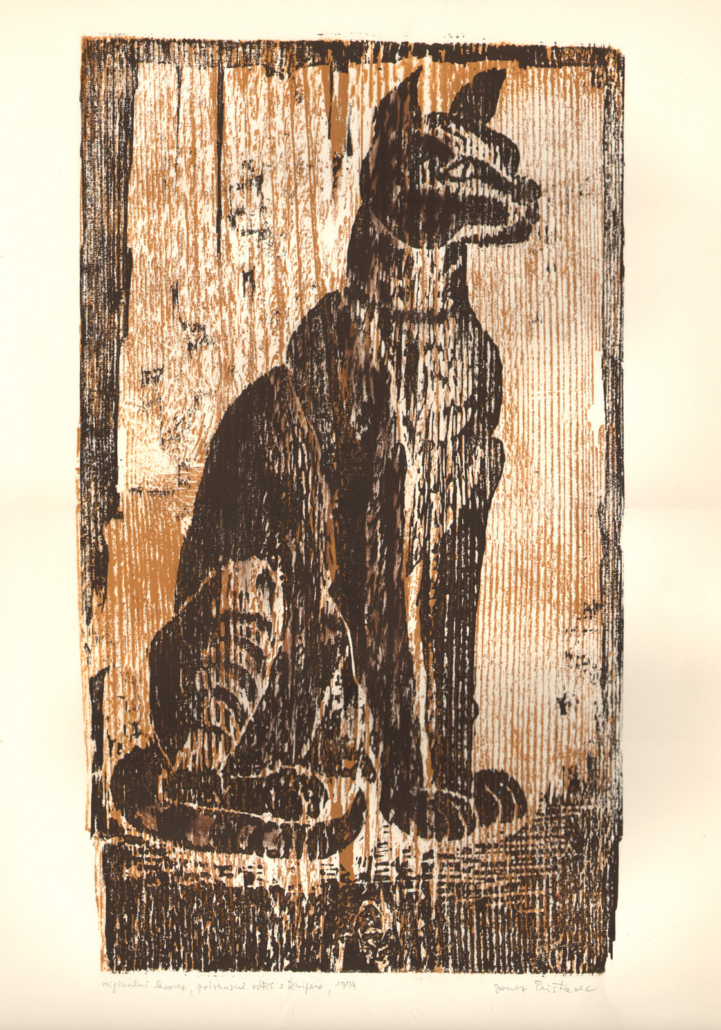
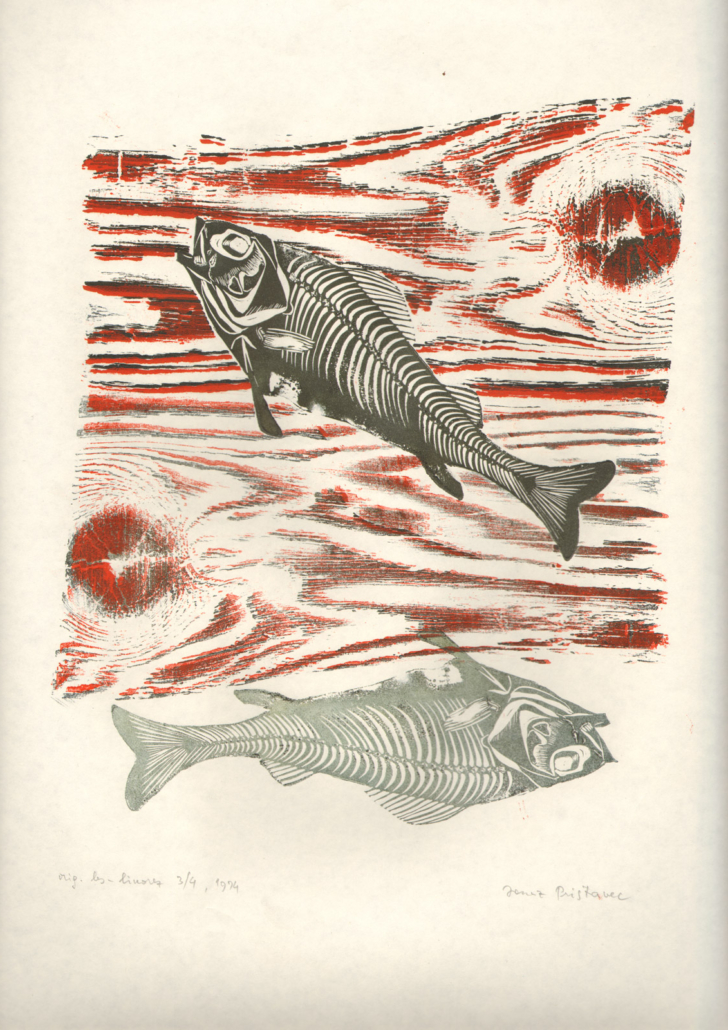
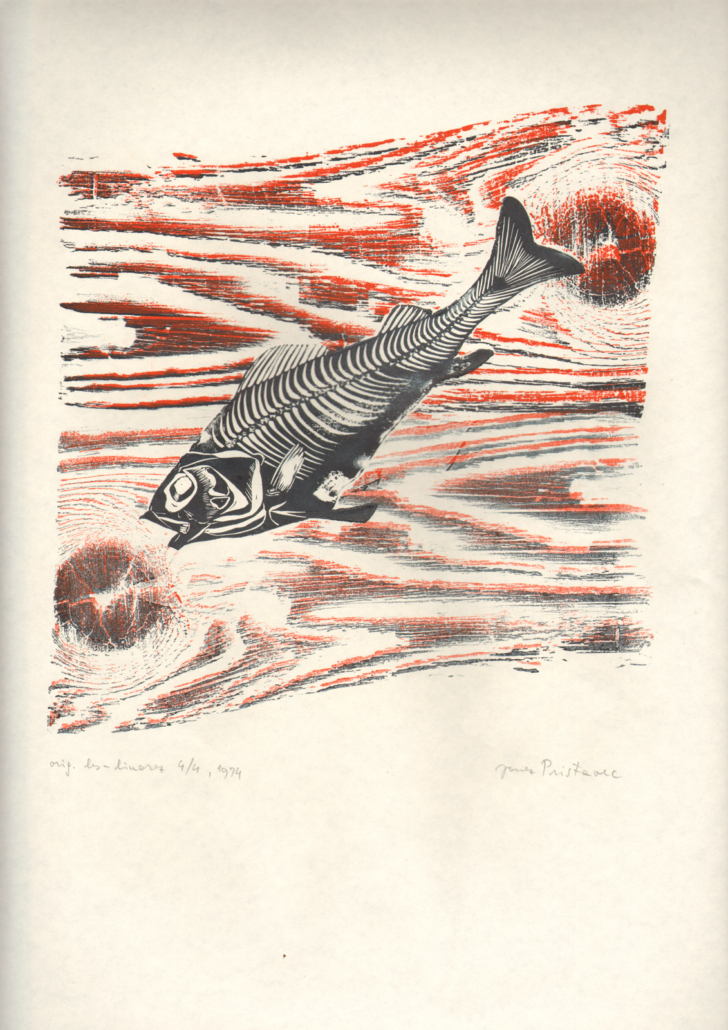
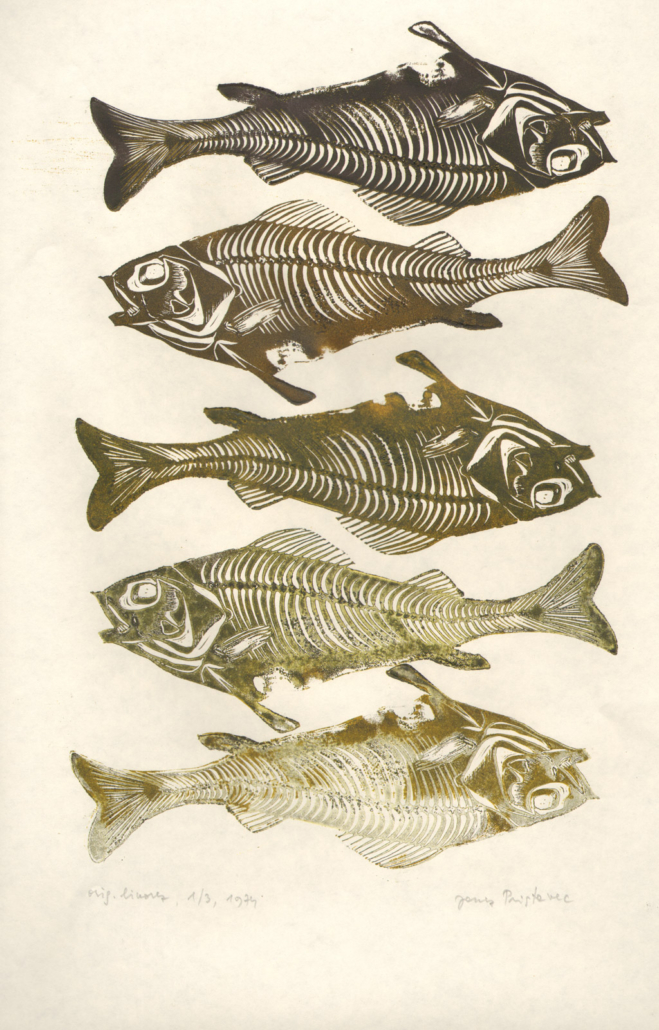
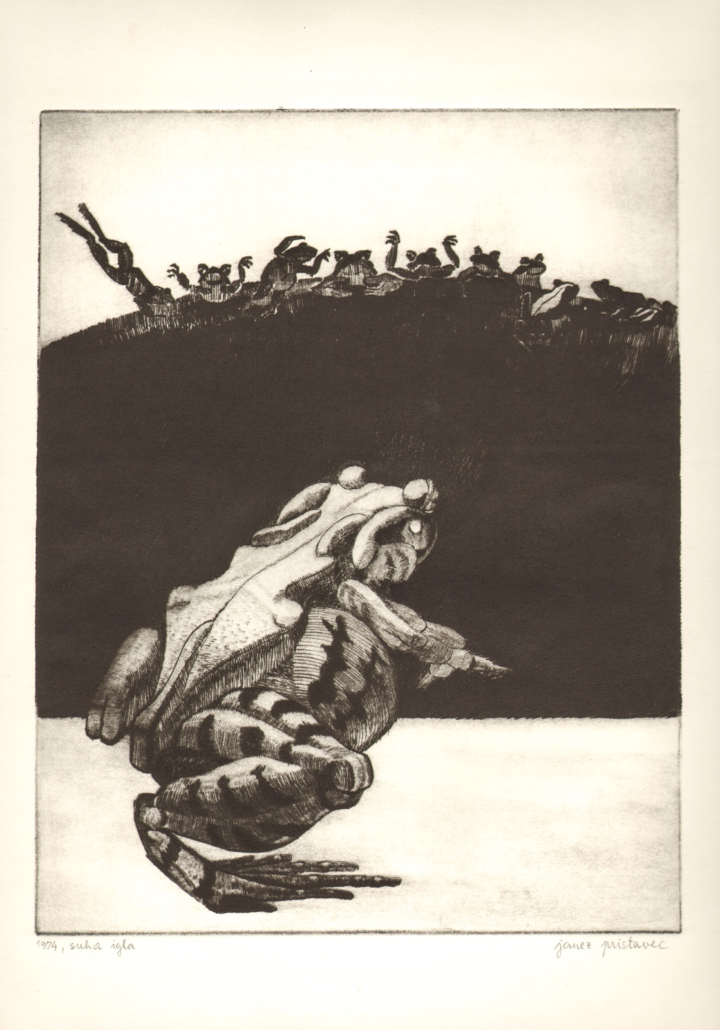
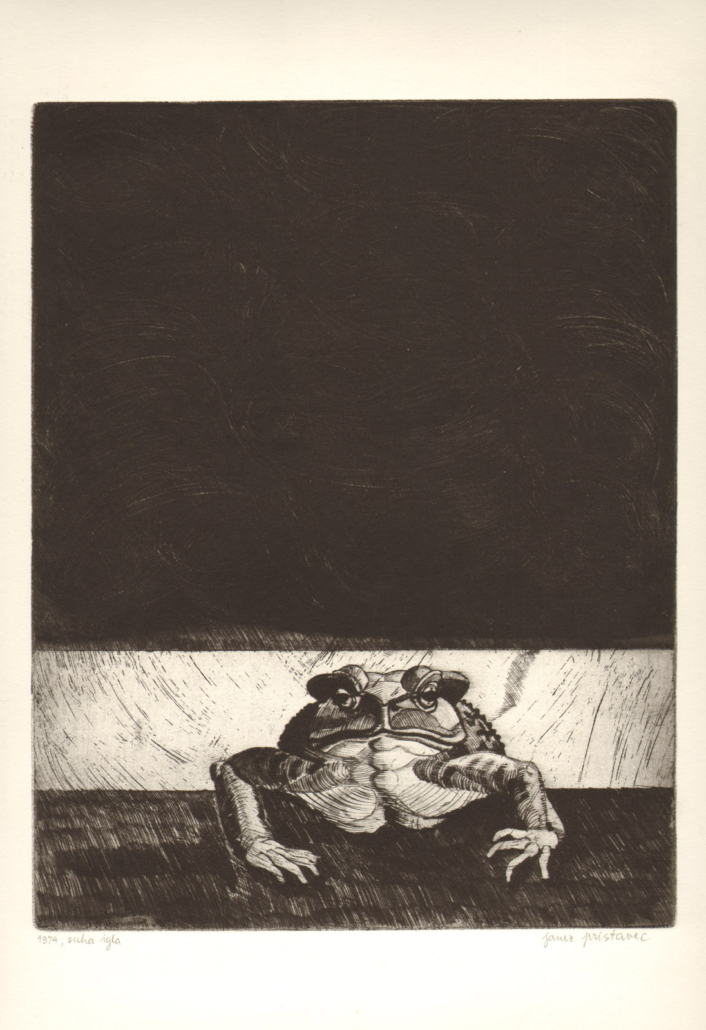
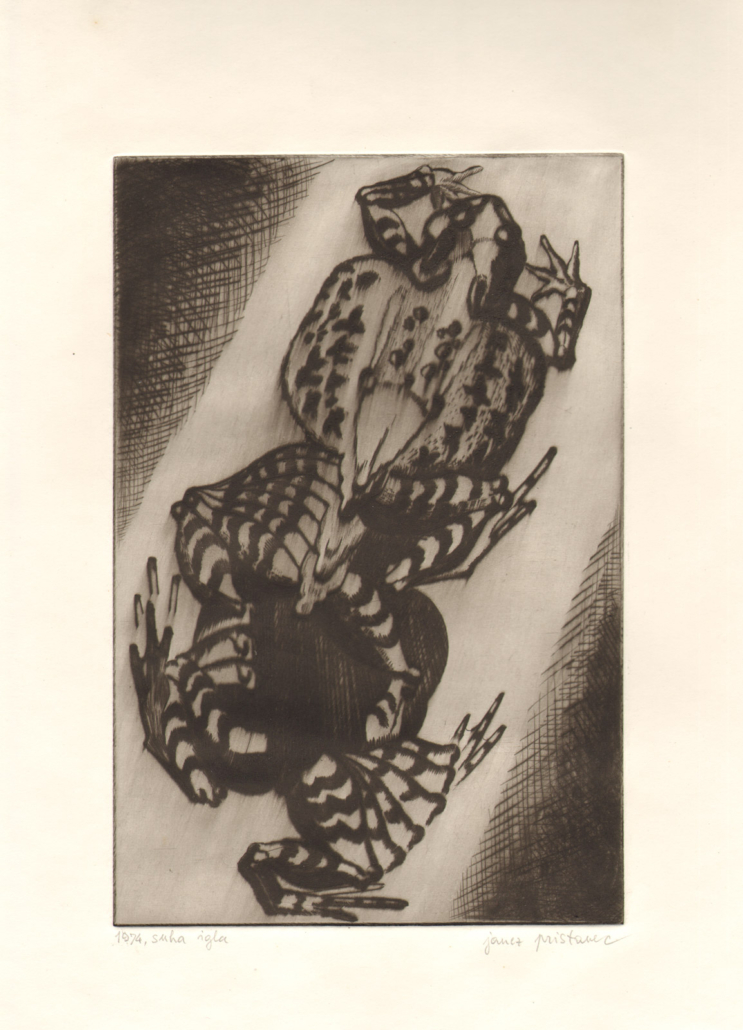
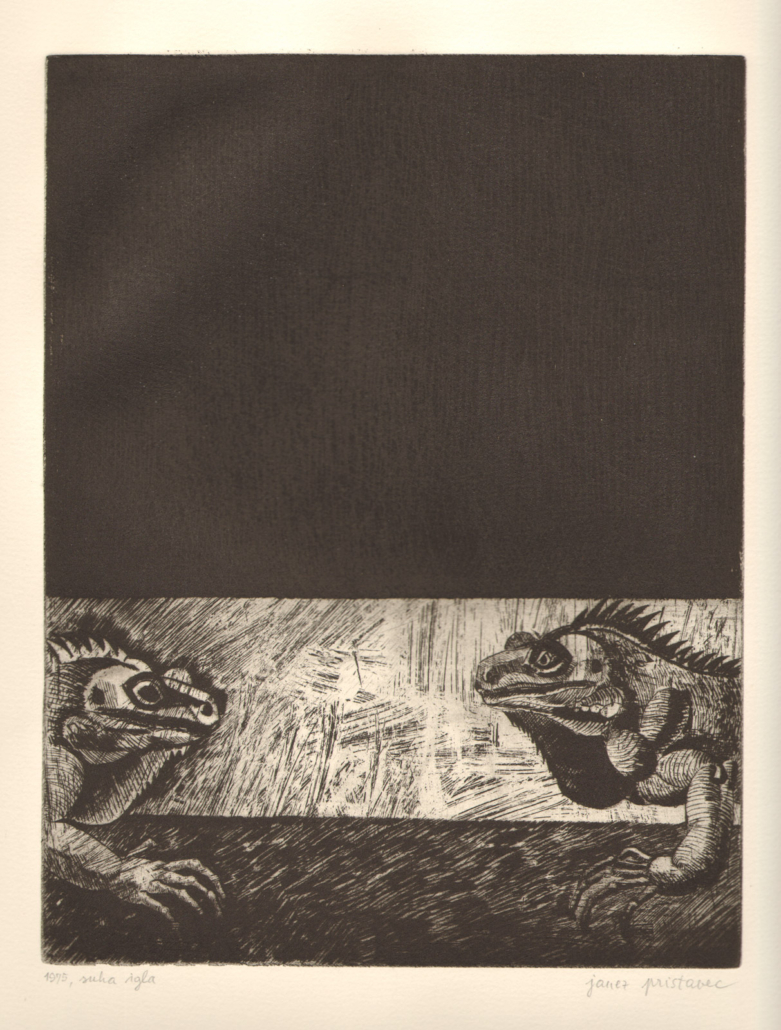
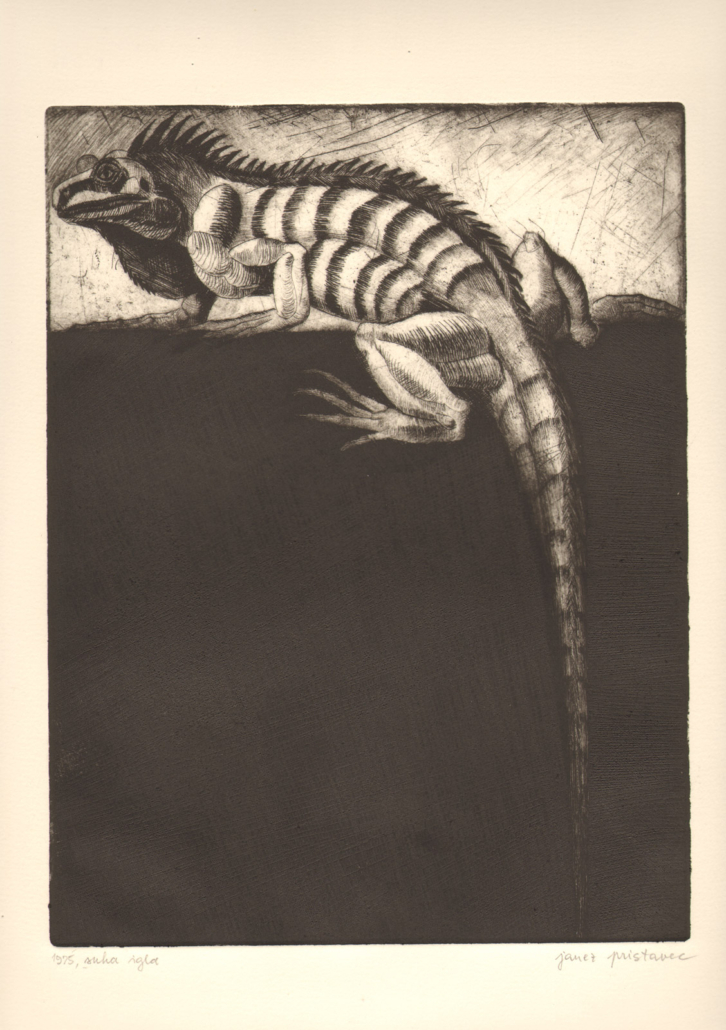
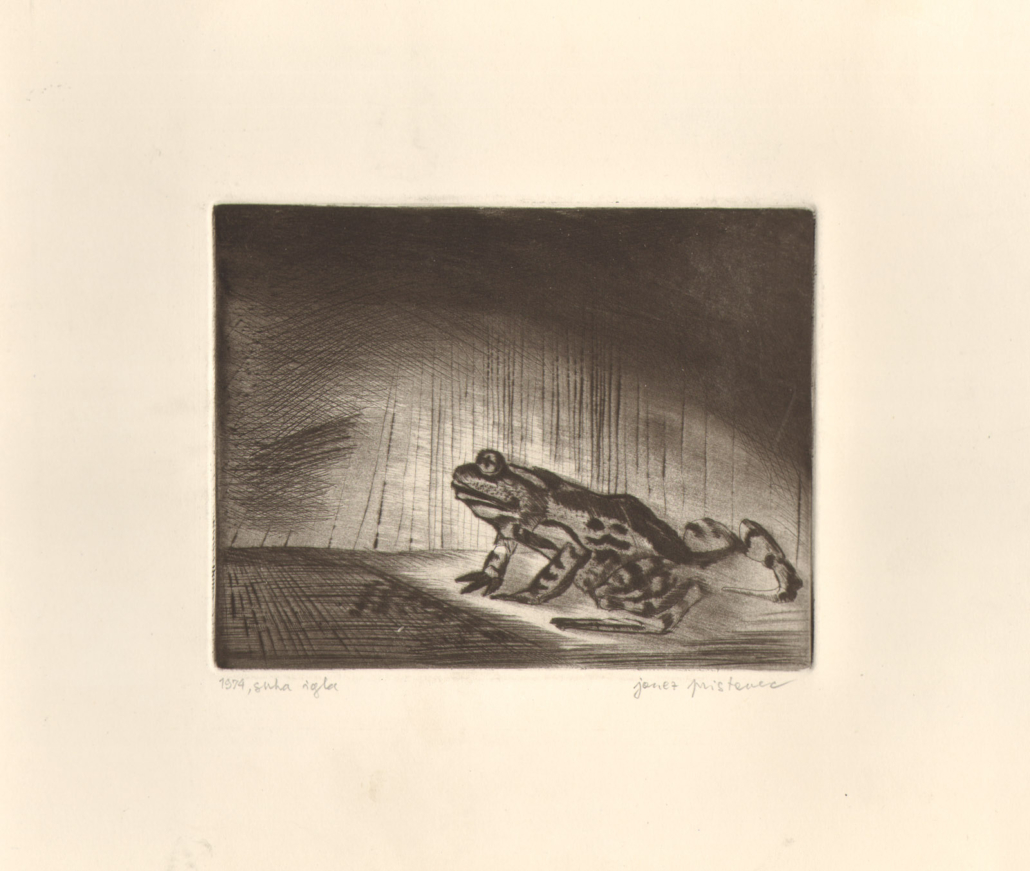
Between 1974 and 1976, printmaking became a particularly active field of technical and formal experiment. Pristavec worked across several processes whose material differences generated distinct pictorial languages. The resistance of wood and linoleum encouraged simplification and strong contrasts; drypoint produced a more intimate, sensitive and sometimes darker line; lithography retained the immediacy of drawing; and screenprint allowed colour to be organised into independent, sharply separated fields.
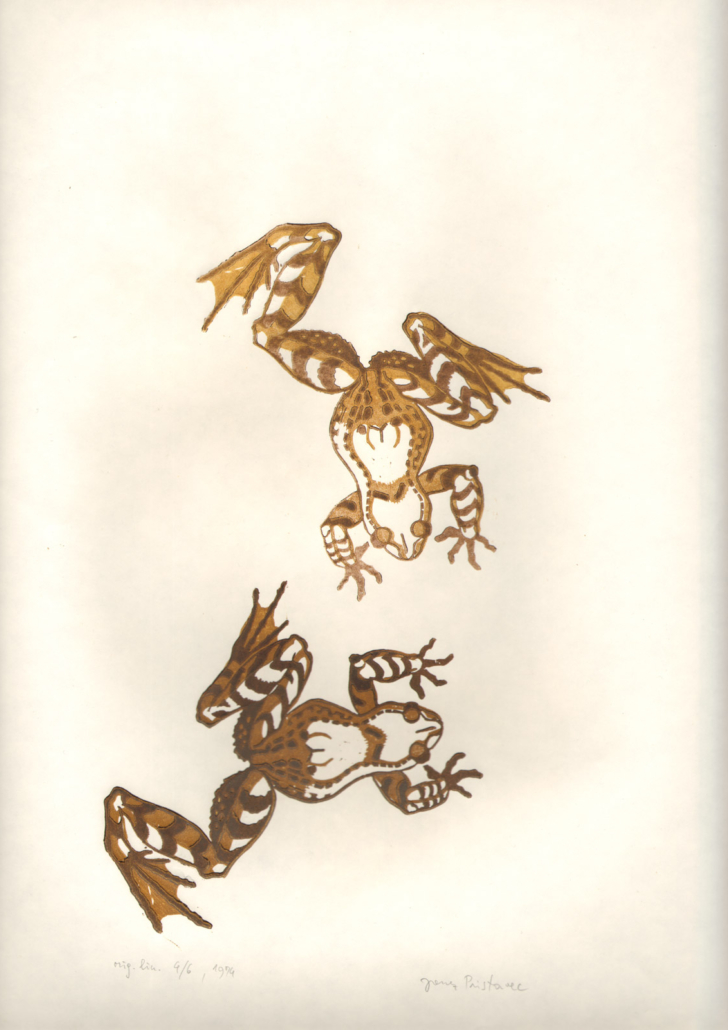
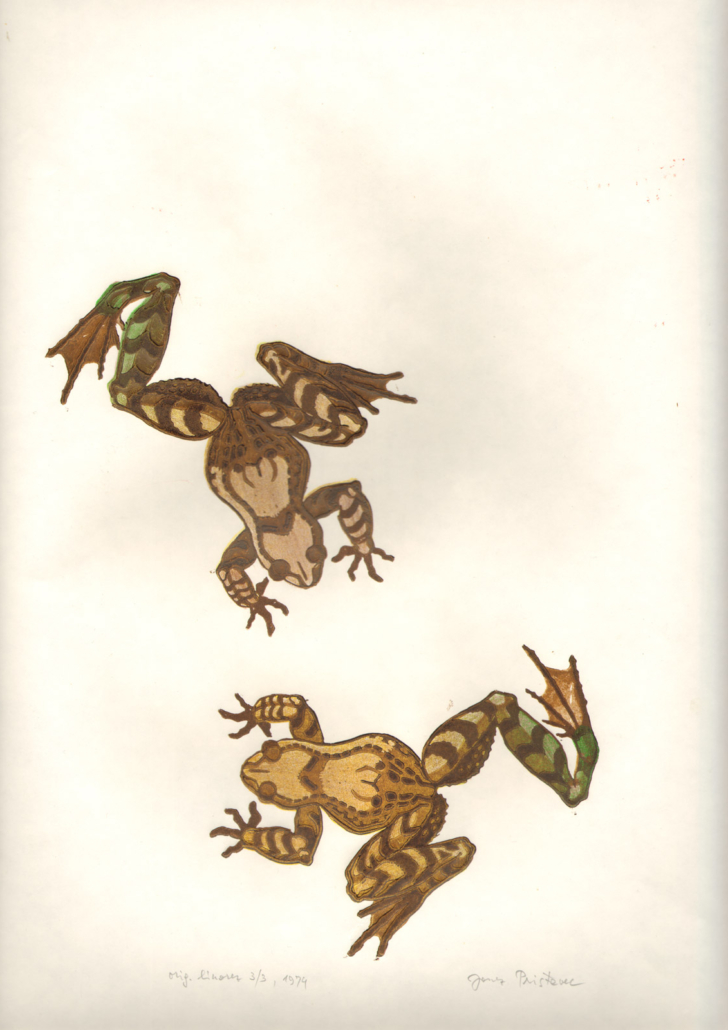
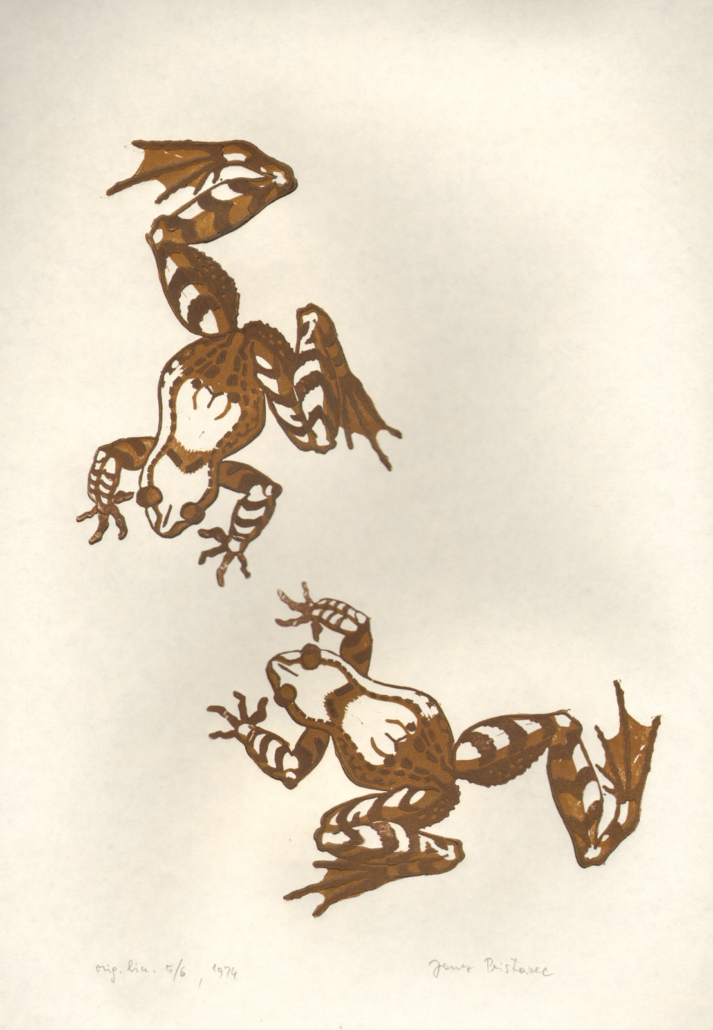
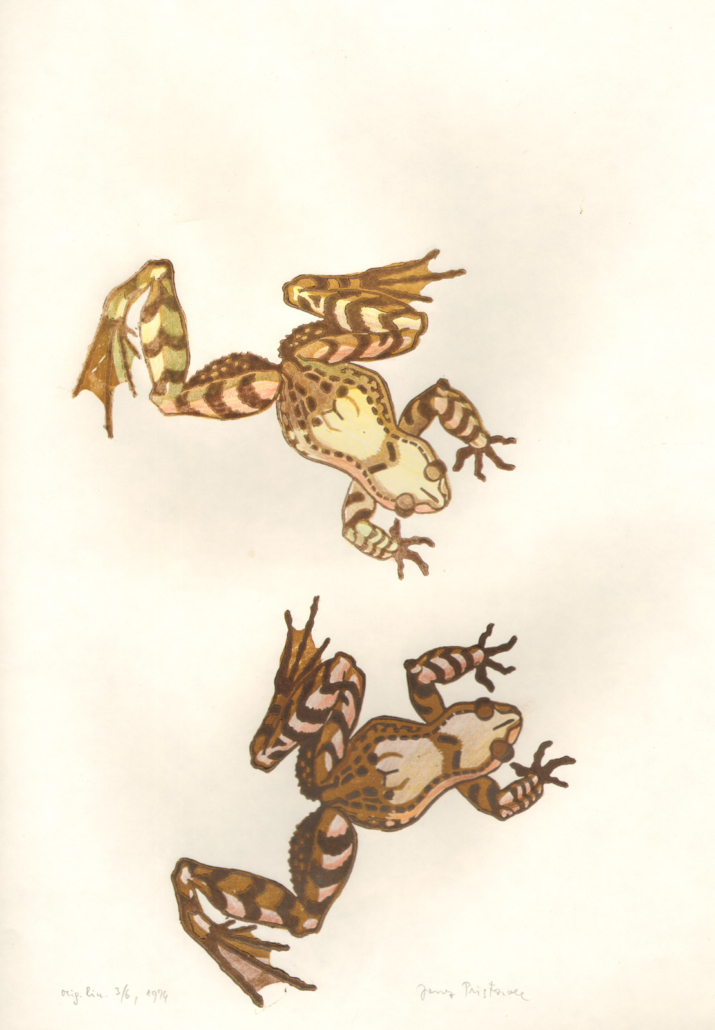
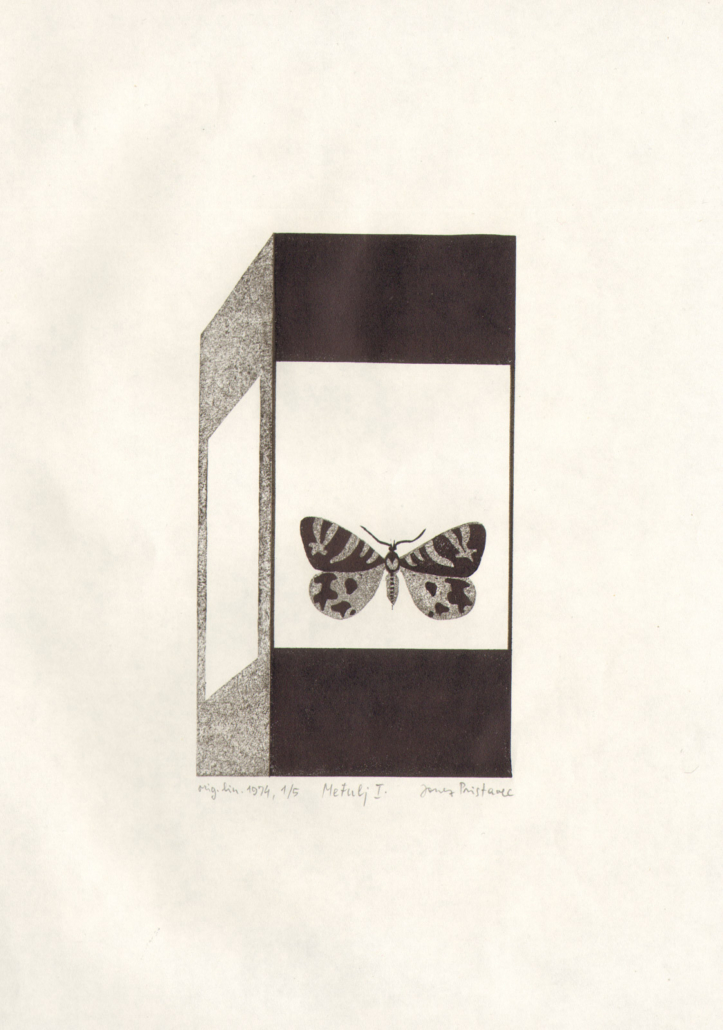
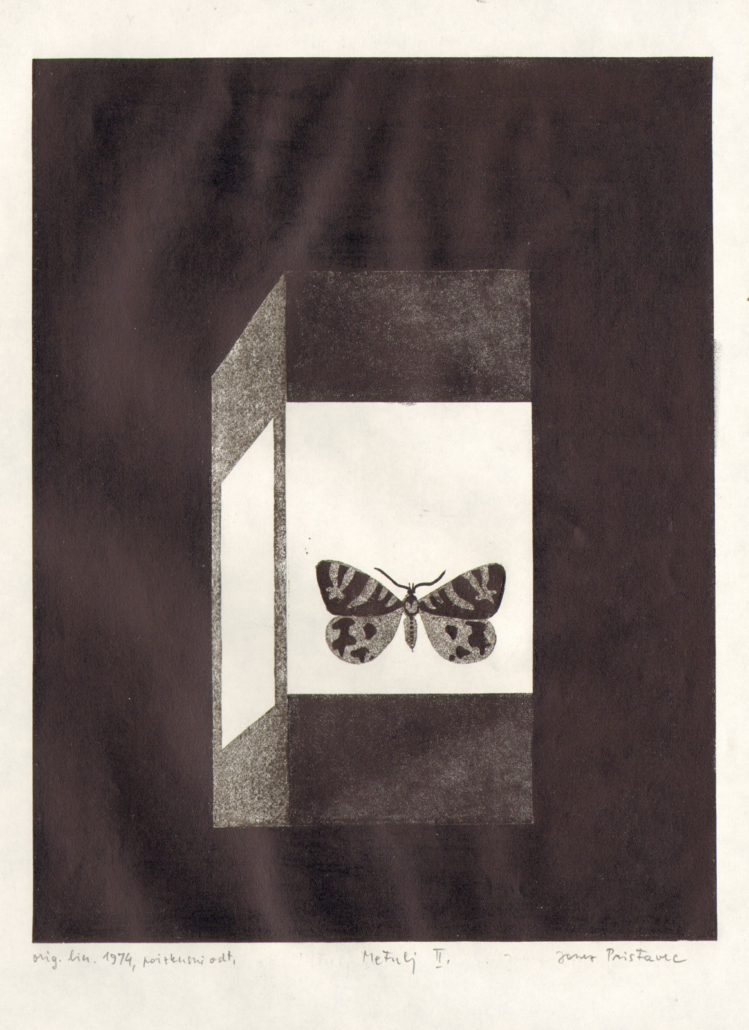
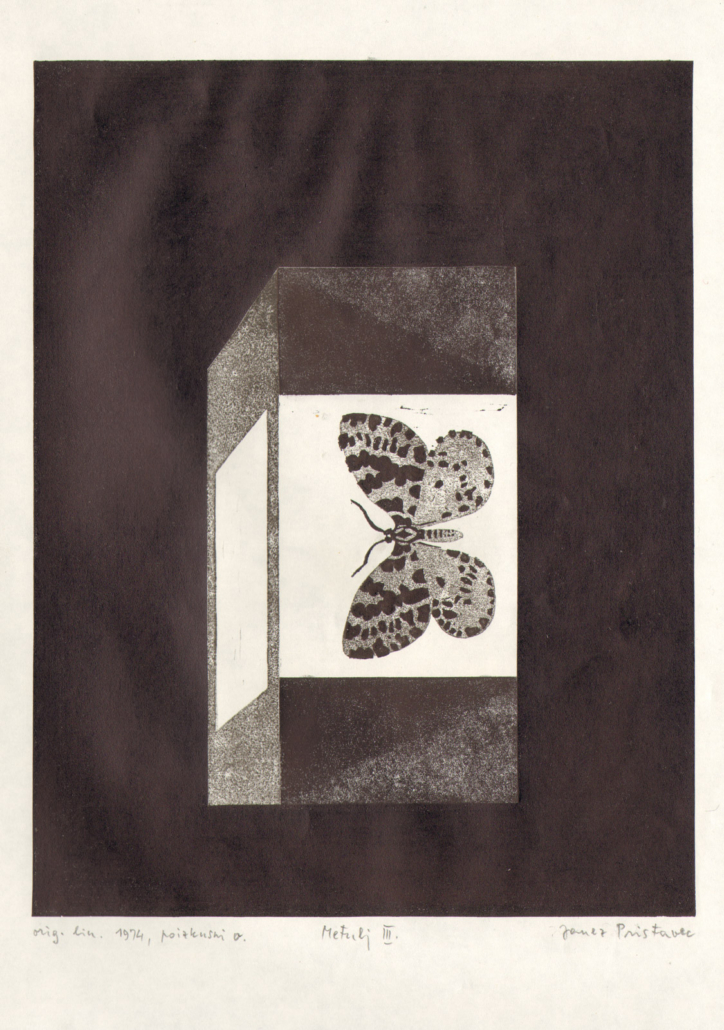
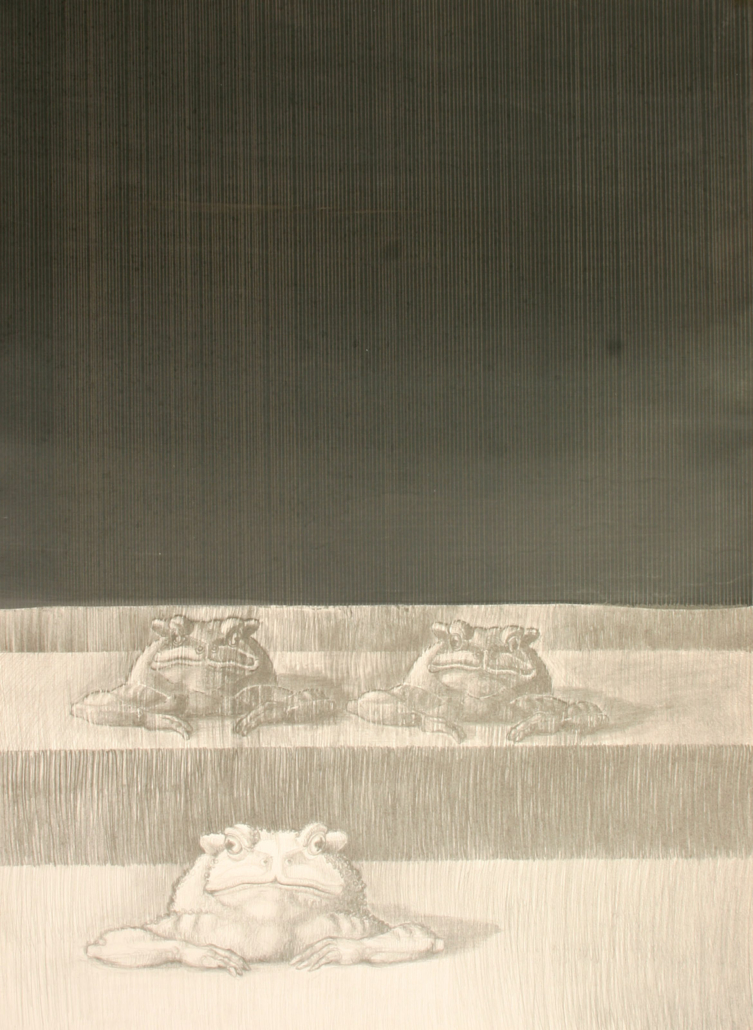
The diversity of techniques is matched by an equally broad range of motifs. Human figures, animals, amphibians, fish, insects, plants and increasingly abstract structures appear in numerous variations. A motif is rarely treated as a fixed illustration. It becomes a starting point for testing changes in scale, orientation, contrast, colour and the distribution of positive and negative space.
Repetition is therefore essential to this body of work. A matrix makes it possible to return to the same image, yet no two visual situations need to be identical. Changes in ink, paper, colour or additional intervention can alter the balance and atmosphere of an impression. The related versions preserved in the archive show Pristavec thinking through variation: each new state retains the memory of the original matrix while opening another possible direction.
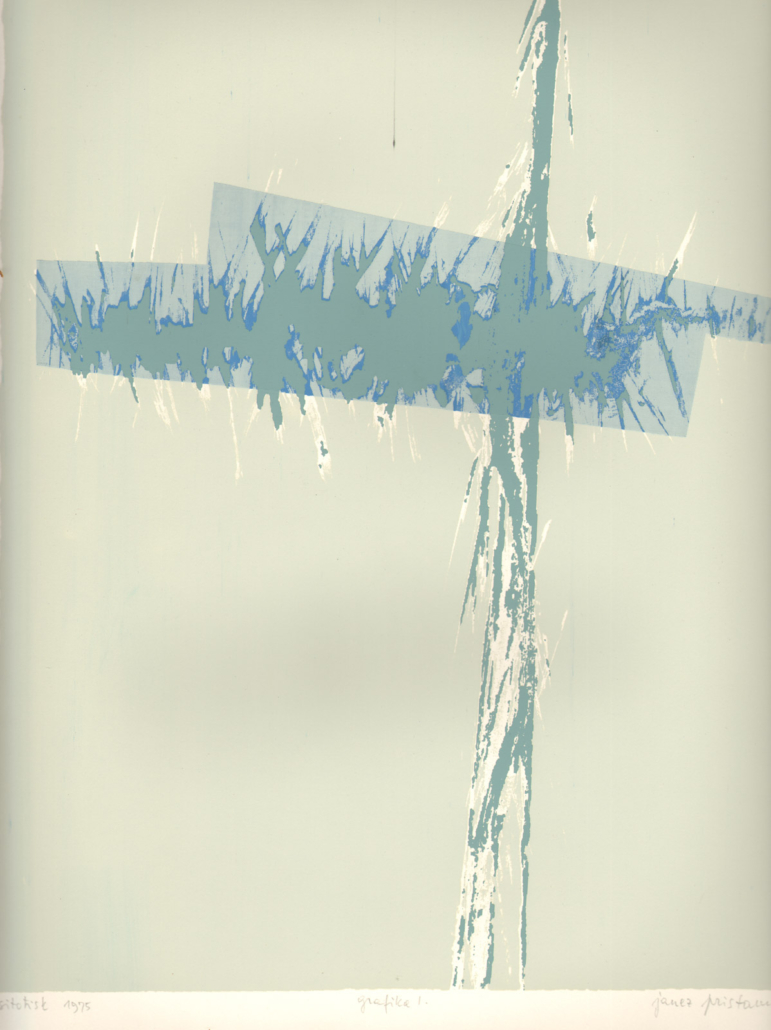
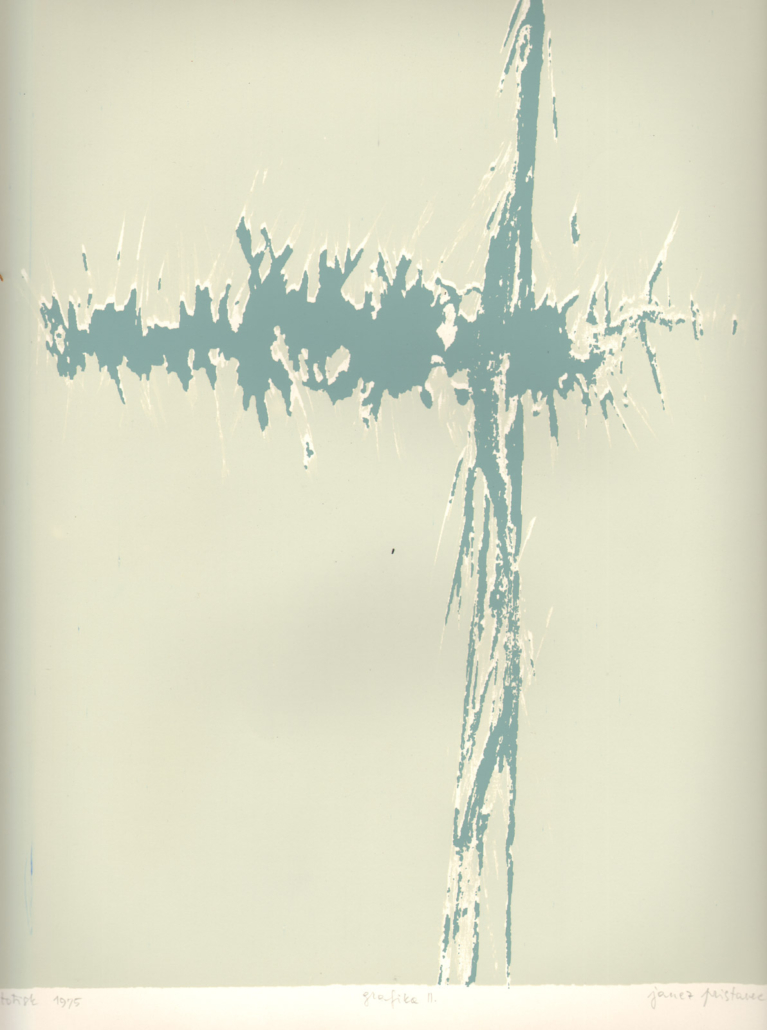
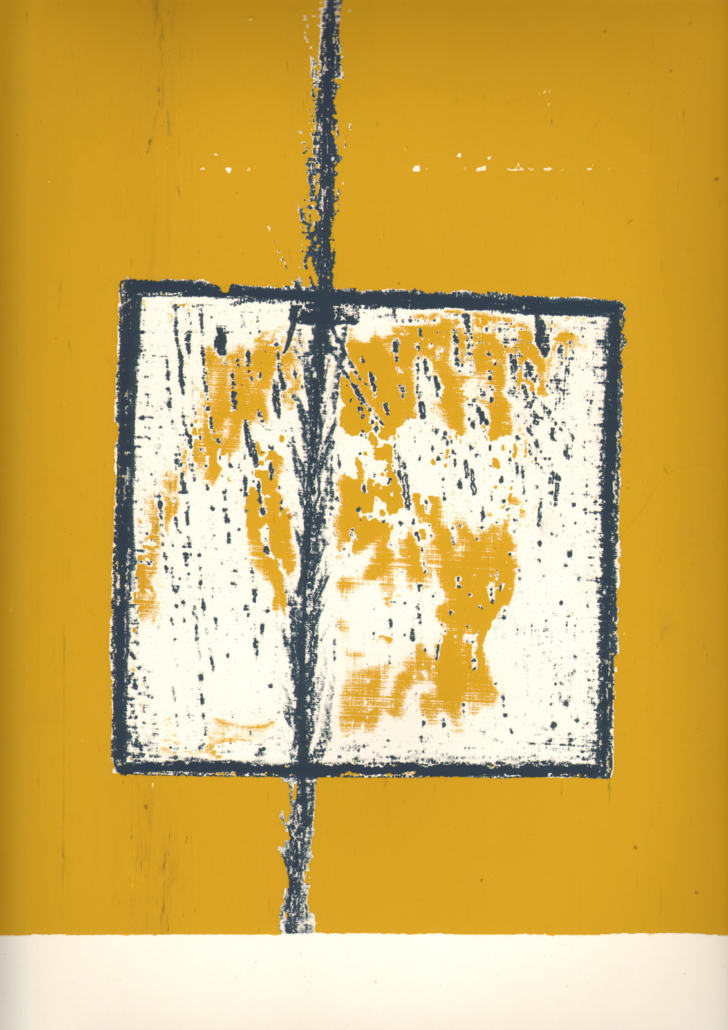
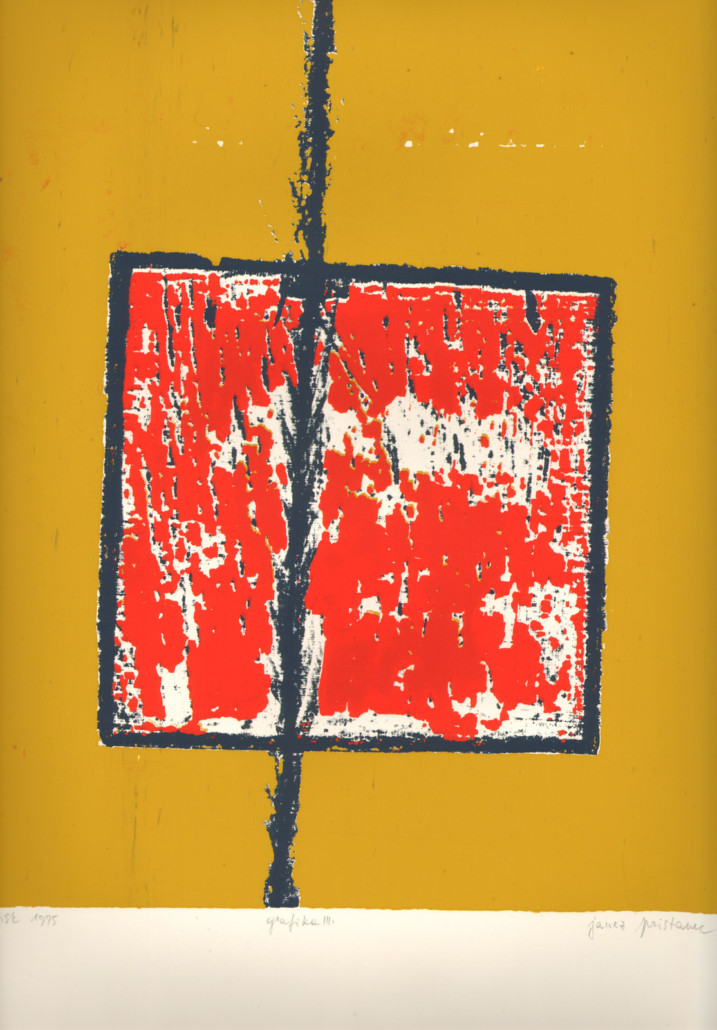
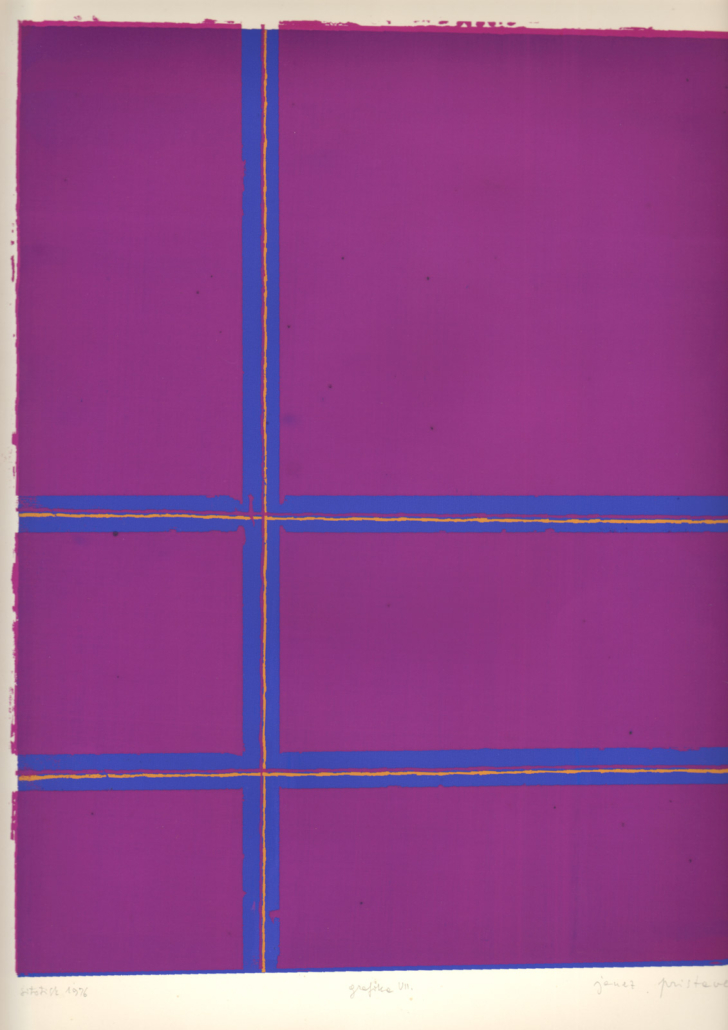
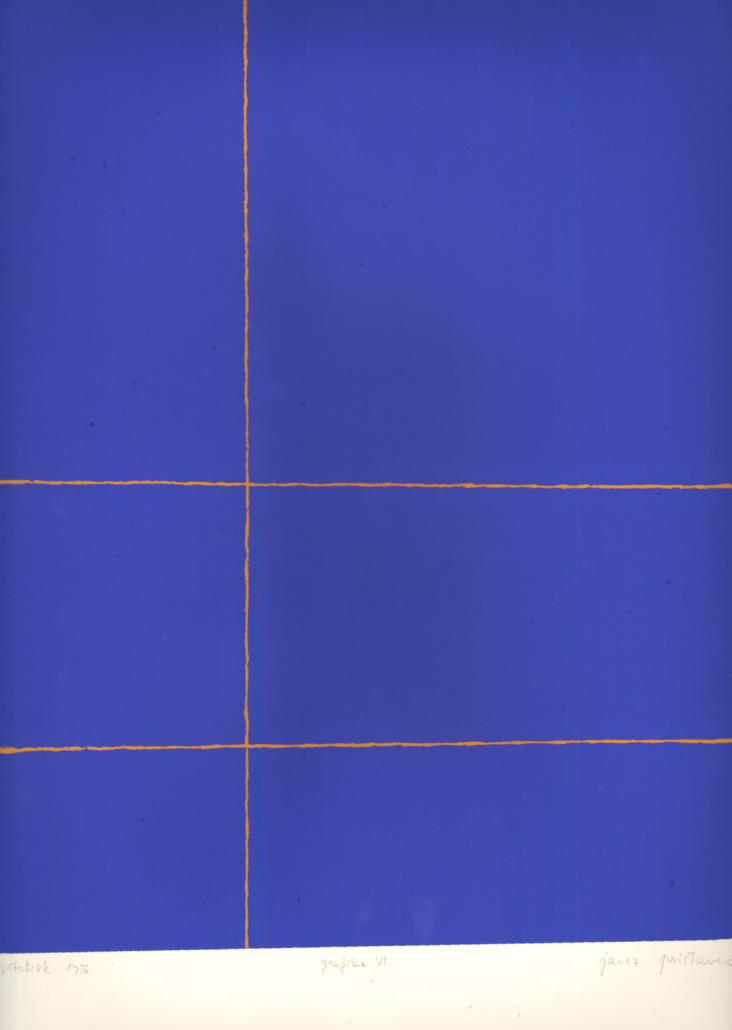
This principle becomes especially evident in the screenprints. Flat areas of colour are placed beside, over or against one another, while geometric divisions interrupt the continuity of the surface. Colour no longer serves only to describe a visible object. It begins to establish its own spatial and rhythmic relationships, connecting these prints with the abstract investigations that would become increasingly important elsewhere in Pristavec’s work.
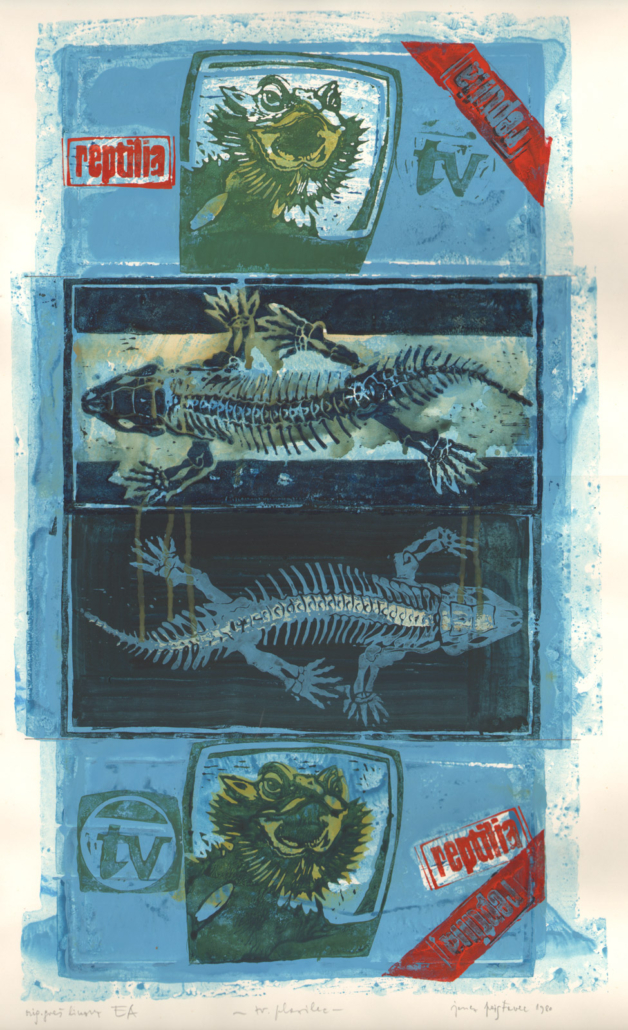
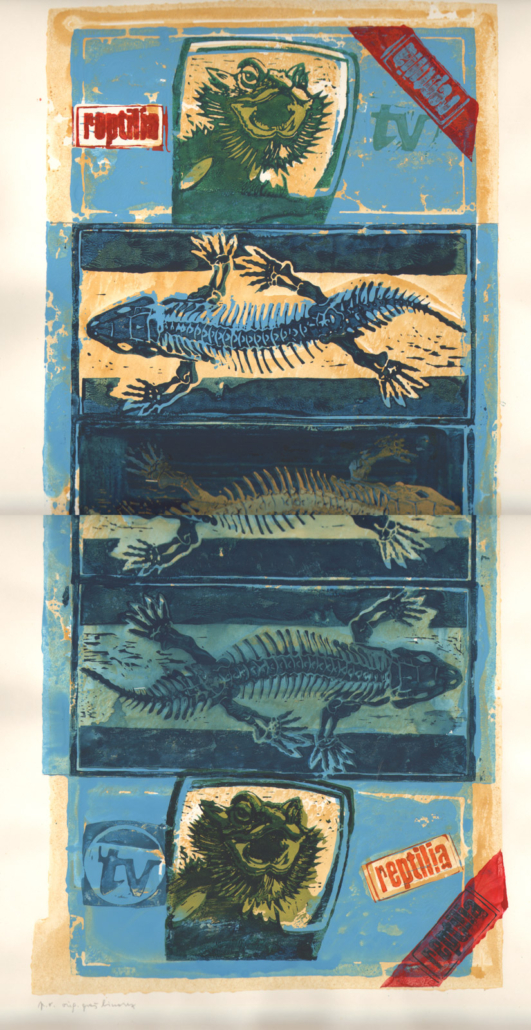
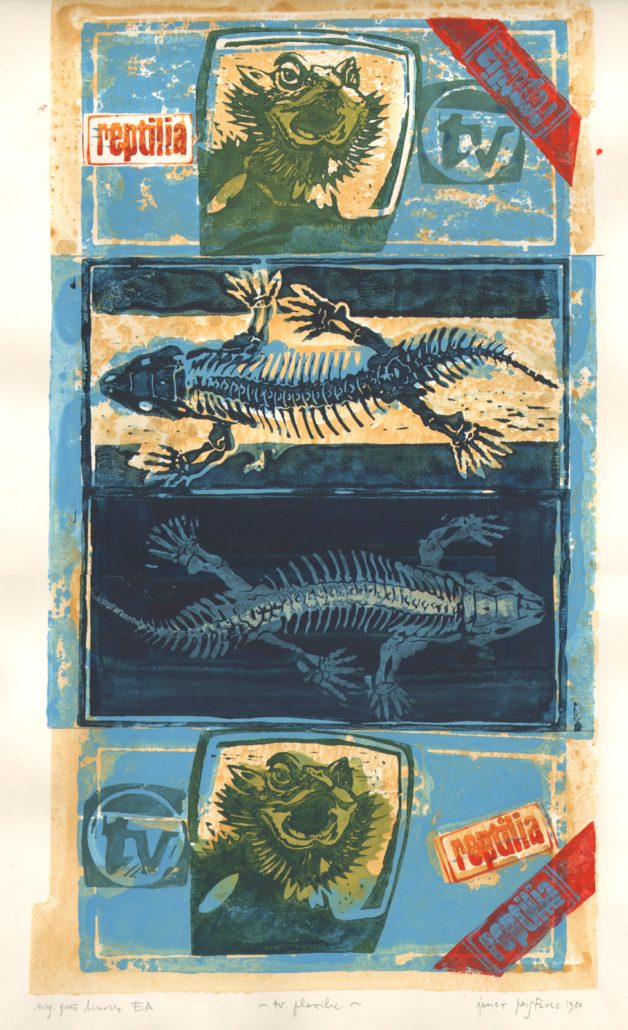
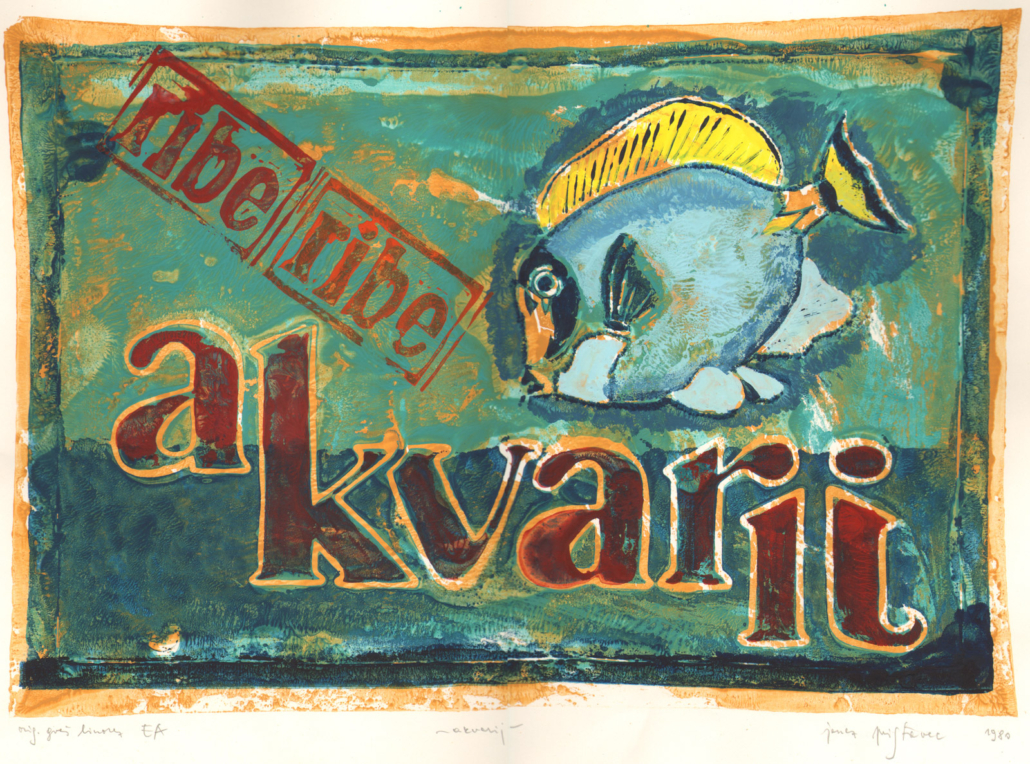
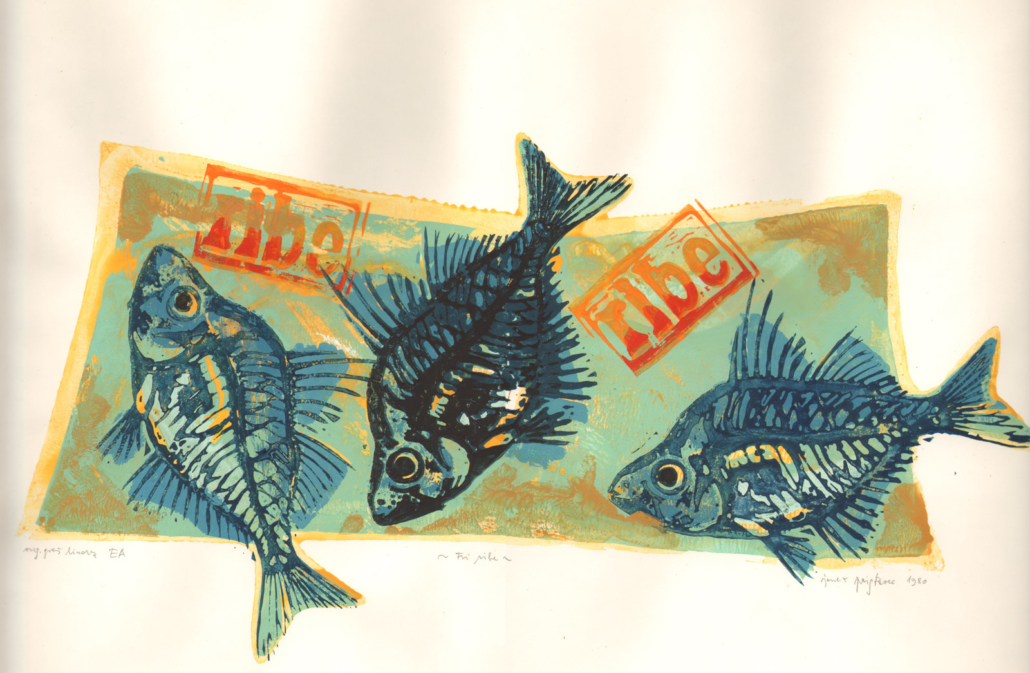
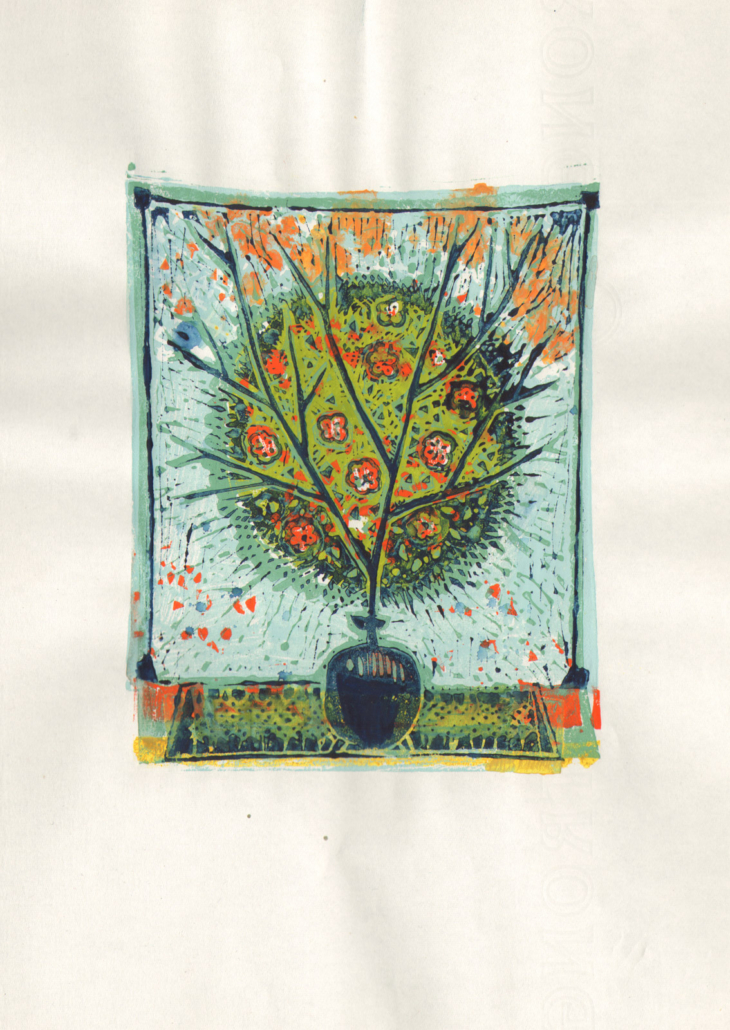
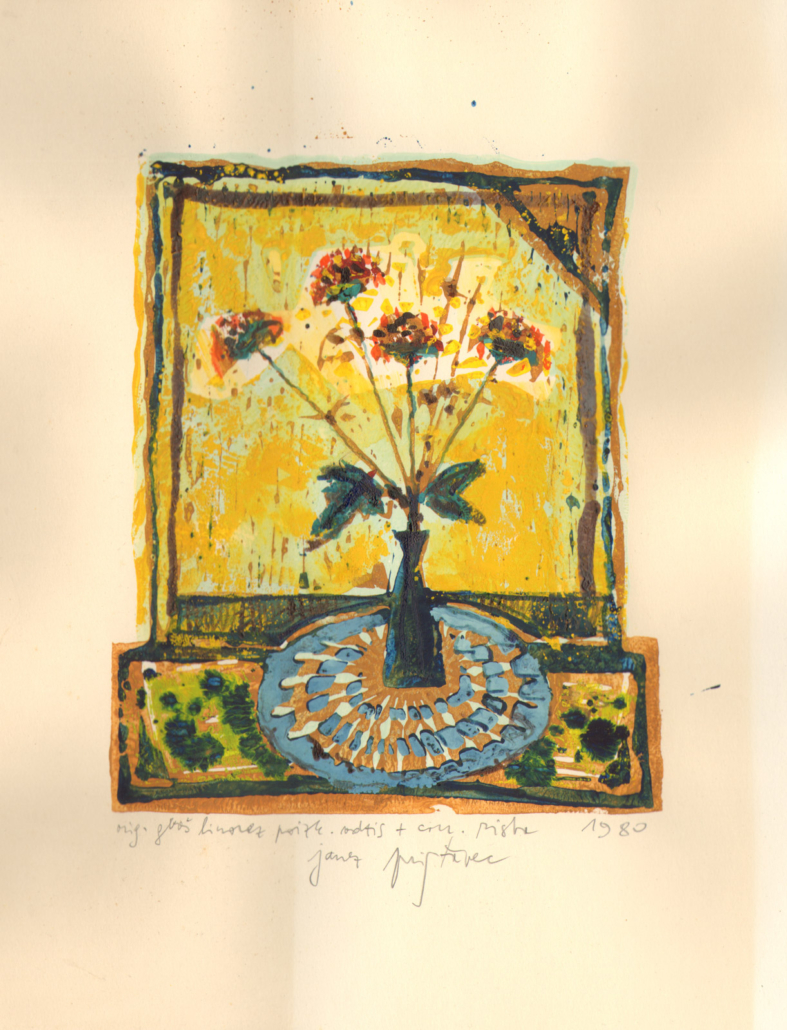
The works from 1980 mark another significant transformation. In several sheets, linocut is combined with gouache and other hand-applied colour. Printed structures representing fish, animal skeletons, flowers and related forms are surrounded, interrupted or partially covered by painterly interventions. The repeatable graphic matrix and the unique gesture of the brush coexist within a single work.
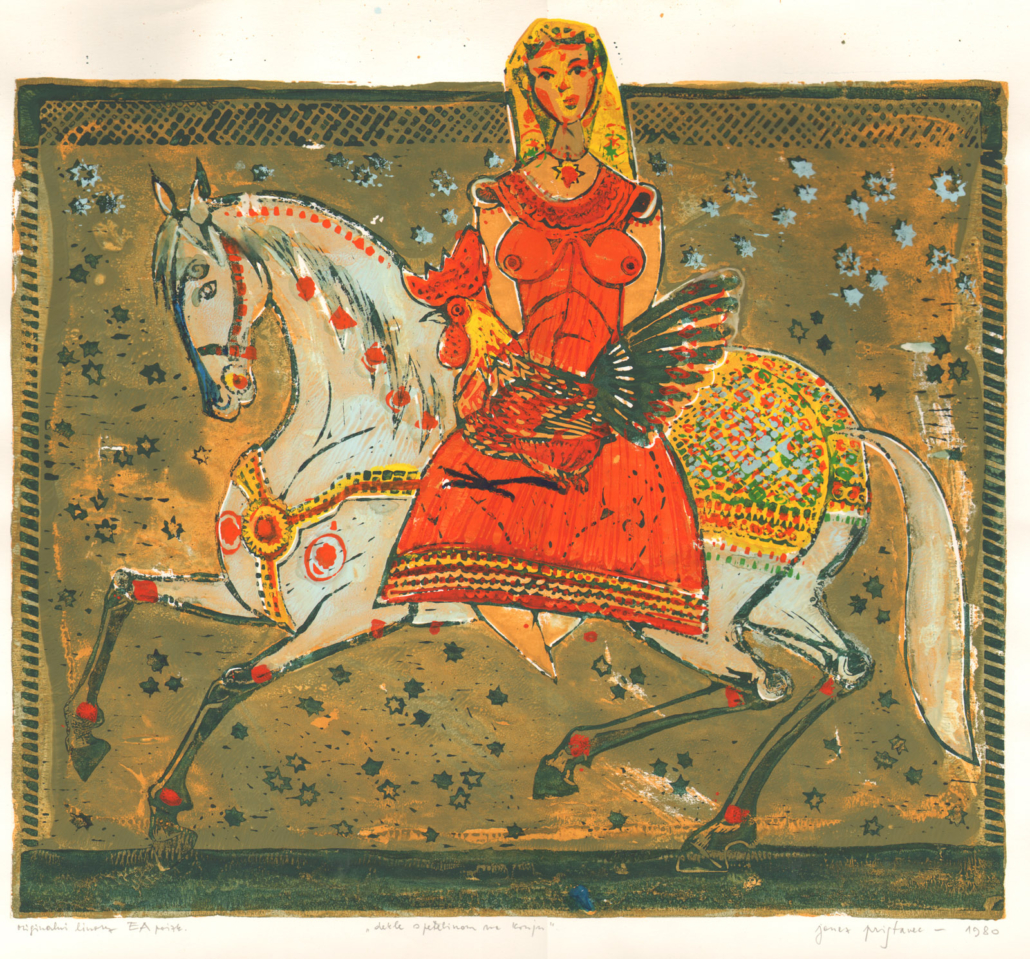
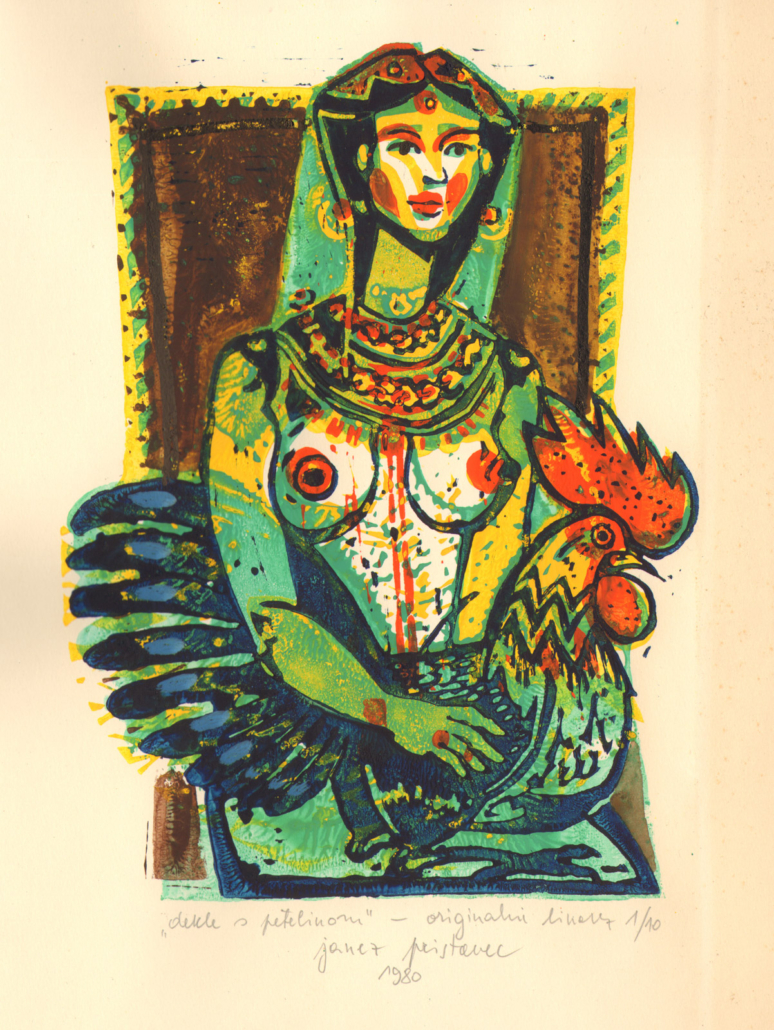
The colour linocuts of female figures similarly extend the traditional relationship between line and surface. Strong contours organise the body, while broad colour areas intensify, divide or partially detach it from naturalistic description. These works stand close to Pristavec’s contemporary figures and nudes on paper, demonstrating how discoveries made through printmaking could pass into painting and drawing.
Pristavec’s prints should therefore not be understood merely as preliminary exercises or as a secondary field beside his paintings. They constitute an autonomous investigation of how an image is created through pressure, incision, reversal, transfer and repetition. At the same time, they form an important bridge between the disciplined observation of his earliest works, the analytical experimentation of his Academy years and the increasingly independent use of colour and gesture around 1980.
Taken together, the prints reveal the matrix as both a physical object and a method of thought. A form can be simplified, reversed, repeated, fragmented and combined with new interventions. Through this process, printmaking became one of the places in which Pristavec most clearly explored the transformation of an observed motif into an independent pictorial structure.

I. FORMATIVE PRINTS, 1967–1973
From Observed Nature to Constructed Space
The earliest prints demonstrate Pristavec’s rapid development from the direct observation of nature and architecture towards a more deliberately constructed pictorial language. In the works from 1967 to 1970, forests, winter scenes, birds and urban motifs are translated into compact black-and-white compositions. The limited means of relief printing encourage clarity: individual details are subordinated to silhouette, rhythm and the balance between printed and untouched areas.
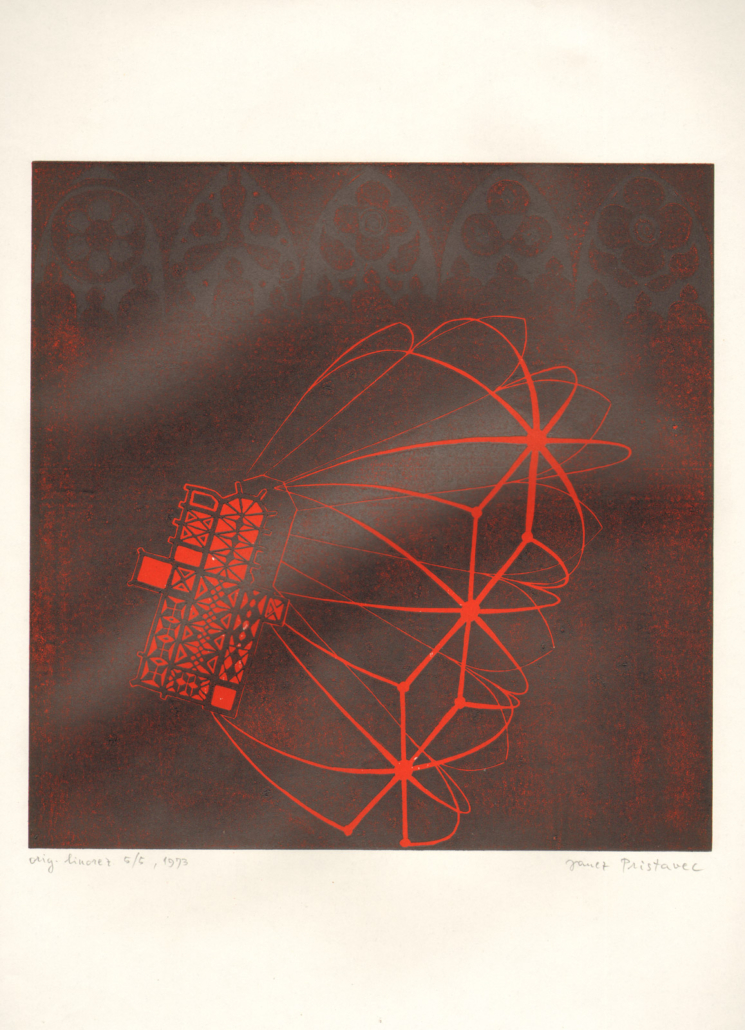
The works created between 1971 and 1973 introduce a more pronounced geometric order. Architectural and industrial associations remain perceptible, but space is increasingly divided into planes, axes and sharply bounded forms. This transition does not represent a simple rejection of observation. Instead, Pristavec begins to uncover and reconstruct the organising structures that he perceived beneath the visible appearance of a place.
Early Prints: Nature and the City, 1967–1970
Geometry and Constructed Space, 1971–1973
II. ACADEMY AND TECHNICAL EXPERIMENT, 1974–1976
The Printed Image as a Laboratory
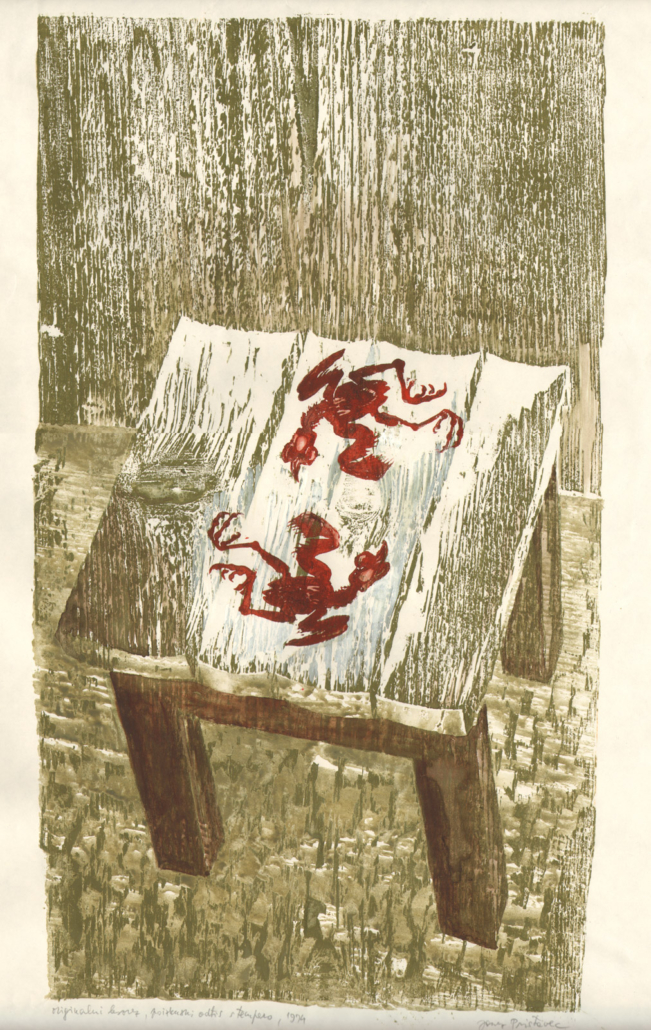
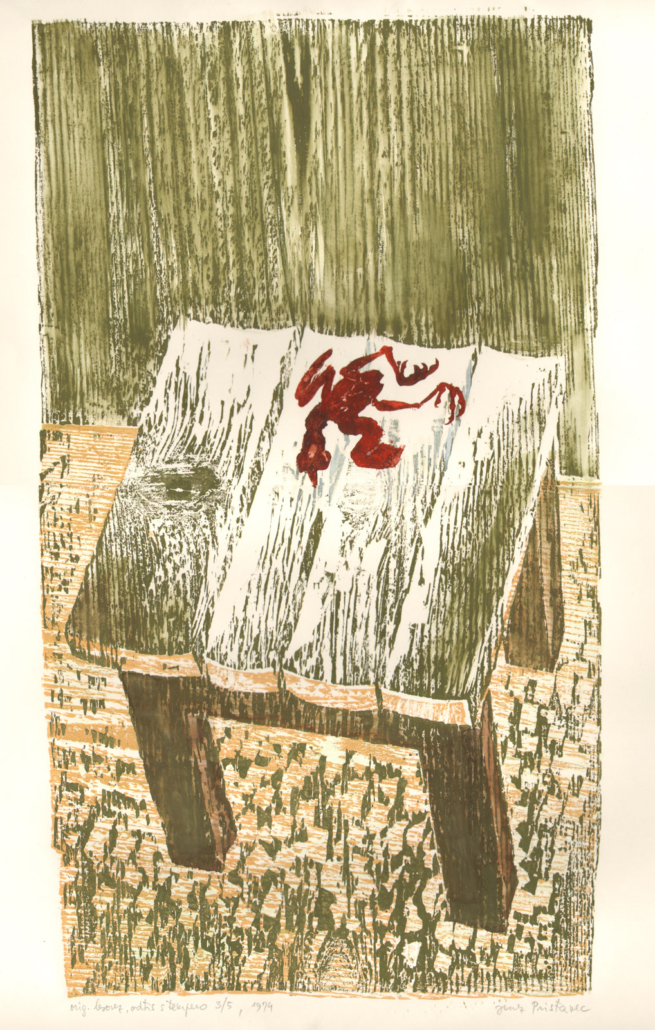
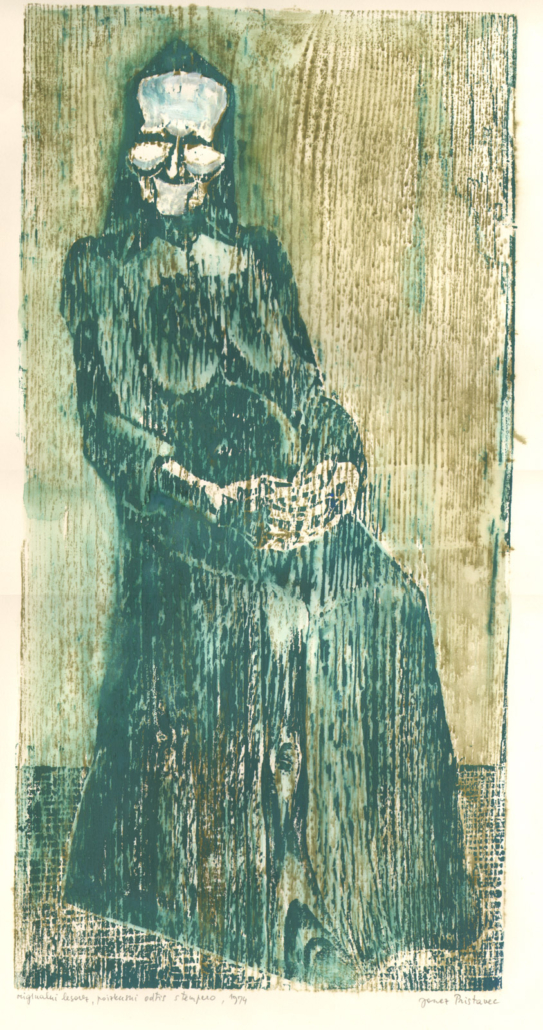
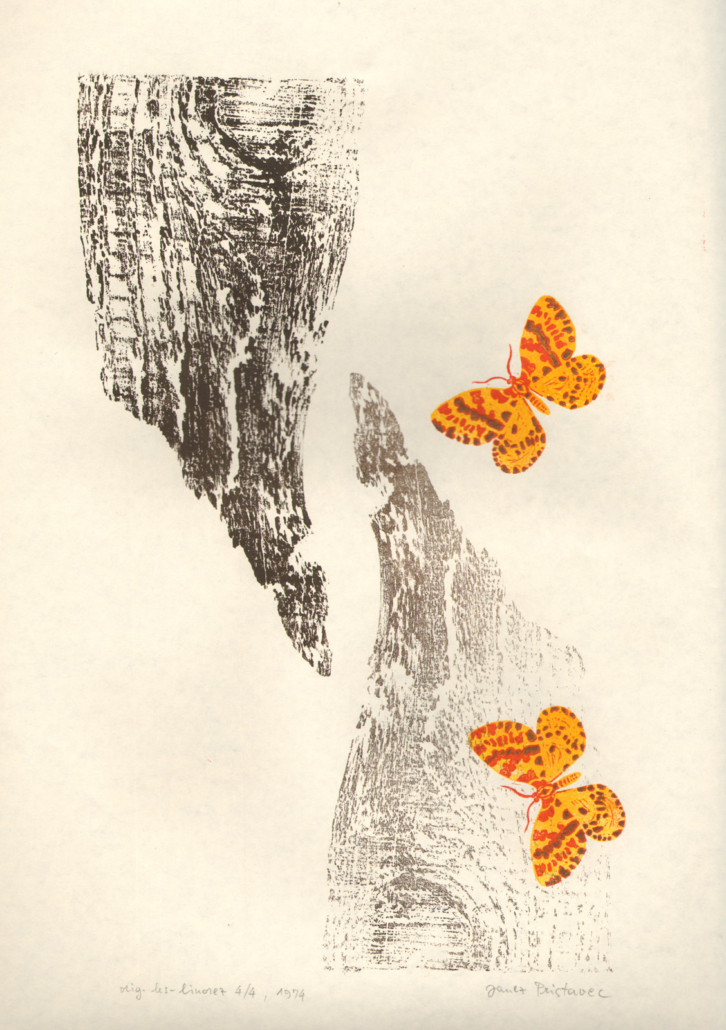
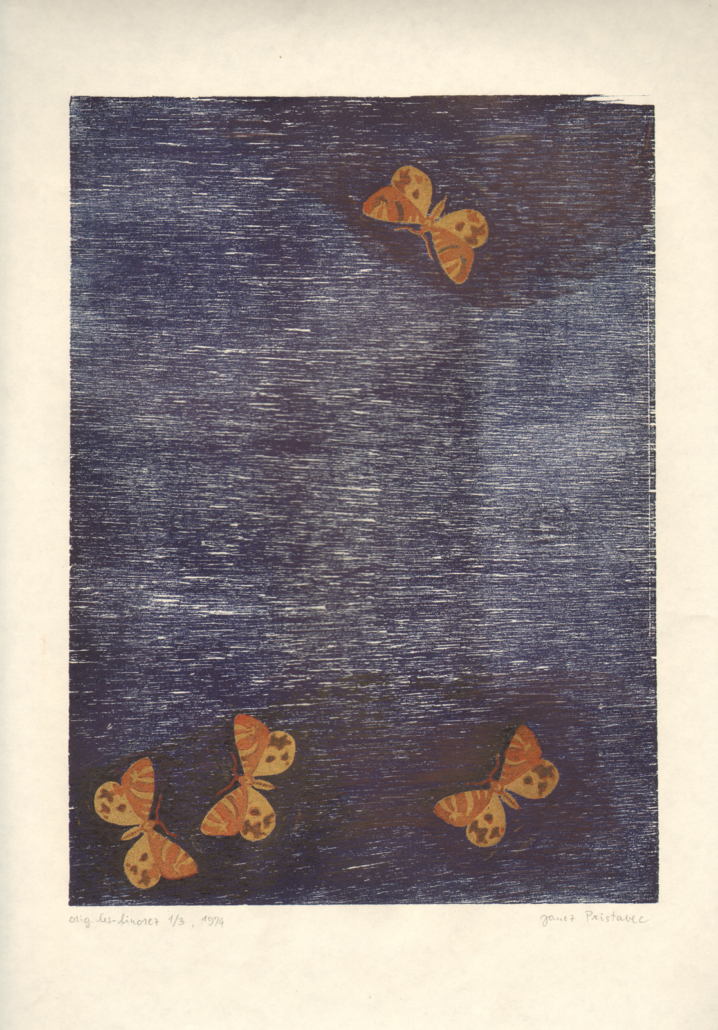
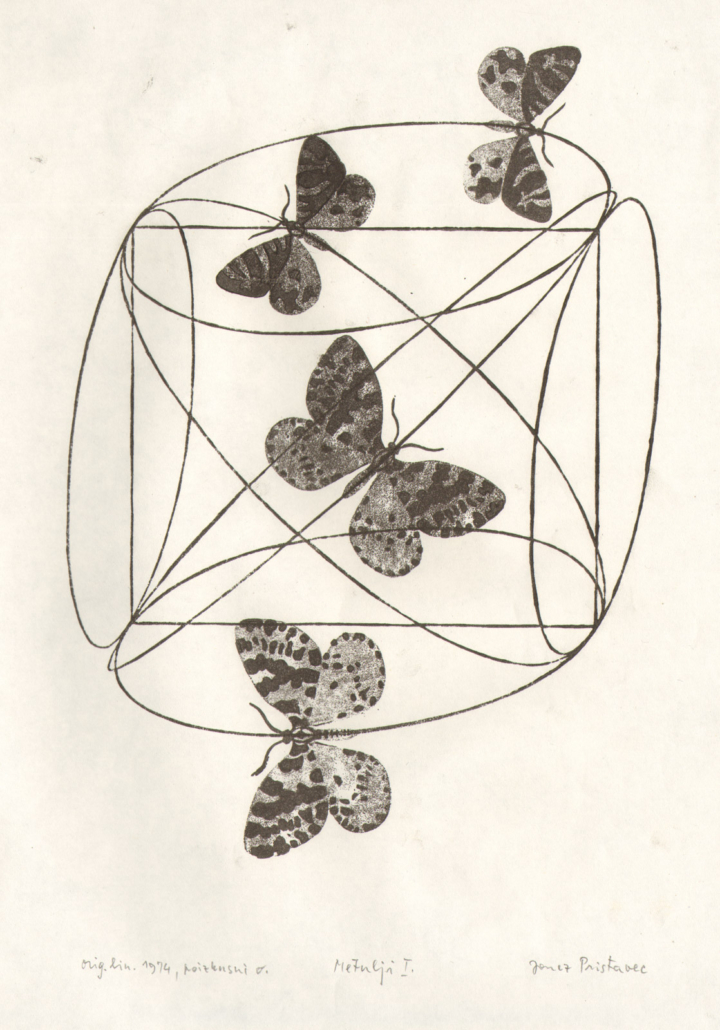
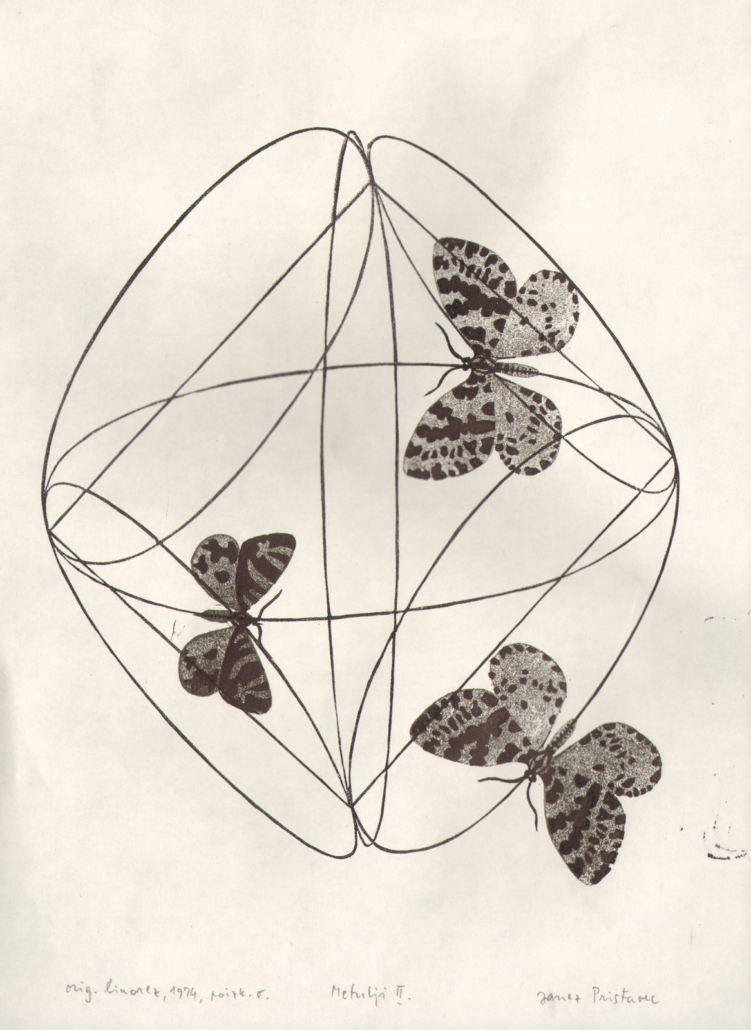
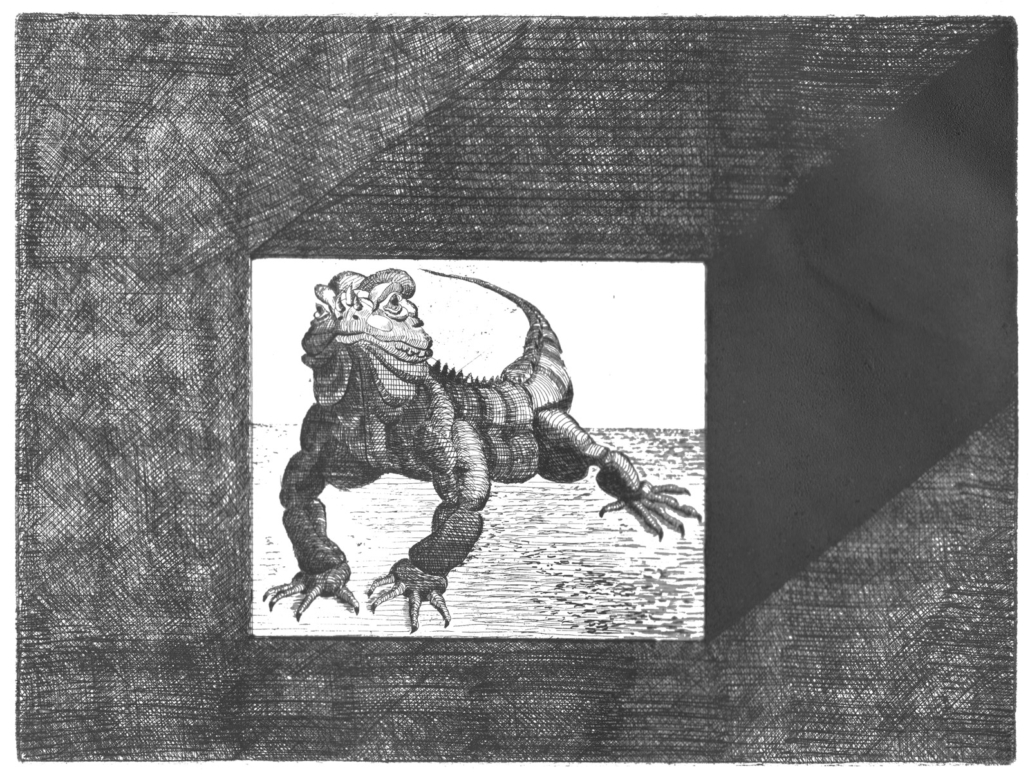
During the mid-1970s, Pristavec explored the distinctive properties of woodcut, linocut, drypoint, lithography and screenprint. Each technique imposed its own physical conditions and therefore encouraged another way of constructing the image. Coarse cuts and strong contrasts coexist with sensitive incised lines, freely drawn lithographic marks and precisely separated screenprinted surfaces.
Across these techniques, familiar motifs are repeatedly transformed. Animals, human figures, organic forms and geometric structures move between recognition and abstraction. The printed image becomes a laboratory in which Pristavec tests how line, texture, colour and empty space can redefine the same subject. The variety of the results reflects neither indecision nor technical display, but a sustained investigation into the specific visual possibilities of each process.
Woodcuts, 1974
Linocuts, 1973–1975
Drypoints, 1974–1975
Lithographs, 1974–1976
Screenprints, 1975–1976
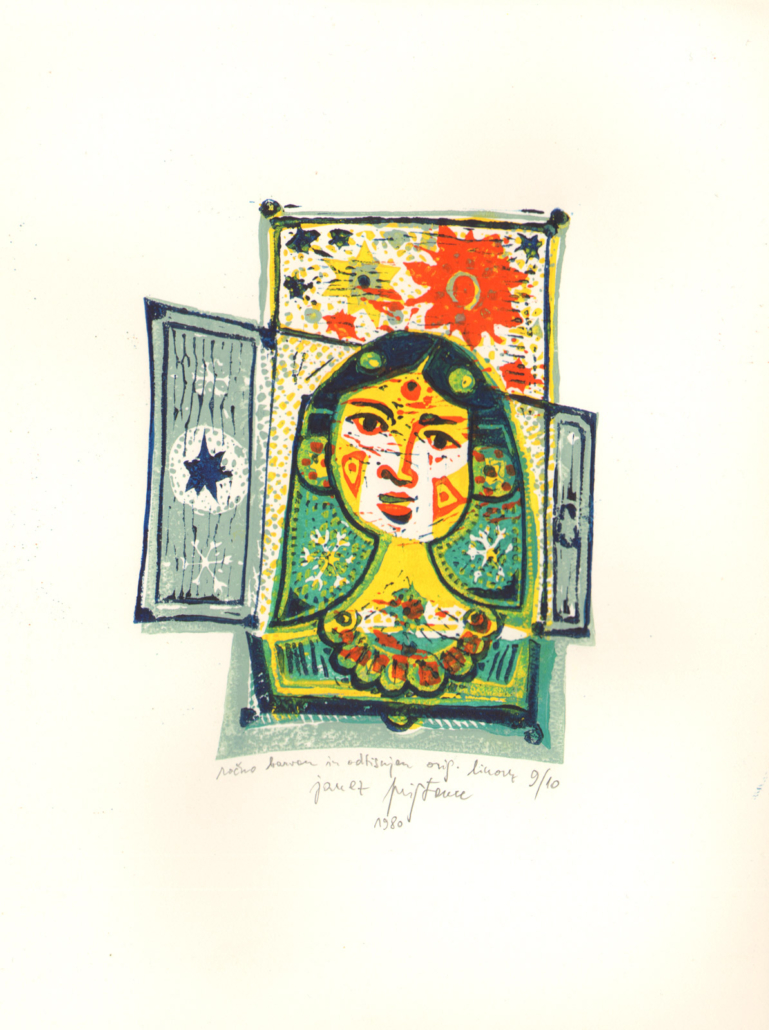
III. COLOUR AND HYBRID PRINTMAKING, 1980
Between the Repeatable Impression and the Unique Work
In the works from 1980, the boundary between printmaking, drawing and painting becomes increasingly permeable. Linocut provides a stable graphic structure, but gouache and other hand-applied interventions make each sheet materially and chromatically individual. The matrix is no longer treated as the final authority over the image; it becomes one layer within a more complex creative process.
Fish, animal skeletons, plants and female figures are organised through the tension between printed contour and painterly colour. Some passages reinforce the underlying image, while others obscure, interrupt or extend it. These hybrid works bring Pristavec’s graphic investigations into direct contact with his wider practice on paper and anticipate the freer relationship between line, colour and surface that would characterise many of his later cycles.