

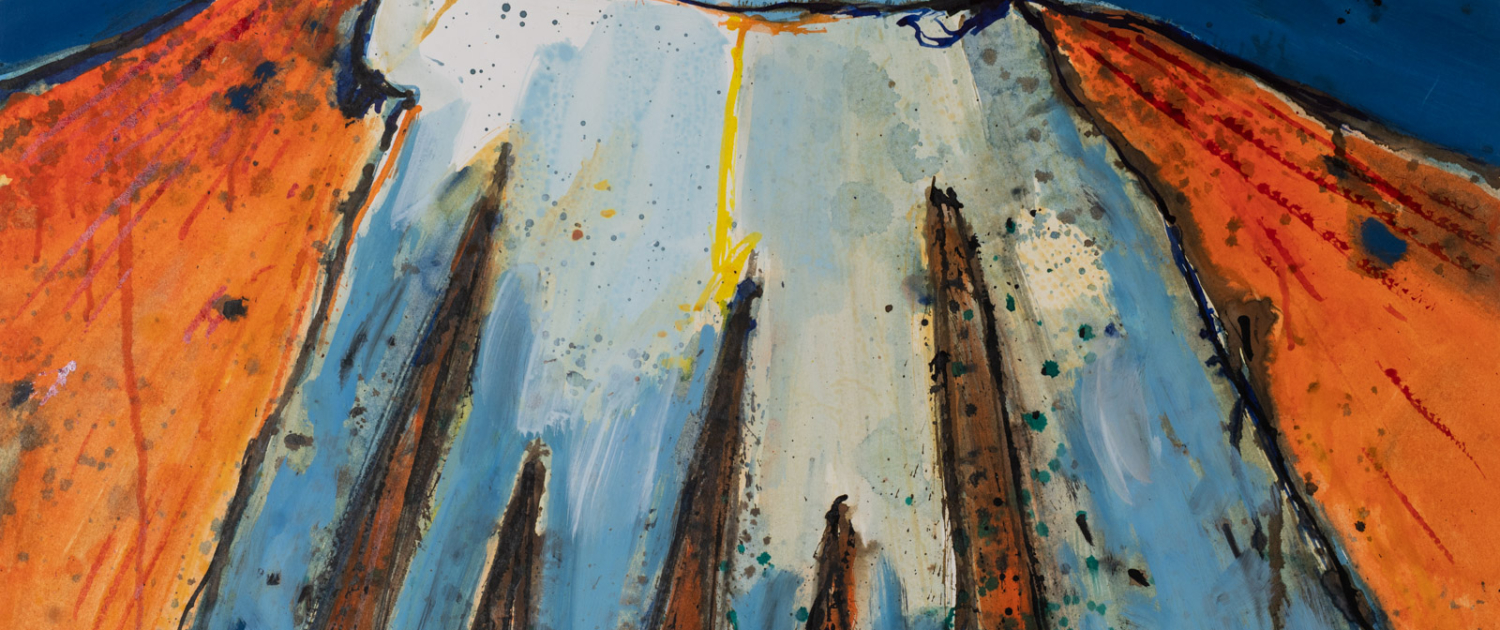
Melje hill – The Hill Cycle
A Landscape Transformed through Repetition and Colour
By returning to the same hill under changing conditions, Pristavec gradually transformed a familiar Maribor landmark into a field of colour, rhythm and pictorial tension.
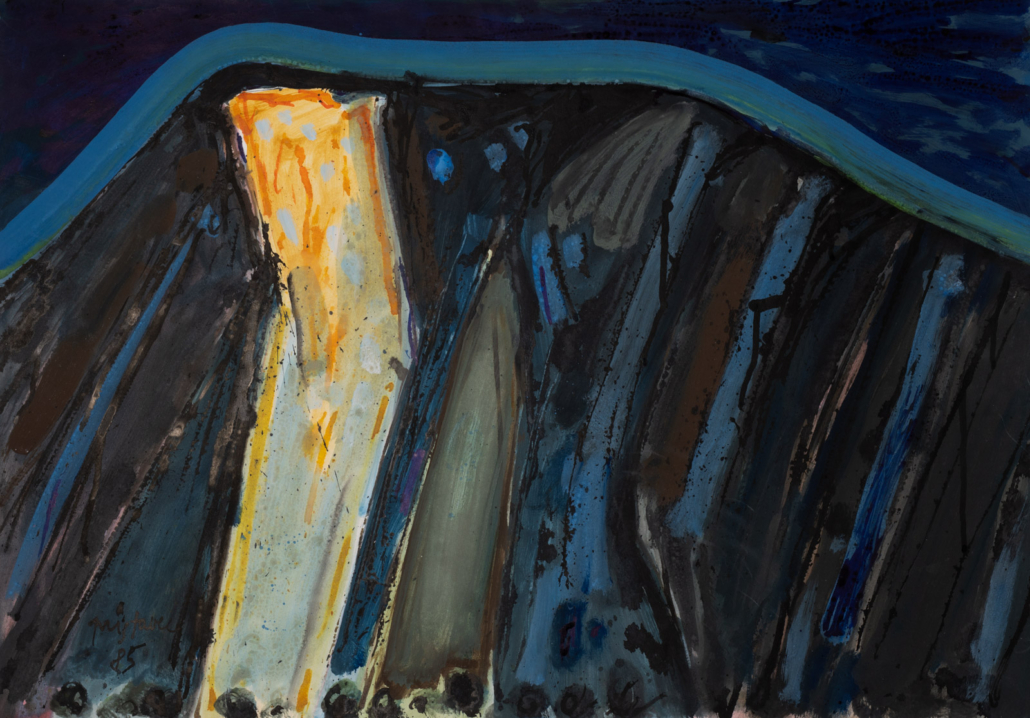
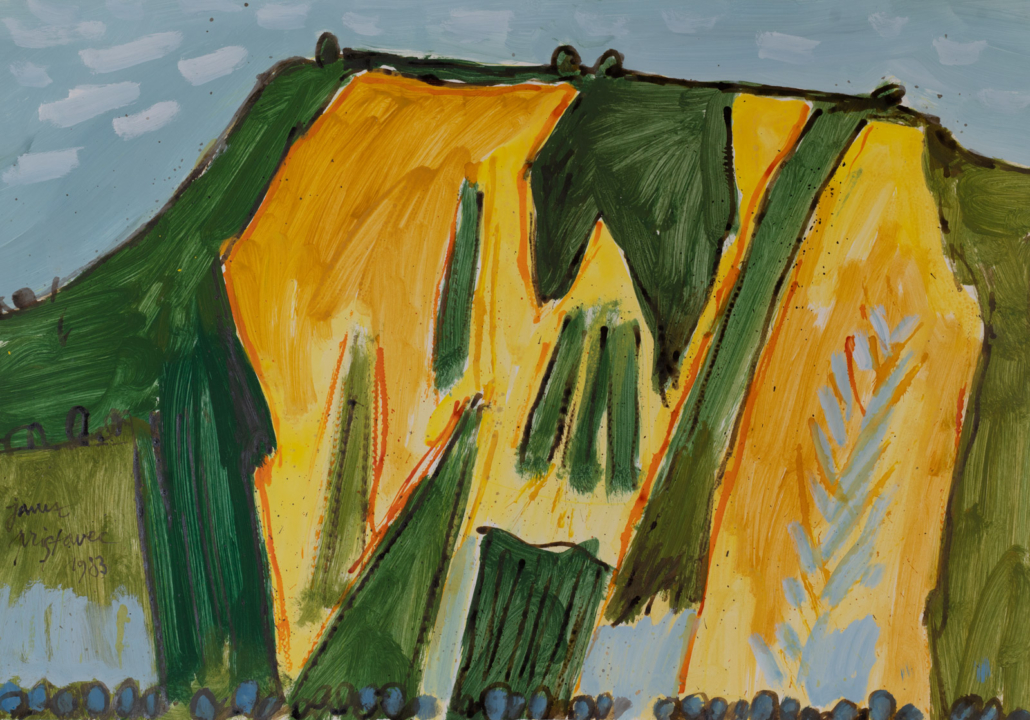
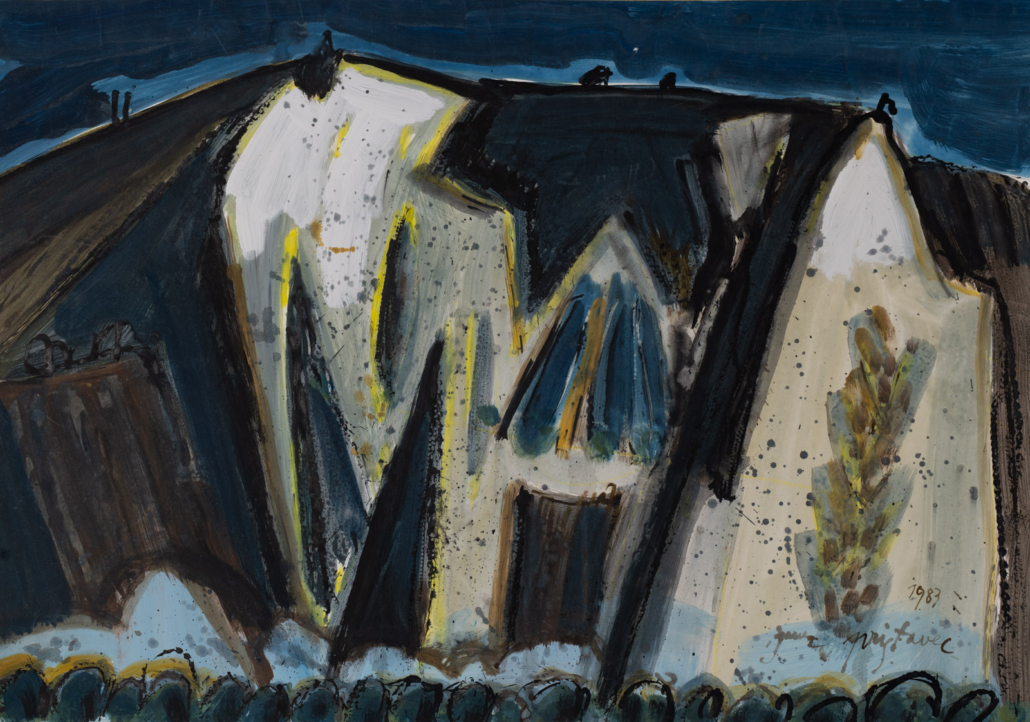
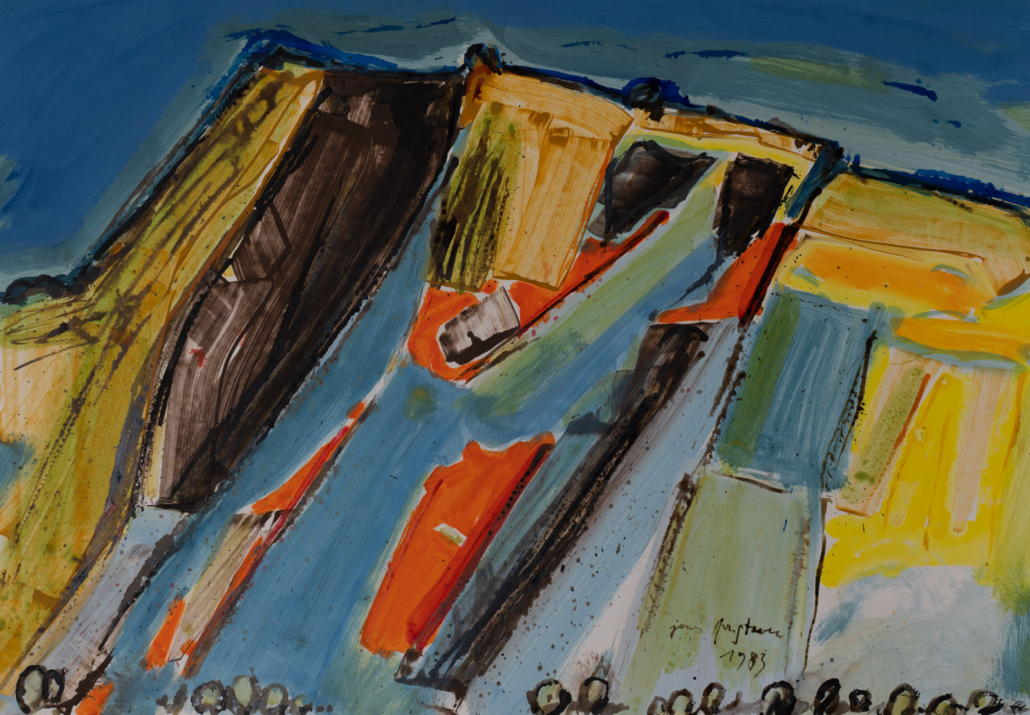
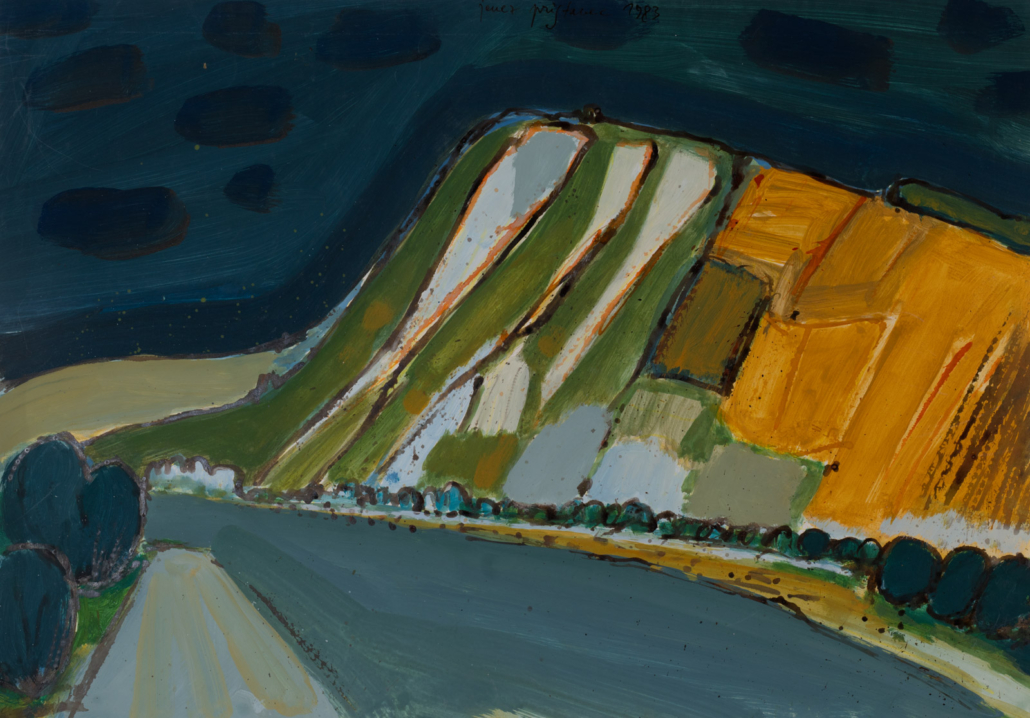
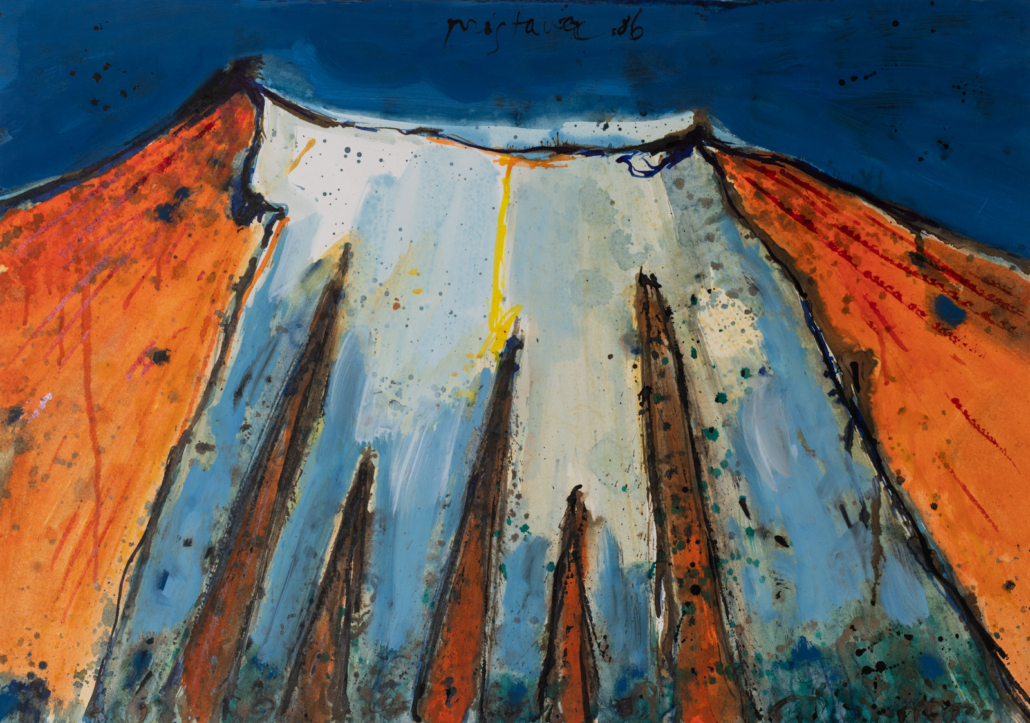
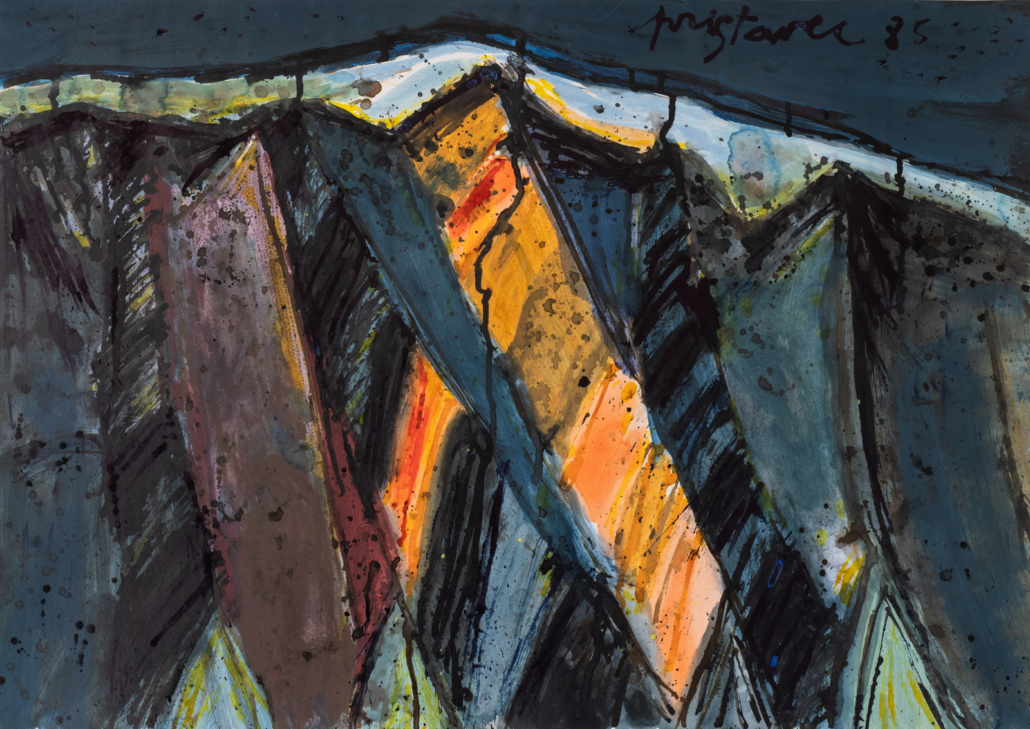
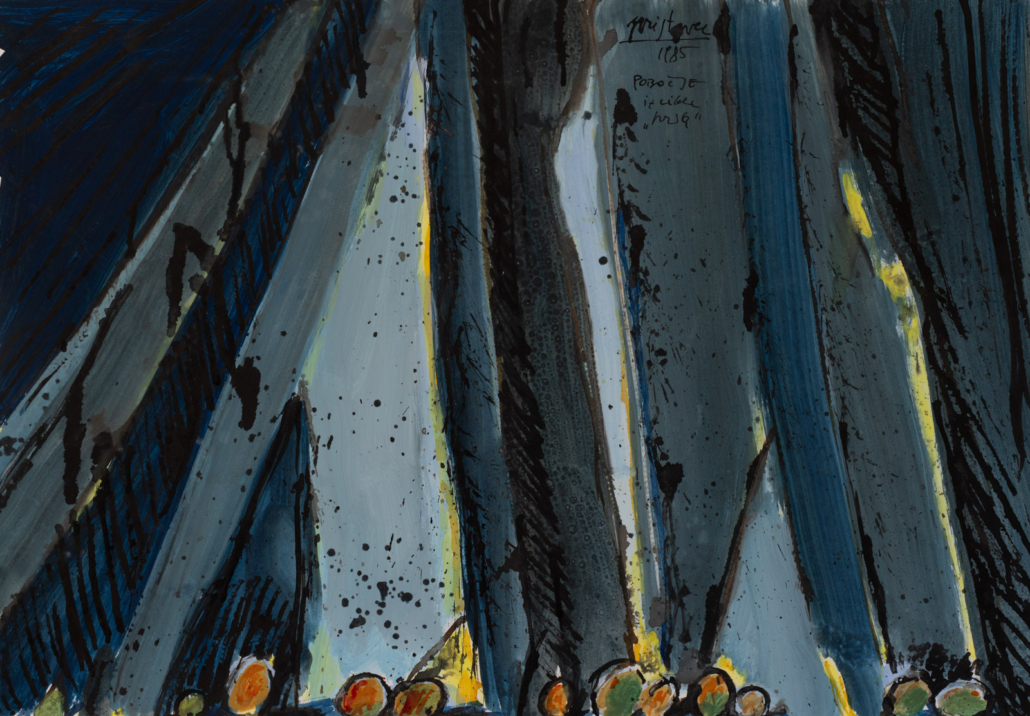
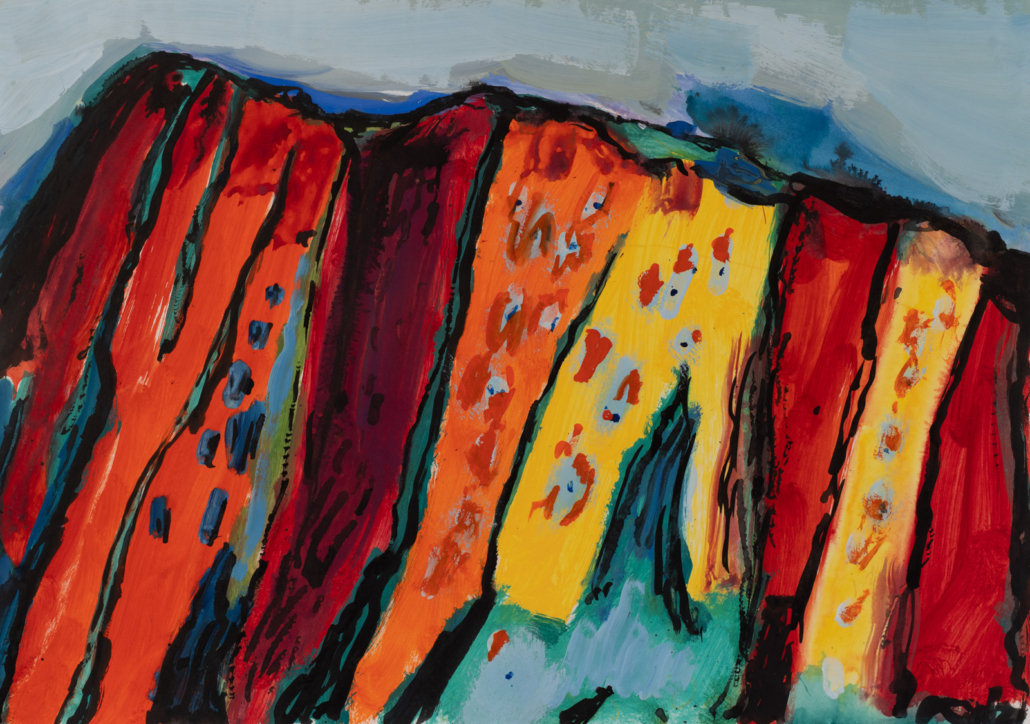
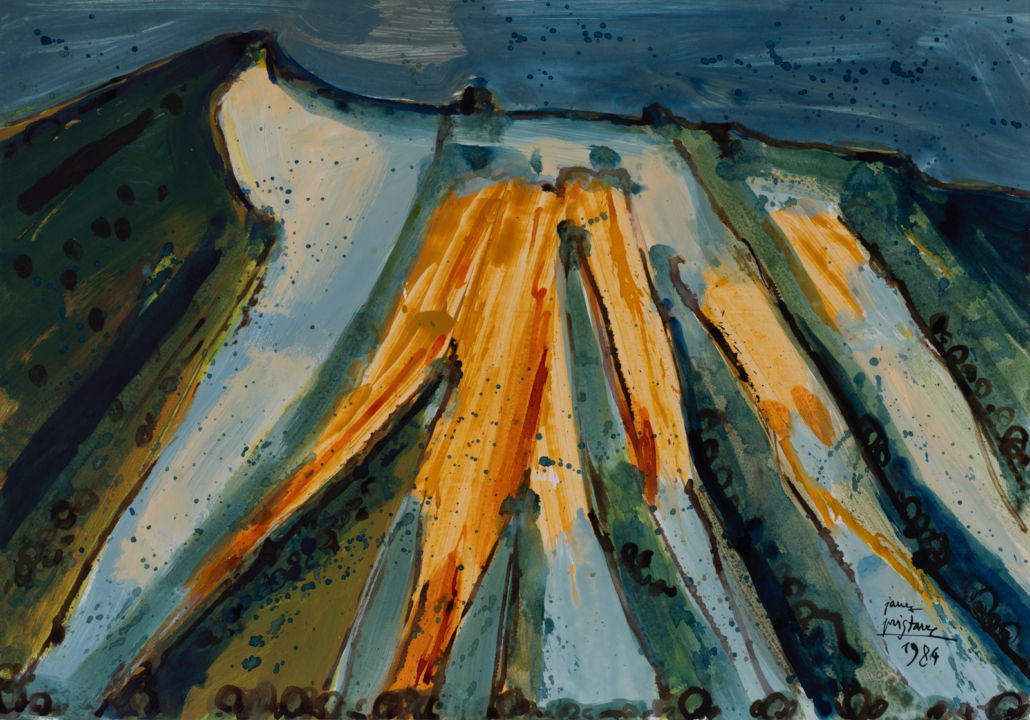
Pristavec’s concentrated engagement with Melje Hill began after the 1983 Ex tempore painting event. Rising above the industrial and residential landscape of Maribor, the hill became a motif he observed repeatedly from different viewpoints, at different times of day and under changing conditions of light and weather. The resulting works, produced principally between 1983 and 1985, form one of the most extensive and significant landscape cycles within his oeuvre.
The series begins with the experience of an actual place. The outline of the hill, its exposed slopes, vegetation and relationship to the surrounding terrain remain recognisable. Yet Pristavec does not approach the motif as a topographical document. With each repetition, he selects, simplifies and intensifies its principal features. The hill is compressed into a monumental mass whose ridges and cut surfaces divide the sheet into strongly articulated planes.
Its distinctive form encouraged a pictorial language built from diagonal bands, vertical incisions and contrasting areas of colour. At times the slopes appear heavy and almost geological; elsewhere they open into luminous yellow, orange, white or pale-blue fields. Dark contours hold these areas together, while individual chromatic accents activate the entire composition.
Yellow and orange assume particular importance. Often used in relatively small quantities, they produce a strong visual pressure against darker blues, greys, greens and browns. Colour no longer merely records the appearance of the landscape. It reveals the artist’s emotional and sensory response to the place.
The repeated motif allowed Pristavec to test how far the visible landscape could be transformed without losing its identity. In some works, the hill remains situated within an atmospheric environment; in others, the horizon disappears and the slopes fill almost the entire sheet. The motif approaches abstraction, yet the memory of its physical weight and local presence remains.
The importance of the cycle lies in this sustained passage from observation to pictorial autonomy. Melje Hill becomes both a specific Maribor landmark and an experimental structure through which Pristavec investigates colour, surface, rhythm and the instability of perception.
Landscapes beyond the hill
Coasts, Trees and Remembered Places
Beyond the fixed viewpoint of Melje Hill, Pristavec’s landscapes open towards coastlines, trees, settlements and places preserved through the selective work of memory.
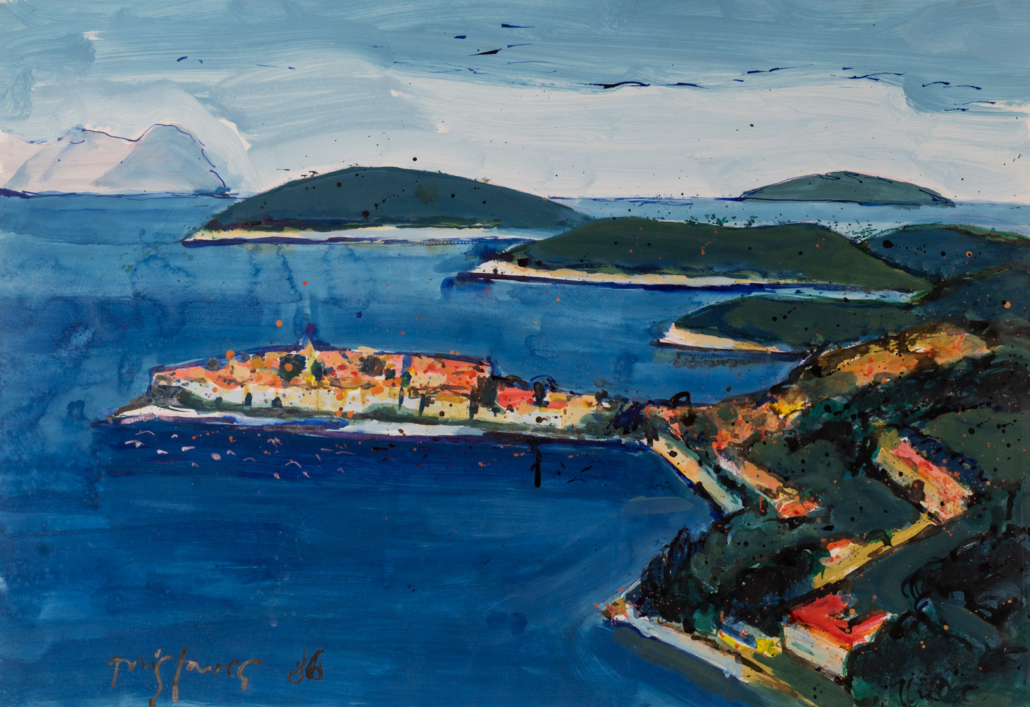
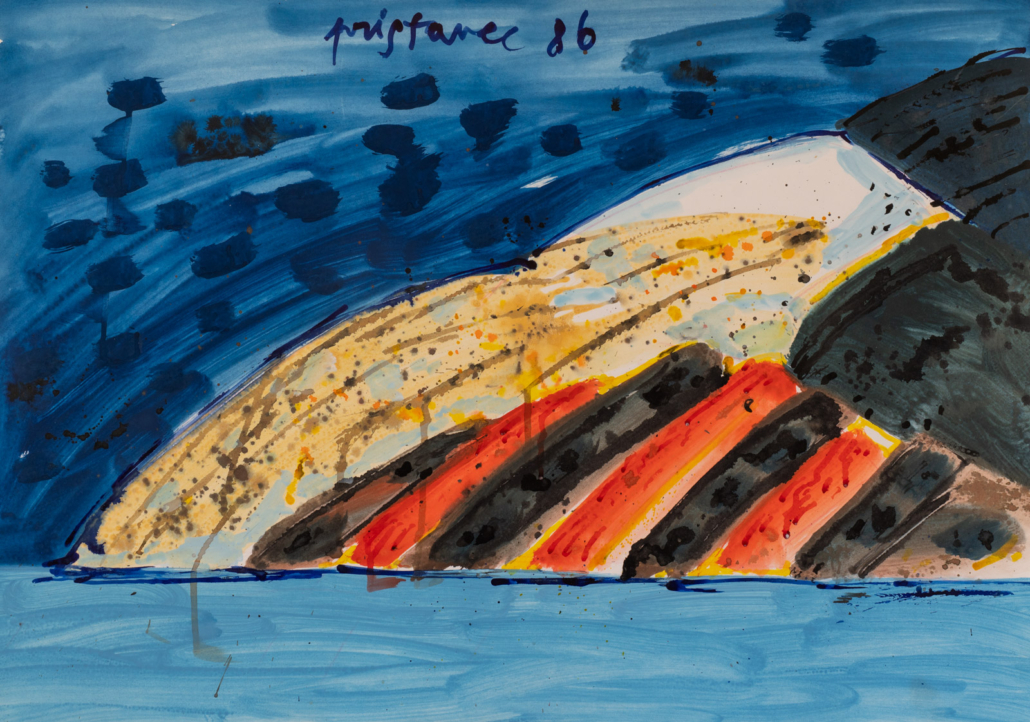
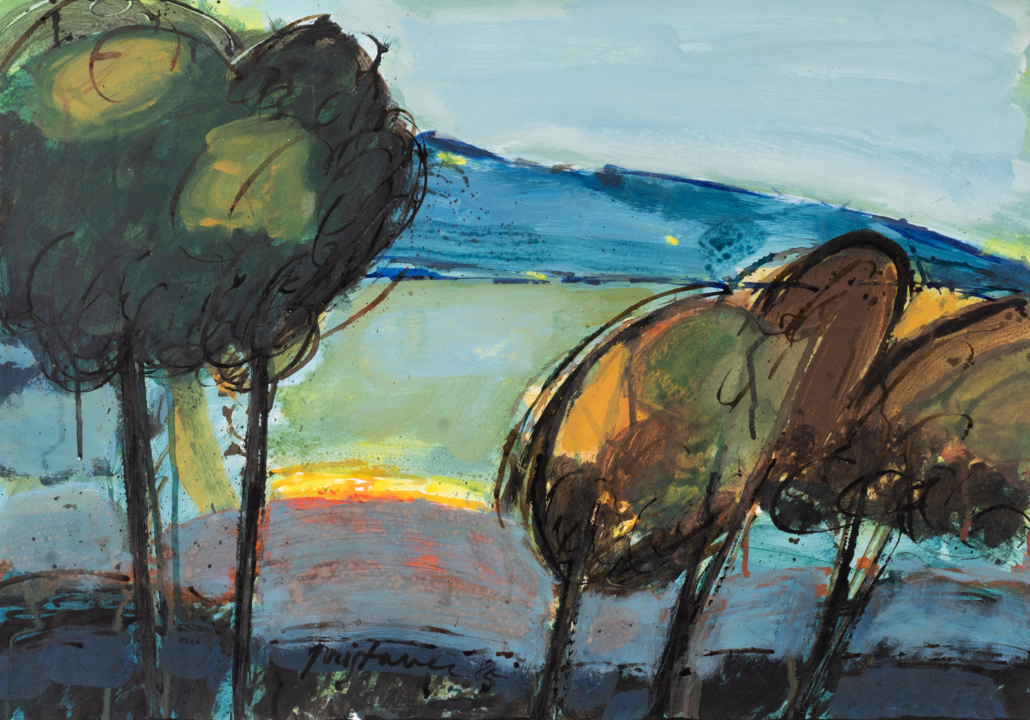
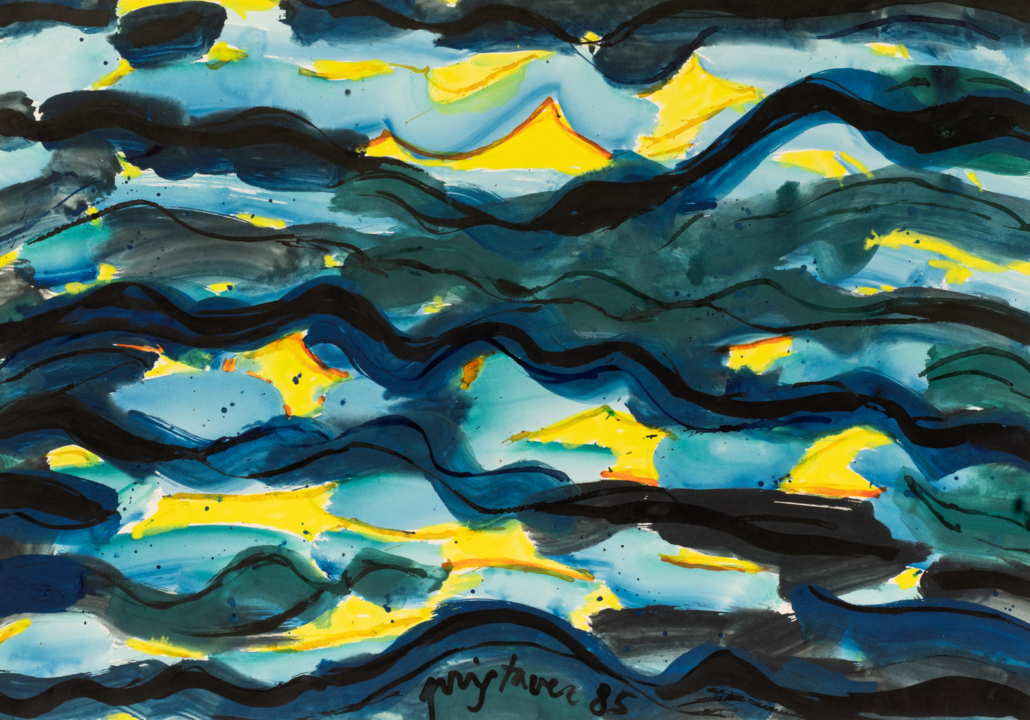
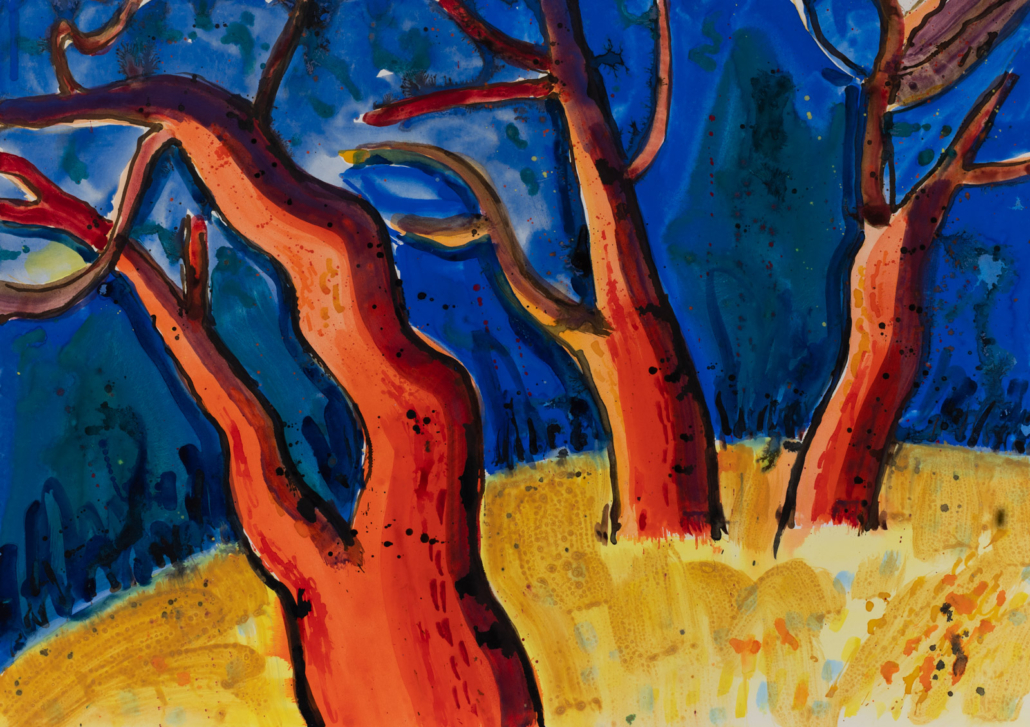
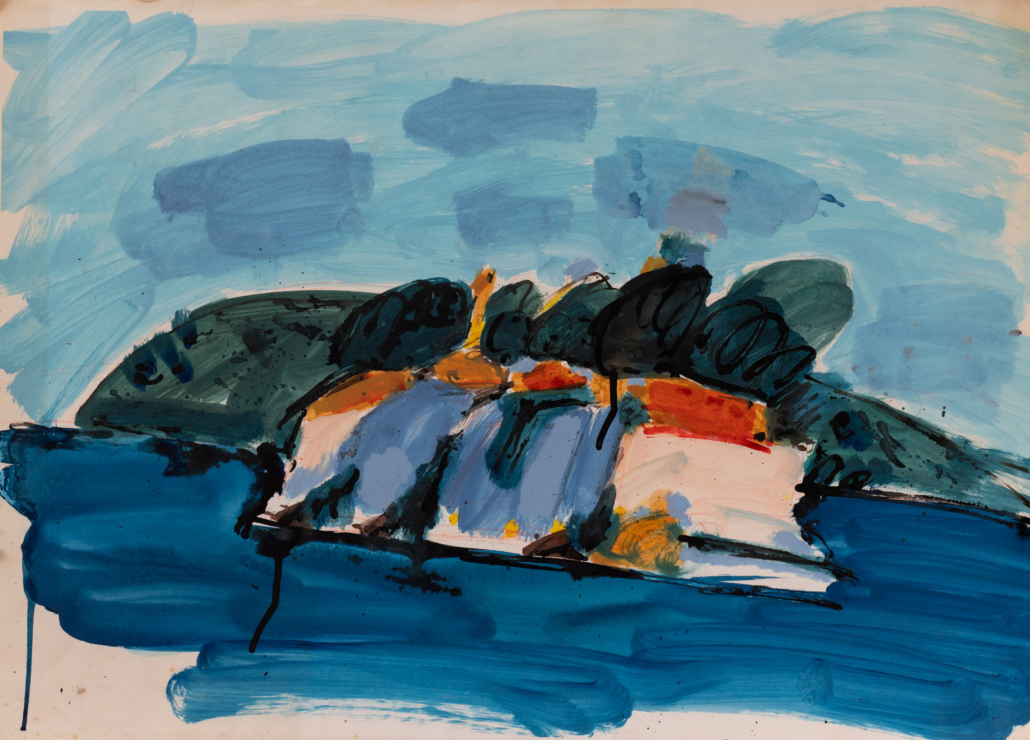
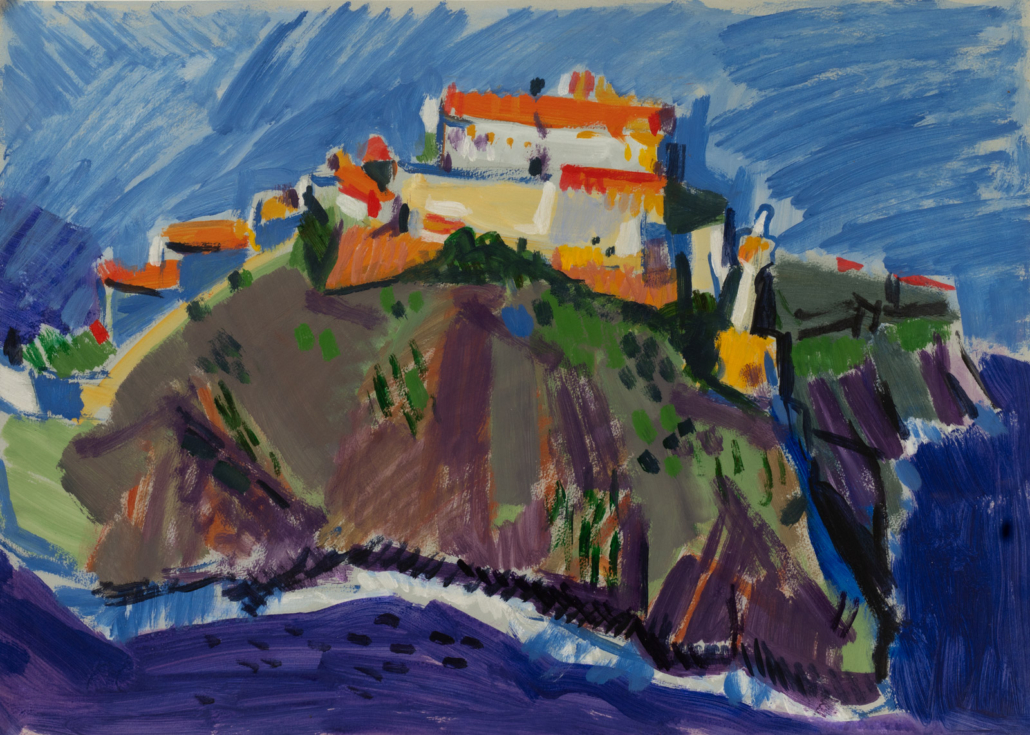
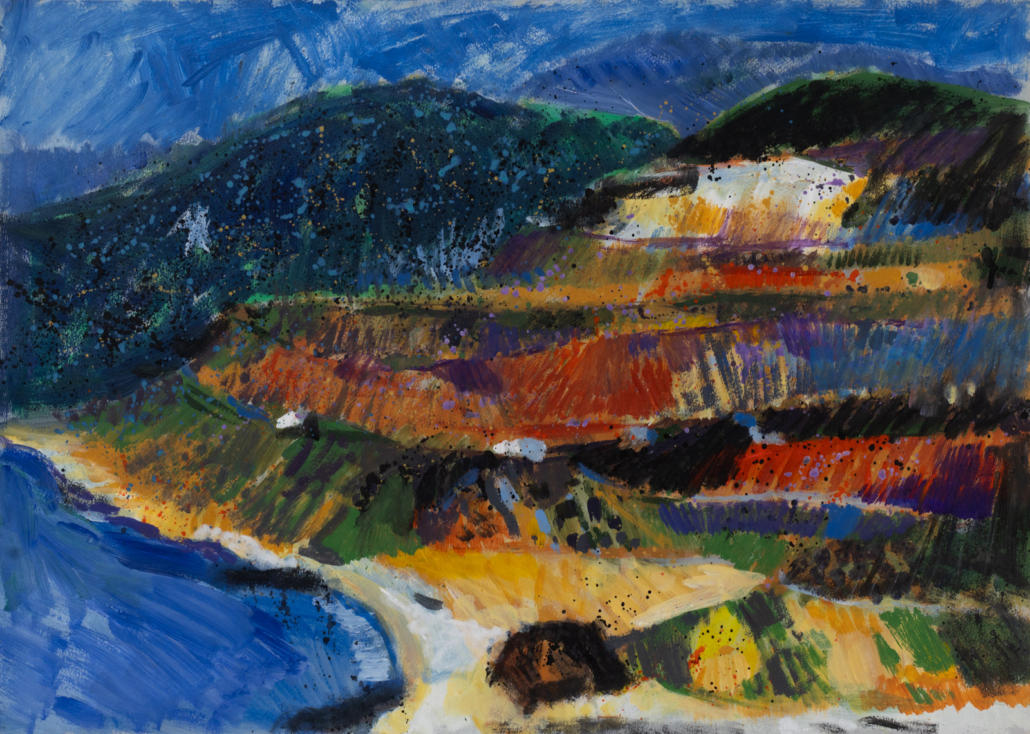
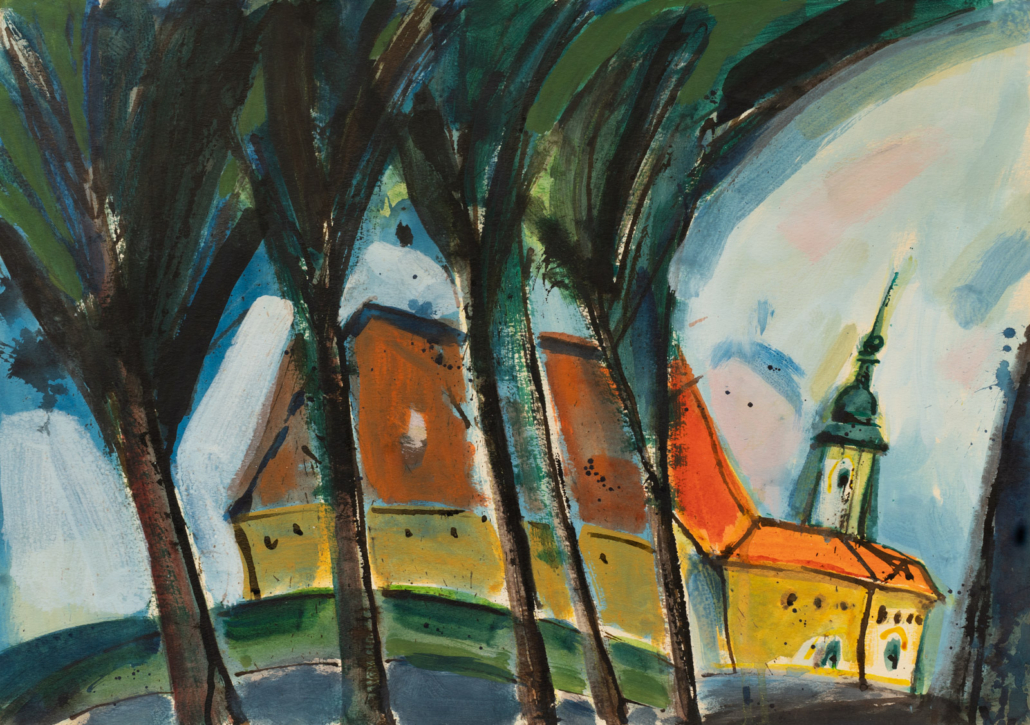
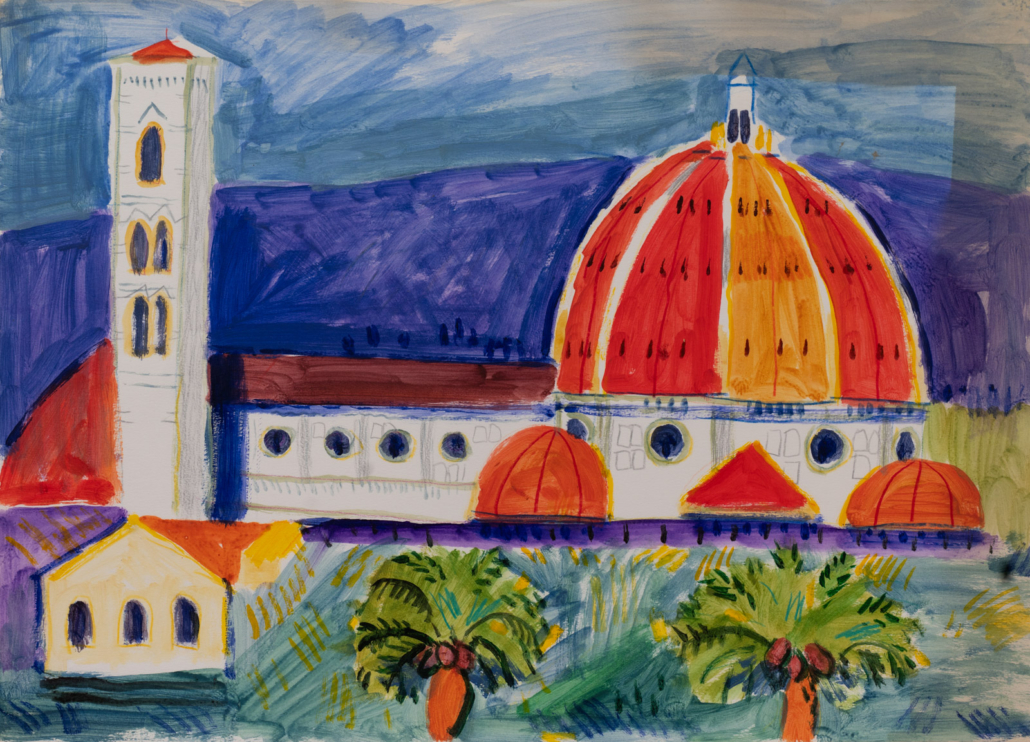
These works do not constitute a single enclosed cycle. They form a broader group of landscapes created during the 1980s in which Pristavec responds to different environments: the Adriatic coast, islands and harbours, cultivated hills, isolated trees, villages, architecture and views connected with Maribor. Their diversity reveals how the pictorial discoveries made through the repeated study of Melje Hill were transferred to new places.
The coastal works are frequently organised by the movement of the shoreline. Land and water meet in sweeping curves, narrow promontories and sharply contrasted chromatic bands. Deep blue surfaces are interrupted by orange roofs, pale stone, dark vegetation or luminous strips of land. Boats, roads, houses and harbour structures provide points of orientation, but they are subordinated to the broader rhythm of the composition.
Trees introduce a more intimate and bodily kind of presence. Their trunks bend, divide or rise through broad fields of blue, green and ochre. Intensified reds and oranges separate them from naturalistic description and give them an almost figurative character. A group of trees may create a rhythmic screen, while a single trunk can become the principal structural axis of the image.
Paper allowed Pristavec to respond rapidly to a place and to preserve the immediacy of first perception. Transparent passages, exposed drawing, abrupt brushstrokes and areas of unpainted or lightly covered paper remain visible. The works often appear to record not a complete landscape but the moment at which a particular contour, colour or spatial relationship attracted the artist’s attention.
Some views retain clearly identifiable architecture, coastlines or industrial features. Others are transformed into layered bands and chromatic signs in which the original place can only be sensed. The landscape therefore moves between direct observation, visual memory and painterly reconstruction.
Seen beside The Hill Cycle, these works demonstrate that Pristavec did not develop a single formula for landscape. Each environment demanded a different pictorial response. What connects them is his ability to convert the structure of a place into an active relationship between colour, line, surface and remembered experience.