

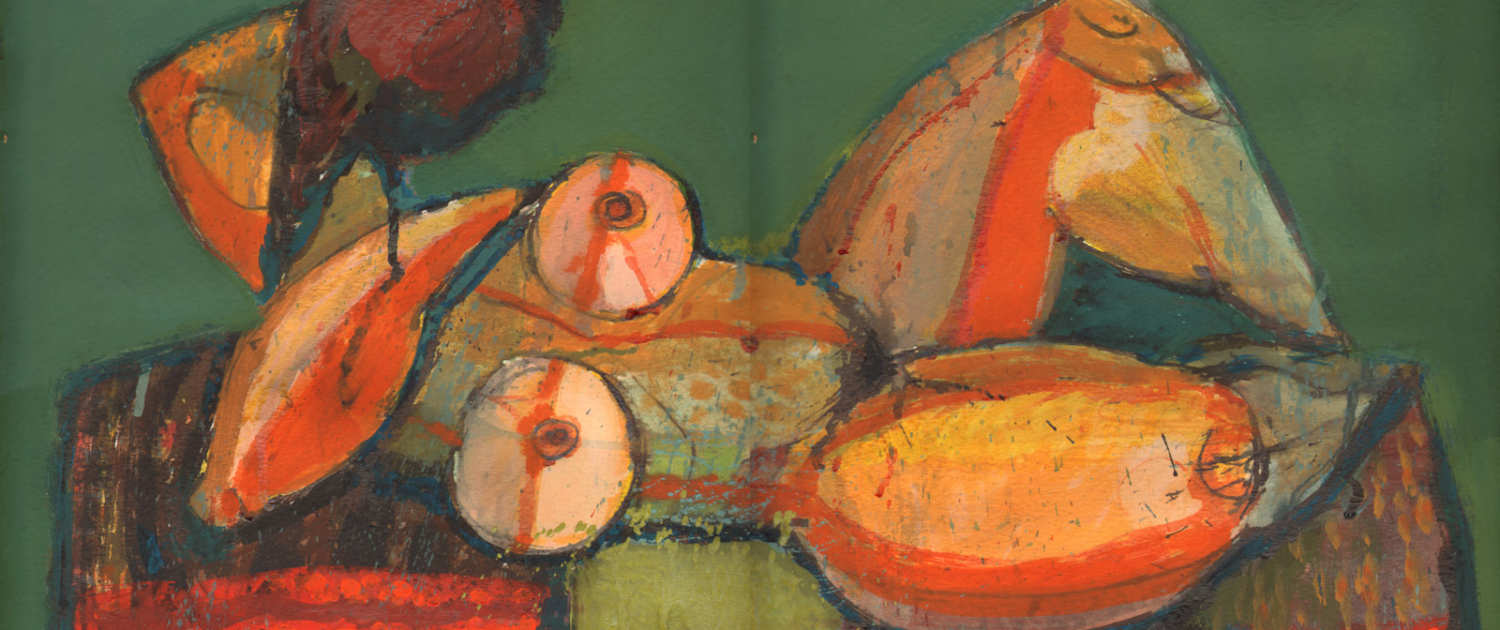
Nudes on paper
The Reclining Body as Colour and Rhythm, 1978–1979
Within the horizontal format of the sheet, the reclining body becomes a concentrated structure of contour, colour, weight and pictorial rhythm.
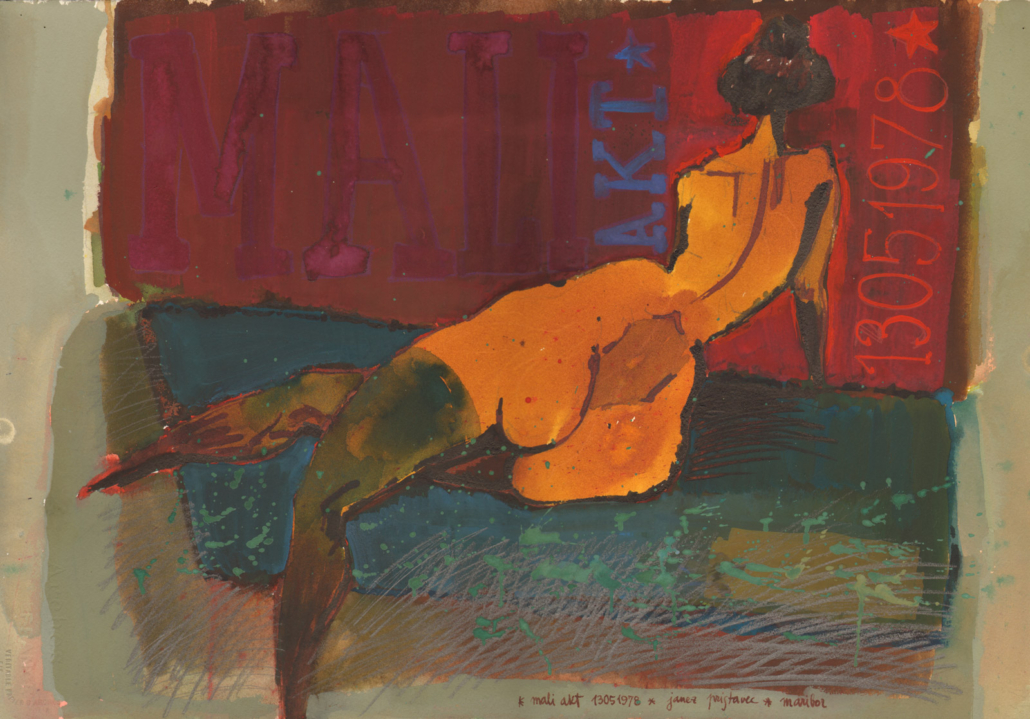
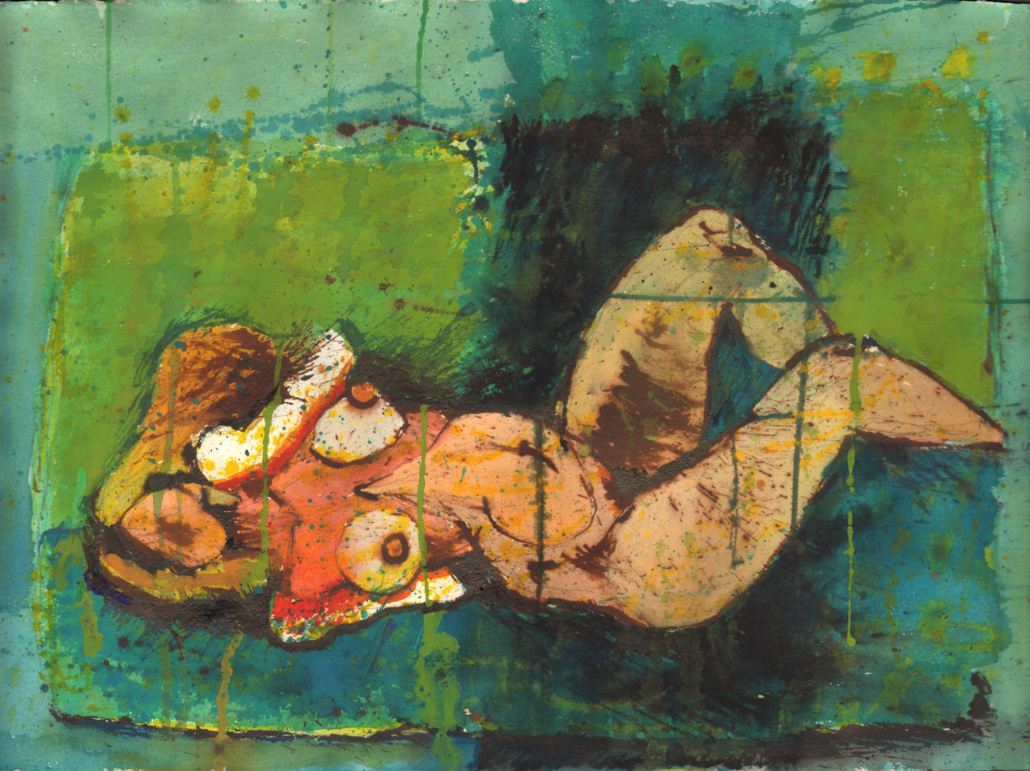
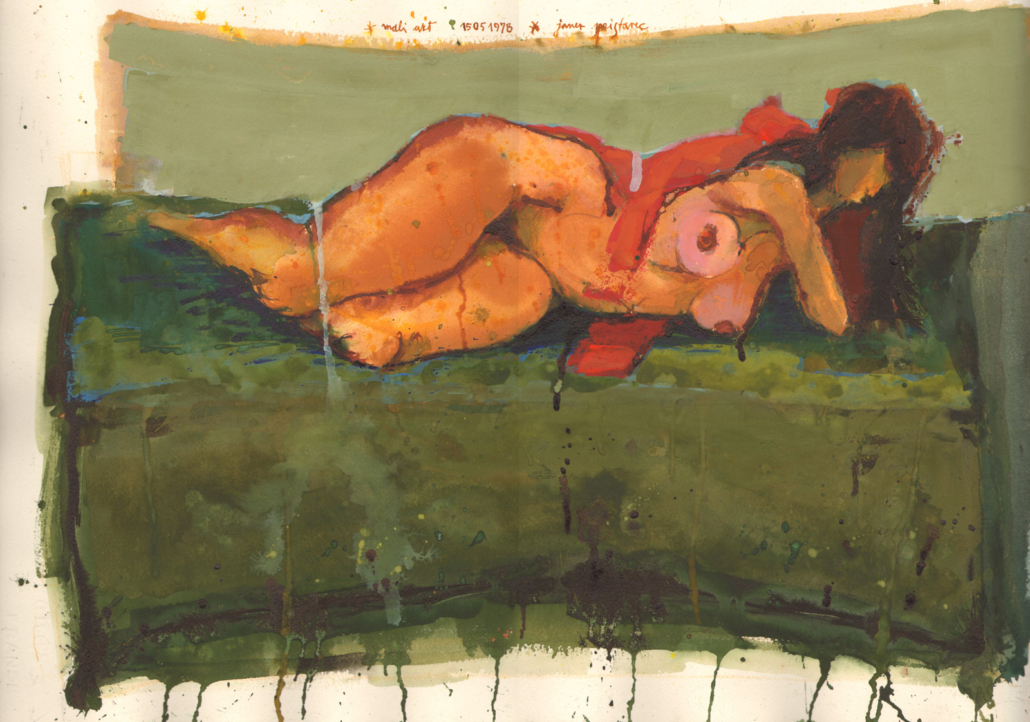
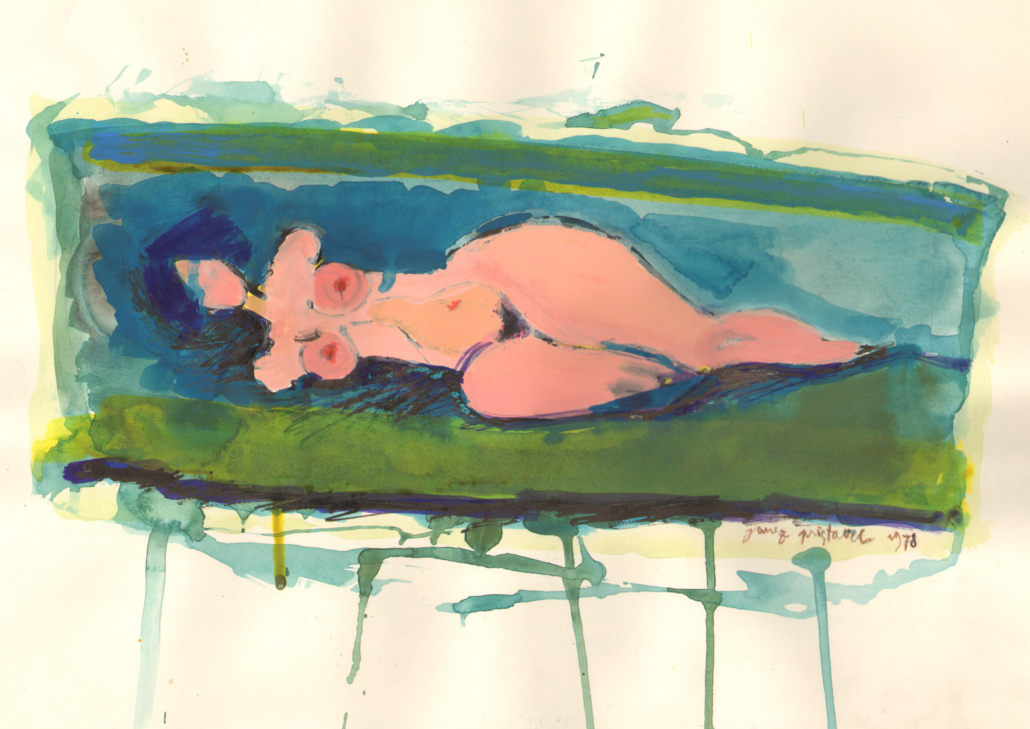
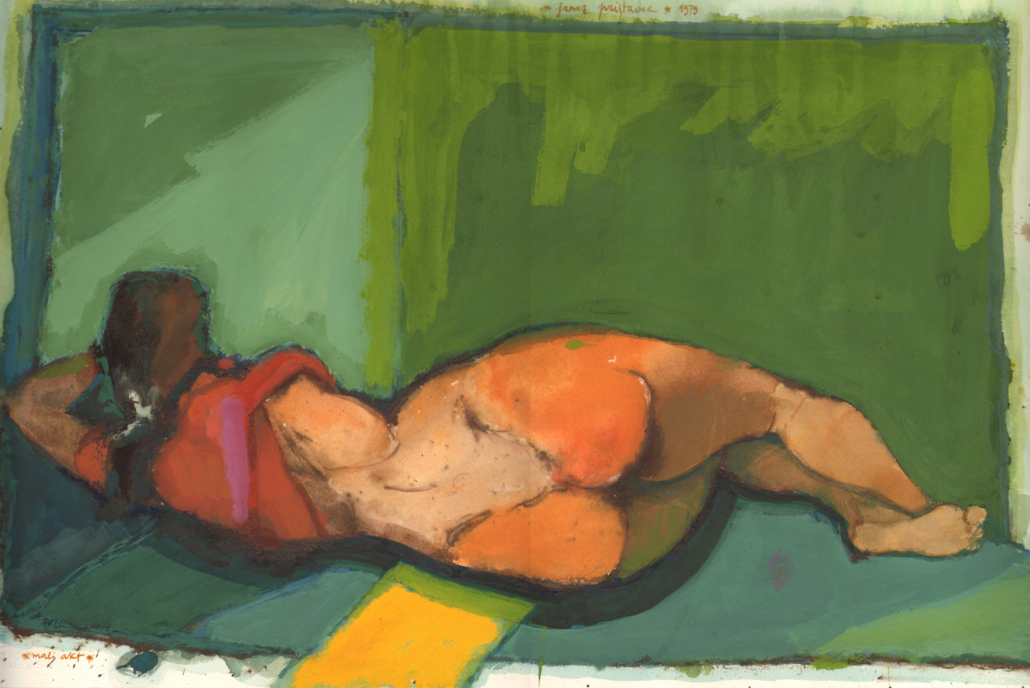
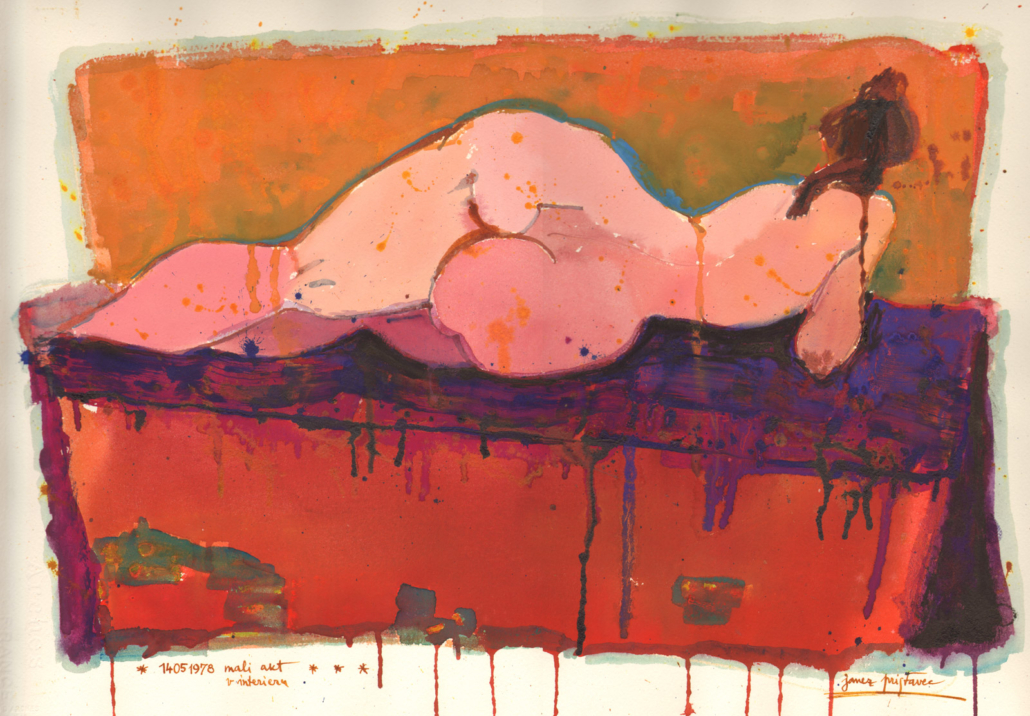
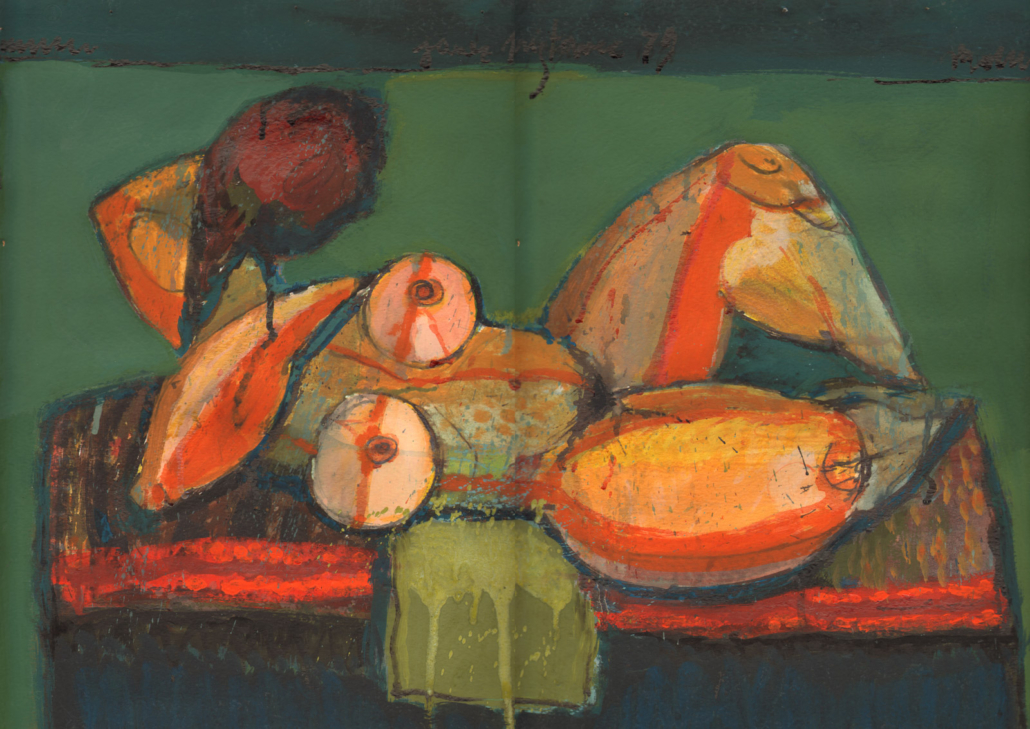
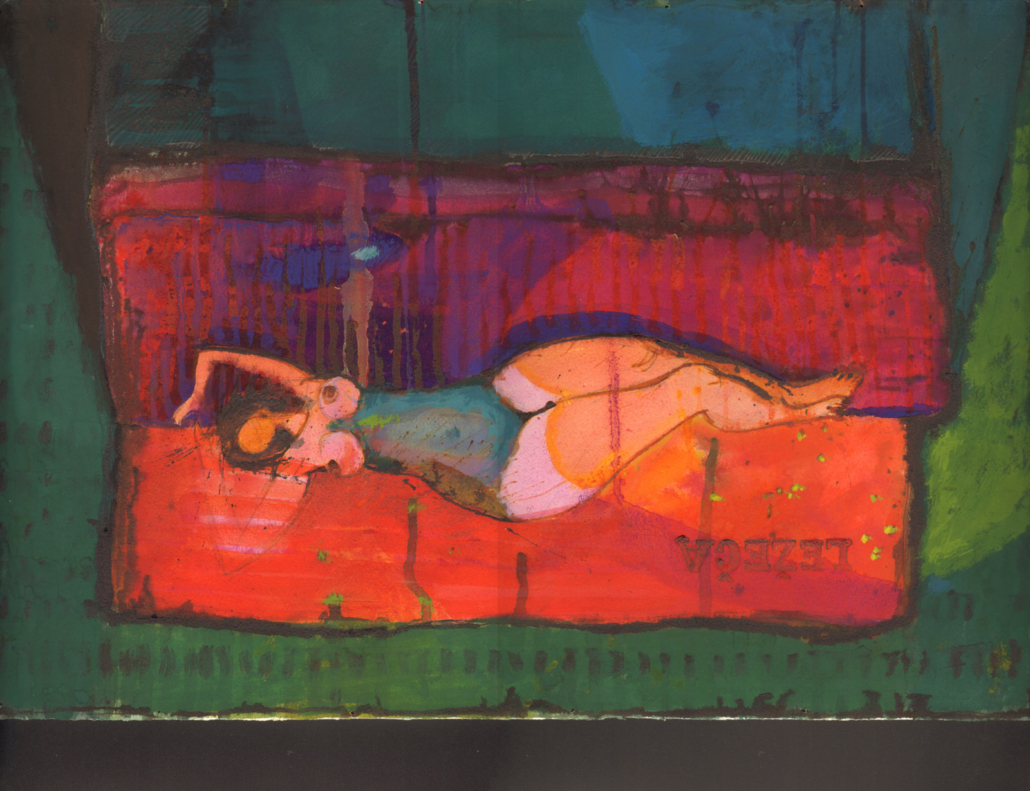
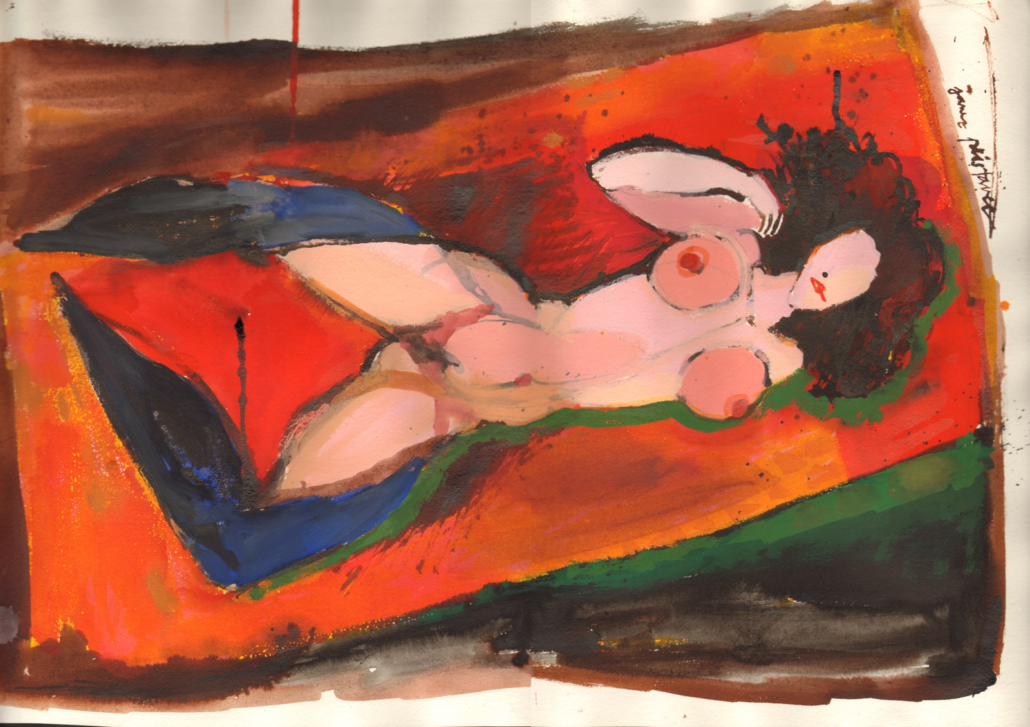
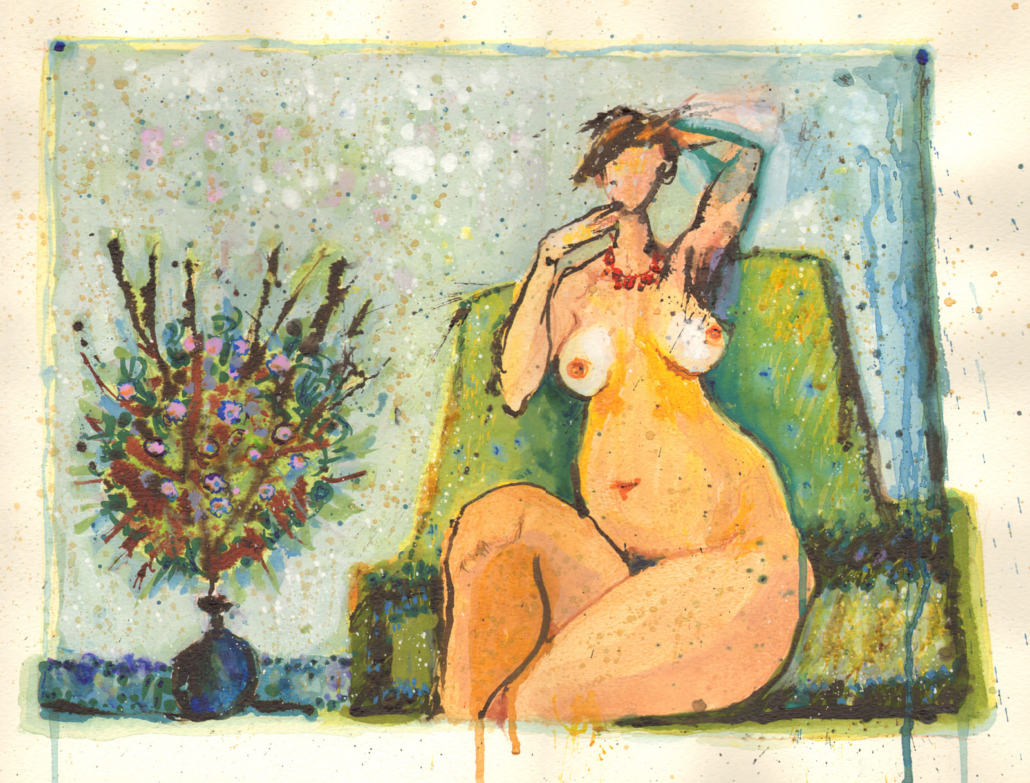
The nudes on paper form a coherent and chronologically concentrated group of temperas on A3 paper created in 1978 and 1979. Unlike Pristavec’s nudes on canvas, which trace the changing treatment of the body across several decades, these sheets capture a specific early moment in his development. The repeated reclining figure allowed him to investigate how anatomical observation could be transformed through colour, contour and the directness of painting on paper.
In almost every composition, the body extends horizontally across the sheet. It lies on a bed, couch or broadly defined surface, frequently occupying most of the available pictorial space. Pristavec brings the figure close to the picture plane rather than placing it within a fully described interior. The surrounding space is compressed into layered bands and rectangular fields that support, enclose or visually counterbalance the body.
The figures retain a convincing sense of bodily weight. Hips, thighs, breasts and shoulders are articulated through changes in direction and colour, while the pose is held together by a strong, often dark contour. Yet anatomical knowledge is already being used freely. Individual parts may be enlarged, shortened or flattened, and the reclining body is sometimes bent into an almost continuous arc. Deformation is not a departure from observation but a means of strengthening the internal rhythm of the composition.
Colour increasingly assumes the role traditionally performed by modelling. Ochre, orange and pink bodies are placed against deep green, turquoise, red, violet or blue grounds. These chromatic relationships do not reproduce the appearance of skin or domestic space. They divide the body into active pictorial areas and establish different degrees of warmth, density and visual tension.
The paper support contributes decisively to the character of the works. Rapid brushstrokes, translucent passages, opaque layers, splashes and vertical drips preserve the physical sequence of painting. Margins sometimes remain exposed, while handwritten dates, words and other marks enter the image as part of its surface. The works therefore retain an immediacy that would be diminished by transferring their visual language directly to canvas.
Repetition does not produce a fixed formula. The body may face the viewer or turn away, stretch across the full width of the sheet, contract into a denser form or be reorganised through sharply contrasting colour fields. Each variation changes the relationship between bodily volume and surrounding surface. The model gradually becomes less an individual presence than a recurring pictorial structure.
The final composition introduces an upright seated figure beside a vase of flowers. This change in orientation opens a relationship between the nude, still life and interior that would remain important in Pristavec’s later paintings. The body and bouquet are not simply placed beside one another: their contours, colours and repeated organic forms create a shared visual rhythm.
These works should not be understood merely as preparatory studies for paintings on canvas. Their immediacy, material openness and serial organisation give them an autonomous place within Pristavec’s oeuvre. Together, they reveal an artist moving from the observed body towards a more independent language in which anatomy, colour and surface become inseparable.