Janez Pristavec

1947 – 2008

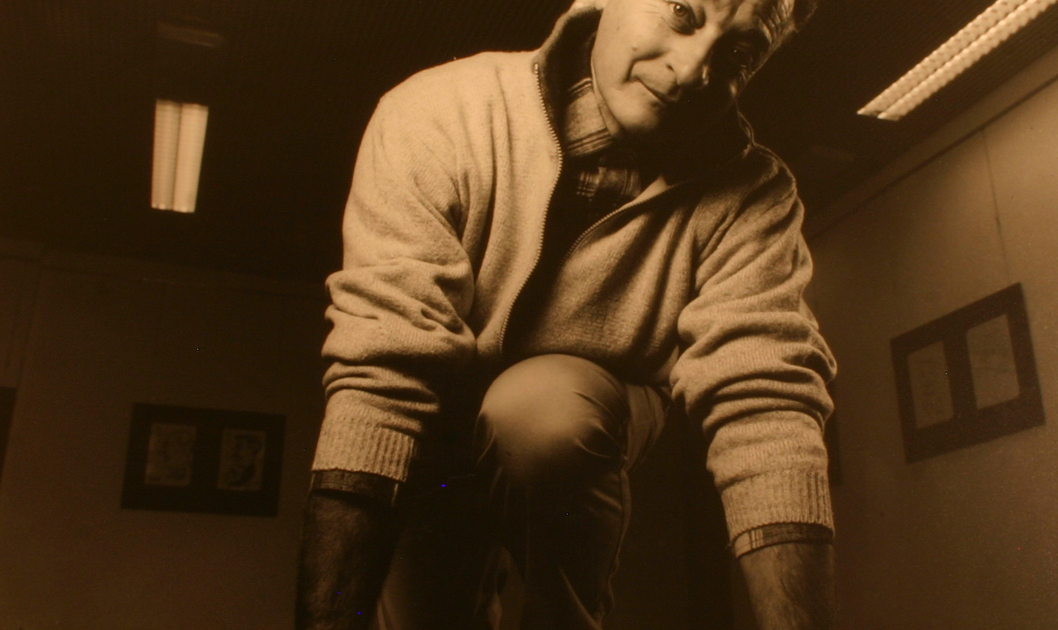
Janez Pristavec was a Slovenian painter, printmaker and art teacher whose work developed through a sustained investigation of colour, line, material surface and the human figure. His extensive oeuvre encompasses painting, drawing and printmaking, as well as portraits, caricatures and works created during public encounters.

Rather than following a simple sequence in which one style replaced another, Pristavec repeatedly returned to a group of fundamental subjects: the human face and body, animals, landscape, still life, the city of Maribor and, in his final years, mythology. Each return transformed the subject. Observation could lead towards abstraction, abstraction could generate a new figure, and a recognisable face could be reduced to a chromatic structure or a few decisive lines.

Pristavec was born in Maribor on 27 March 1947. After years of independent drawing and graphic experimentation, he enrolled at the Academy of Fine Arts in Ljubljana in 1973 and graduated in 1977. His professors included Janez Bernik, Bogdan Borčič, Milan Butina, Zoran Didek, Nikolaj Omersa, Štefan Planinc, Marjan Pogačnik, Gabrijel Stupica and Apolonijo Zvest. He subsequently lived and worked in Maribor and was a member of the Maribor Society of Fine Artists and the Association of Slovene Fine Artists. These educational and professional details are also recorded by the Maribor Art Gallery.

Alongside his independent artistic practice, Pristavec worked as an art teacher. He participated in approximately forty solo and eighty-five group exhibitions in Slovenia and abroad. Maribor remained the geographical and cultural centre of his life, yet his work engaged with broader currents of post-war European painting, modernist colour research, expressive figuration and the renewed interest in painting during the 1980s and 1990s.
Formative Years and Academy Studies

Pristavec began drawing during childhood. His early surviving works include landscapes, architecture, portraits, self-portraits, plants and scenes from Maribor and its surroundings. These drawings already demonstrate sustained attention to spatial organisation, proportion and the expressive possibilities of line.

Before entering the Academy, he explored pencil and ink drawing, drypoint, linocut and other graphic techniques. This period of largely independent study gave him considerable technical confidence before the beginning of his formal education.

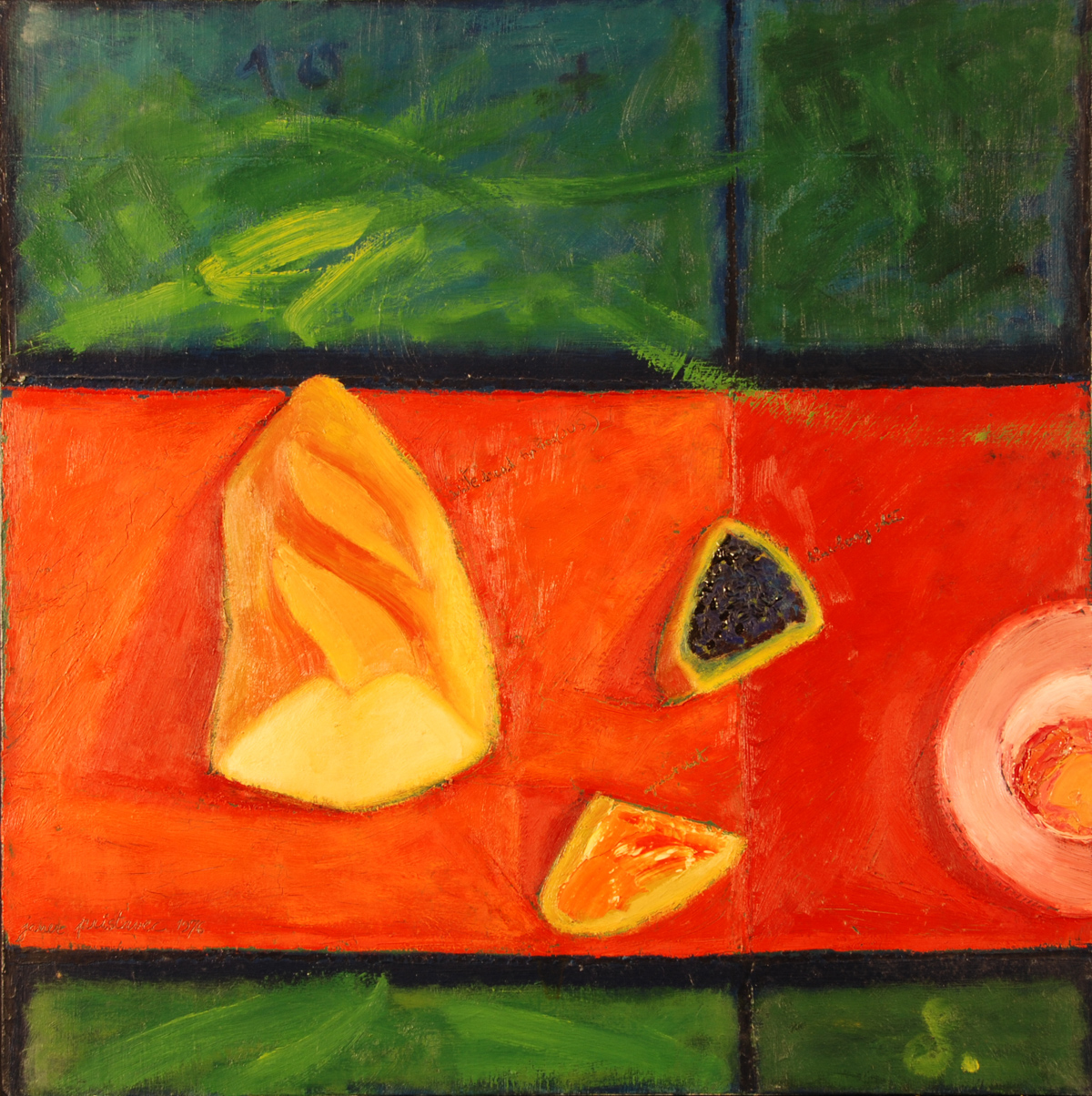
At the Academy of Fine Arts, observational drawing was joined by the analytical study of anatomy, movement, descriptive geometry and colour relationships. His student works include studies of shells, animal bodies, the human skeleton and the female nude. They reveal an artist learning to understand the visible world not only through resemblance but through construction: the organisation of weight, rhythm, volume and internal structure.

The nude became one of his principal fields of experimentation. Initially grounded in observation, it was gradually simplified into planar and geometric relationships. Naturalistic colour gave way to stronger chromatic contrasts, while the body increasingly functioned as a structure through which Pristavec could investigate the relationship between figure and pictorial field.

Printmaking and Figural Transformation

During the late 1970s and early 1980s, Pristavec devoted considerable attention to printmaking. Linocuts, woodcuts and drypoints frequently depict animals, especially fish, frogs, reptiles and birds. The animal body offered a meeting point between close observation, symbolic meaning and formal transformation.

At the same time, the human figure became increasingly unstable. In the 1981 cycle Množice (Crowds), bodies expand, contract and merge into compact organic formations. Perspective is distorted, anatomy is exaggerated and the boundary between an individual figure and a collective mass becomes uncertain.

These drawings should not be understood merely as preparatory studies. They form an autonomous cycle in which line becomes capable of generating bodily volume, movement and psychological tension. Their deformed figures also anticipate Pristavec’s later interest in masks, hybrid beings and mythological bodies.
The Hill and the Discovery of Colour

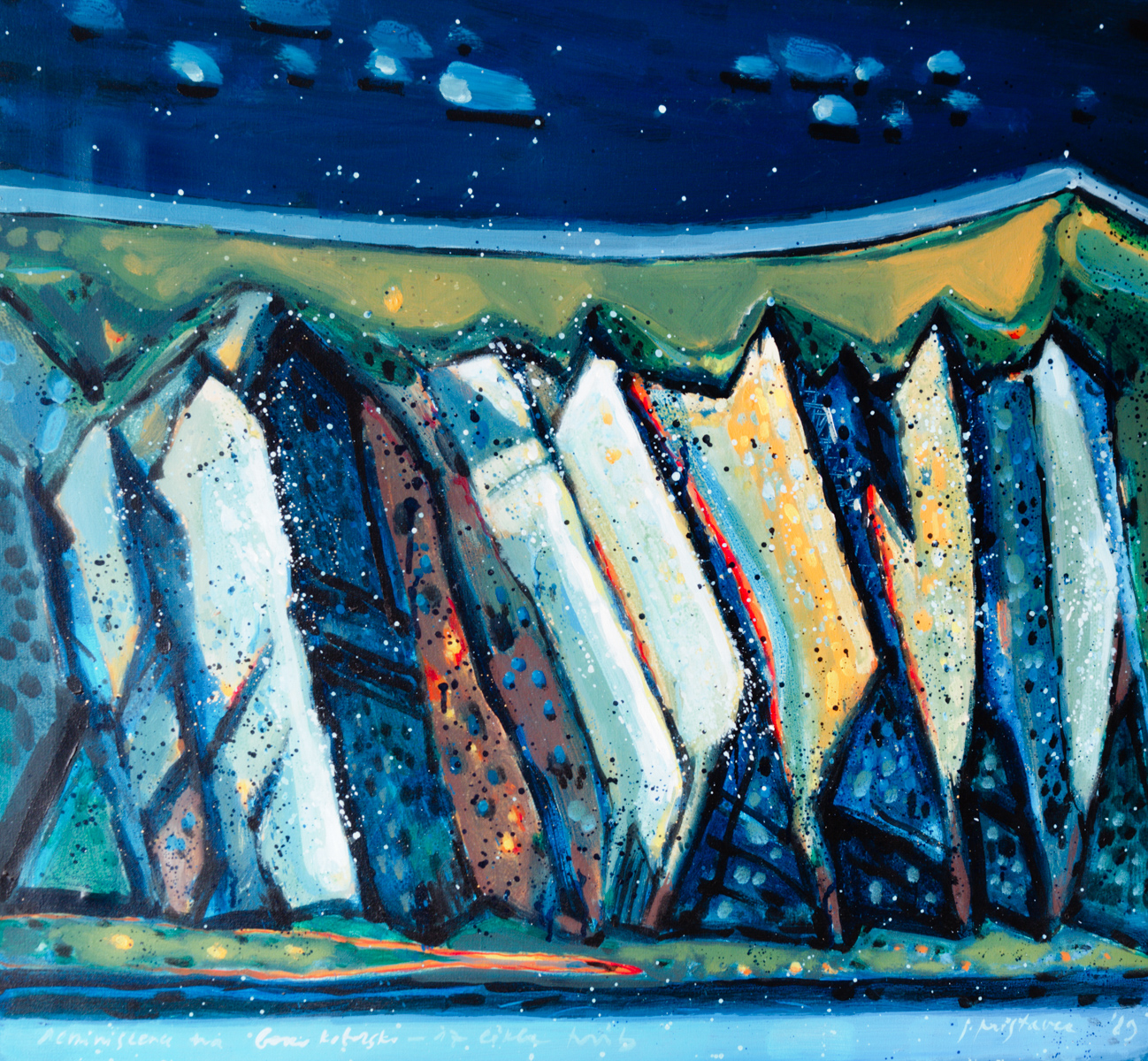
A decisive change occurred after the 1983 Ex tempore painting event, when Pristavec became intensely interested in Meljski hrib, a hill rising above the industrial and residential landscape of Maribor. He observed it from different positions, at different times of day and under changing weather conditions.

The resulting cycle, generally known as The Hill, comprises an extensive group of works on paper produced principally between 1983 and 1985. The landscape motif is gradually transformed. At first the hill remains recognisable, but its contours progressively become bands, intervals, chromatic tensions and layered fields.

Yellow and orange assumed particular importance within this research. Pristavec used relatively small quantities of these colours to activate larger areas of darker, cooler or more restrained tones. Landscape was no longer simply represented. It became the starting point for an investigation of how visual observation, memory and emotional experience could be translated into colour.

The importance of The Hill lies precisely in this passage between motif and pictorial autonomy. The series does not mark a complete abandonment of nature. Instead, nature is internalised and reconstructed through colour.

Crumpled Paper, Masks and Chromatic Fields

From the middle of the 1980s, Pristavec began working with physically altered and crumpled sheets of paper. The folds, ridges and damaged surfaces were not accidental imperfections but active elements of the work. Paper ceased to function solely as a neutral support and became a material body that could be painted, folded, abraded and reactivated by colour.

The earliest works in this group often retain recognisable faces, masks or fragmentary figures. Their identity appears unstable, emerging from and disappearing into the irregular surface. The face becomes both image and object: a psychological presence, a painted sign and a materially fractured field.

In later works, especially those associated with the Colors cycle, recognisable motifs recede. Horizontal bands, vertical axes, chromatic layers and broken geometric structures begin to organise the sheet. Yet these works should not be separated too sharply from the masks and figures that preceded them. Their colour fields retain a bodily character, while traces of face, landscape and spatial depth continue to inhabit the abstract surface.

Pristavec’s abstraction was therefore not a rejection of the visible world. It developed from prolonged looking—from landscape, leaves, bodies and faces—and preserved the memory of these sources even when they were no longer immediately recognisable.

The Return of the Figure

During the early 1990s, the figure reappeared with renewed intensity. This was not a return to the kind of representation practised before the abstract cycles. The body now carried the experience of fragmentation, chromatic division and material instability.

The Minotaur drawings of 1992 occupy an important position in this development. Human and animal anatomy are joined in a hybrid body that embodies physical force, vulnerability, conflict and confinement. The cycle forms a bridge between Pristavec’s earlier animal imagery and the mythological paintings of his final years.

The Harlequin works, produced principally during the 1990s, introduce a different kind of transformed figure. Harlequin is simultaneously performer, mask and psychologically divided individual. Patterned clothing breaks the body into chromatic segments, while theatrical identity becomes a means of examining concealment, exposure and the instability of the self.

Nudes, animals, portraits and figures continued to appear throughout these years. Pristavec’s artistic development should consequently be understood as a network of returns rather than a progression through strictly separated stylistic periods.

Portraiture and the Social Archive

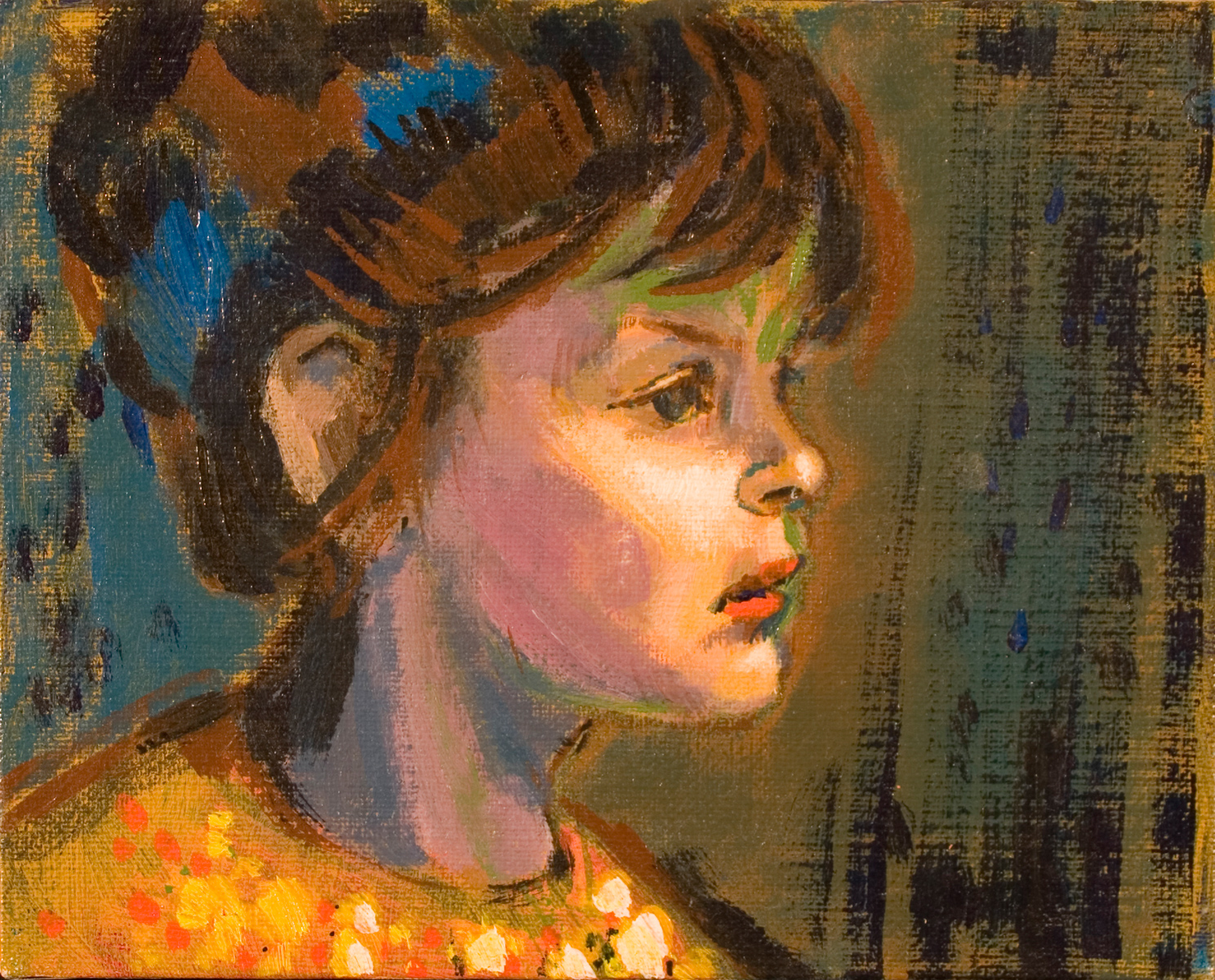
Portraiture became one of the central areas of Pristavec’s later work. His portraits on canvas give the face material and chromatic density, while the extensive portraits on paper preserve the speed and risk of direct observation.

The sitters include family members, friends, artists, writers, musicians, actors, cultural figures and people from the Maribor environment. Together, these works form more than a gallery of individual likenesses. They constitute a visual archive of personal relationships and of the cultural life surrounding the artist.

Pristavec continually tested how far a face could be transformed without losing its identity. Likeness might be preserved by the inclination of a head, the weight of an eyelid, a particular profile, hairstyle or expression. Distortion and abbreviation were not necessarily departures from recognition; they could become its most effective instruments.

Around 1999, public drawing assumed growing importance. As Pristavec later recalled, drawing outside the studio was also connected with the personal need to overcome solitude following the death of his wife. He began portraying people at exhibitions, literary evenings, concerts, social gatherings and in public spaces.

In these works, portraiture became an encounter involving the artist, sitter and sometimes an audience. The speed of execution was both an artistic method and a condition of the event. Names, dates, dedications and brief comments frequently remained visible on the sheet, turning each drawing into a record of a particular meeting.

Many of these works were later brought together in the 2006 publication Janez Pristavec: Srečanja (Encounters), with a foreword by Mario Berdič. The book transformed a series of temporary social occasions into a more lasting collective portrait of Maribor and its cultural community.

Late Mythological Paintings

During the final years of his life, while facing prolonged illness, Pristavec turned increasingly towards mythological and sacred subjects. Between approximately 2006 and 2008, he produced a concentrated group of paintings based on Greek mythology, biblical and Christian narratives and other archetypal themes.

These works include Nereids, Amazons, the Minotaur, mounted figures, winged horses, sacrificial scenes and apocalyptic riders. They are not conventional illustrations of established stories. Pristavec condensed their narratives into confrontations between bodies, colours and forces: ascent and fall, desire and violence, mortality and transformation.

The late mythological paintings unite many of the concerns that had shaped his work over several decades. Animal and human bodies merge, colour acquires symbolic intensity, and the figure is subjected to the same processes of fragmentation and reconstruction that had previously shaped the crumpled-paper works, masks and abstract colour fields.

Illness forms part of the historical context of these paintings, but it should not become their only interpretative key. The works are not merely documents of physical decline or a final testament. They represent an artist returning to the body and to narrative with extraordinary concentration, bringing together observation, memory, cultural tradition and personal experience.

The Janez Pristavec Estate and Archive

Janez Pristavec died in Maribor on 28 May 2008. His surviving and currently documented oeuvre is extensive, comprising several thousand works on paper and a substantial body of paintings on canvas. It encompasses childhood drawings, Academy studies, prints, independent drawing cycles, mixed-media works, works on crumpled paper, portraits, caricatures and paintings from every major period of his career.

The majority of this extensive body of work remains together in the family-administered Janez Pristavec Estate and Archive in Maribor. Galerija Unuk was established in 2008, the year of the artist’s death, with the long-term purpose of preserving, documenting, researching and presenting his artistic legacy. Since then, these activities have developed gradually as an independent and ongoing project. Driving forces behind project are the artist’s daughter, art historian Ivana Unuk Pristavec, together with digital manager Igor Unuk. Their work combines art-historical research with the photographic and digital documentation of the oeuvre, the organisation and verification of archival material, and the preparation of works for exhibitions, publications and professional presentation.

In addition to the artworks themselves, the archive contains photographic material, exhibition records, catalogues and other documents relating to Pristavec’s life and career. Individual works are also held in public institutions and private collections. The collections presented on this website are therefore carefully considered curatorial selections intended to represent the principal periods, subjects and formal developments within the artist’s oeuvre, rather than a complete online catalogue of all documented works. The scale and continuity of the surviving material make it possible to follow not only Pristavec’s completed works but also his processes of observation, repetition, experimentation and revision.

This persistence is one of the defining characteristics of Pristavec’s oeuvre. Rather than pursuing a single definitive style, he repeatedly explored how visible form could be observed, simplified, transformed, dissolved and ultimately brought back into presence through line, colour and material. Seen as a whole, the archive provides an unusually detailed record of this lifelong process.

Cataloguing, verification and digitisation remain ongoing. Titles, dates, dimensions, techniques and other information are checked against the original works and surviving archival records. Provenance information, archive references, high-resolution photographs, images of the reverse, condition reports and certificates of authenticity can be provided for individual works where available. Enquiries concerning research, exhibitions, loans, publications and professional access to the archive are considered individually.

Exhibitions

Books

Janez Pristavec: Encounters (Srečanja) [foreword Mario Berdič], Maribor, Mariborska literarna družba, 2006; ISBN 961-6483-54-4