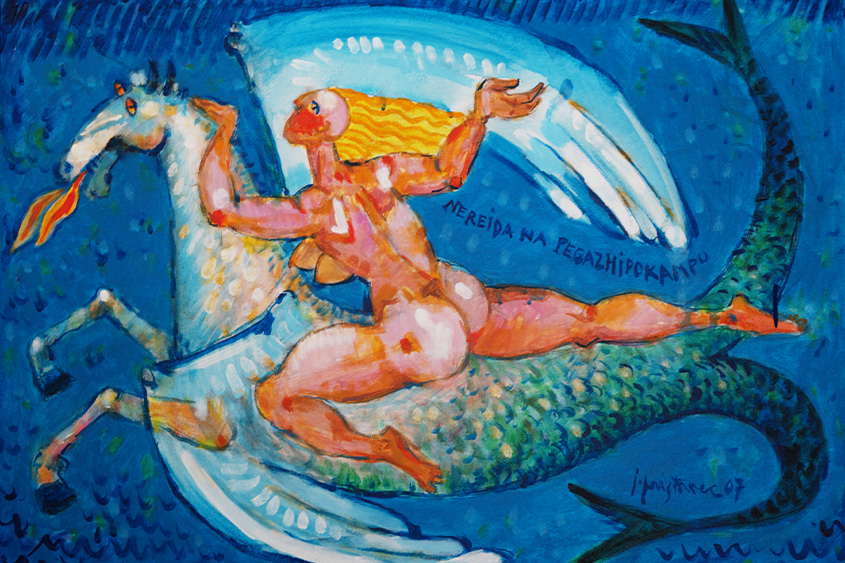
Nereid on Pegazhipokamp
Mythology, as a timeless source of imagery, has perennially inspired visual artists, particularly during periods of existential questioning and cultural redefinition. In Janez Pristavec’s “Nereida na Pegazhipokampu” (2007), myth is not merely quoted but re-imagined through a vivid, expressive visual language rooted in neo-expressionism. Created during a period when conceptual and minimalist trends dominated Western European art, Pristavec’s turn toward figurative mythology stands out as a deliberate and rich artistic statement.
Iconographic Analysis
Depicting a nereid riding a hybrid of Pegasus and a hippocampus, the painting explores themes of elemental fusion (air and water), freedom, and sensual vitality. The nereid’s nude form, dynamically poised in mid-motion, evokes classical ideals while reinterpreting them through contemporary expressiveness. The hybrid creature symbolizes the permeability of mythological categories, underscoring the narrative of unity between different worlds. The work invites readings aligned with Gaston Bachelard’s theories on elemental imagination (Bachelard, 1942).
Post-1990s Slovenian art, like much of Central Europe, navigated the tensions between global conceptualism and local figurative traditions. Pristavec’s choice to delve into mythology aligns him with the neo-expressionist resurgence that, according to Donald Kuspit (The End of Art, 2004), reflects a humanistic reassertion against the perceived sterility of postmodernism. Unlike the detached irony prevalent in contemporaries like Damien Hirst, Pristavec embraces myth with emotional sincerity.